Culture
'Lex Netflix' Law Boosts Swiss Film Industry with CHF19.9 Million Investment
A new law requiring streaming services to invest in local content has resulted in a 25% increase in funding for Swiss film production, with platforms like Netflix and Disney contributing nearly CHF20 million in the past year.
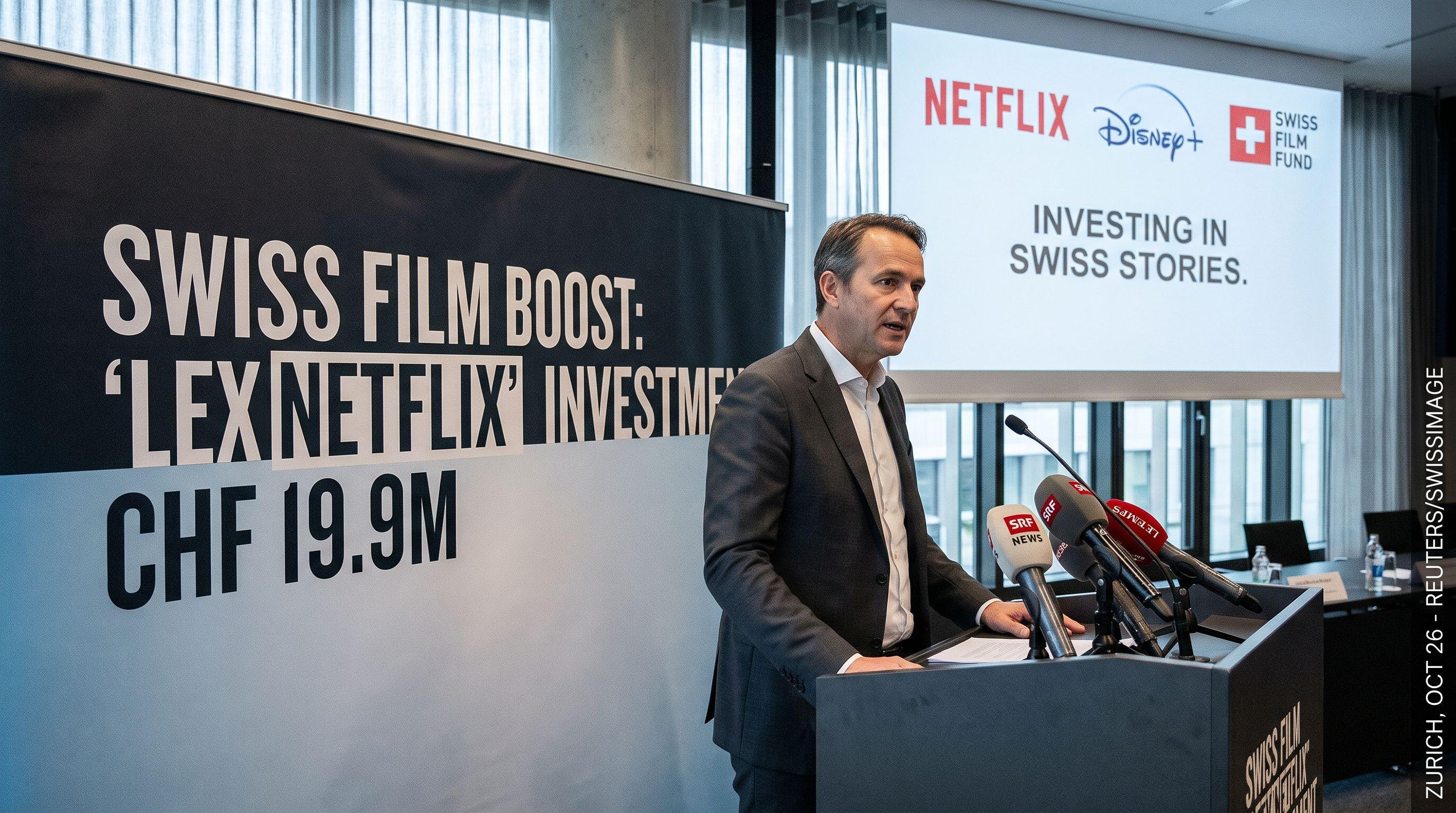
Streaming Giants Fuel Swiss Cinematic Surge
Switzerland’s film industry is witnessing an unprecedented financial renaissance. A staggering 25% surge in funding has hit the domestic cinema sector, ignited by the aggressive implementation of the so-called 'Lex Netflix.' This is no longer a theoretical debate; it is a hard-cash reality. As of 2025, the culture of Swiss filmmaking is being bankrolled by the very platforms that once threatened to overshadow it. The Federal Office of Culture (FOC) confirms that the era of passive consumption is over. Now, global titans must pay to play in the Swiss market, ensuring that local creators are not just spectators but active participants in the digital revolution. This influx of capital represents a seismic shift in how the nation protects its cultural sovereignty while embracing the global streaming boom.
Decoding the CHF 19.9 Million Windfall
Nearly CHF 20 million—specifically CHF 19.9 million—has been injected directly into Swiss film production and support measures in a single year. This massive capital injection stems from a combined gross revenue of CHF 817 million generated by 22 streaming and broadcast companies within Swiss borders. While the total investment obligation was calculated at CHF 32.7 million based on the 4% revenue rule, the CHF 19.9 million already hitting the ground marks a transformative milestone. These figures represent a 9% year-on-year revenue growth for the platforms, proving that the Swiss market remains lucrative despite the new regulatory hurdles. The money bypasses traditional federal bureaucracy, flowing directly from the likes of Amazon and Disney into the pockets of local production houses, fueling jobs, innovation, and high-quality Swiss content.
Global Platforms Confront Local Mandates
The mandate is clear: allocate 4% or face the consequences. Since January 1, 2024, foreign streaming services and international broadcasters with Swiss advertising windows have grappled with this strict investment obligation. This legislation, ratified by Swiss voters in a 2022 referendum, forces giants like Netflix and Disney to reinvest in the ecosystem they profit from. Unlike other European models where funds are often pooled into state-run pots, the Swiss 'Lex Netflix' encourages direct partnership. This creates a dynamic where global expertise meets local talent, forcing a collision of Hollywood-scale budgets with Swiss-scale precision. However, the gap between the CHF 32.7 million obligation and the CHF 19.9 million invested suggests that the industry is still in a transitional phase, with more capital expected to be deployed as project pipelines mature.
A New Era for Swiss Storytelling
The implications for the future of Swiss culture are profound. With more than CHF 19 million in fresh capital, Swiss filmmakers are no longer restricted to shoestring budgets; they are now positioned to produce world-class content that can compete on the global stage. This law ensures that the Swiss identity remains visible in an era of algorithmic curation. As we look toward 2026 and beyond, the success of Lex Netflix will be measured not just in francs, but in the quality of the stories told. Will we see a Swiss 'Squid Game' or a Zurich-based 'The Crown'? The infrastructure is now funded, the mandate is set, and the spotlight is firmly on Swiss creators to deliver. The film industry has been handed a golden ticket; now it must prove it can lead the narrative in the heart of Europe.