Environment
Invasive Japanese Beetle Spreads to Bern, Prompting Containment Measures
The destructive Japanese beetle has been detected in the Swiss capital and the nearby town of Köniz, forcing cantonal authorities to implement immediate measures across 21 municipalities to combat its spread and protect local agriculture.
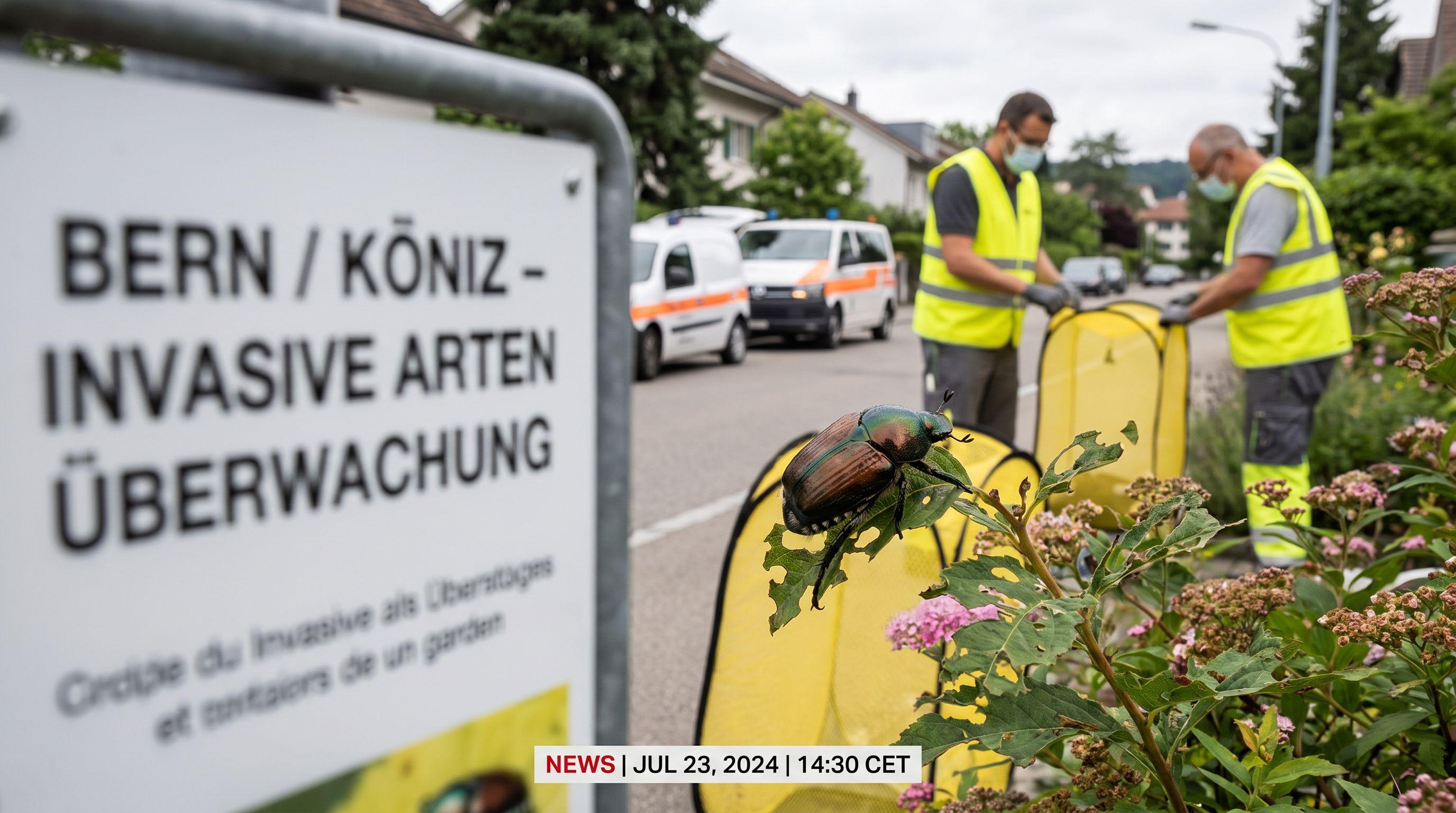
Bern Confronts an Ecological Siege
The Swiss capital is officially under attack. In a dramatic escalation of Switzerland's war against invasive species, the destructive Japanese beetle has breached the defenses of Bern and the neighboring town of Köniz. This is no longer a distant threat; it is a localized crisis. After several beetles were snared in traps near the Schönausteg at the end of June, the Plant Protection Unit’s expanded monitoring has confirmed the worst: a population has firmly established itself in the heart of the city. While authorities previously managed isolated outbreaks in Spiez and Oberaargau, this surge into the capital represents a significant and alarming shift in the battlefront. The beetle, known for its voracious appetite, threatens to devastate the region’s lush greenery and manicured gardens. The urgency is palpable as investigators now swarm the Bernese Oberland, where individual catches suggest the front line may have already moved further south. Every hour counts as experts scramble to map the true extent of this infestation before it spirals out of control.
Lockdown Measures Envelop 21 Municipalities
A staggering 21 municipalities are now grappling with strict containment orders as the Canton of Bern moves to paralyze the beetle’s movement. These measures, effective immediately, transform the city of Bern and Köniz into a high-security outbreak zone. Within these borders, the transport of garden waste, compost, and topsoil is strictly prohibited—a move designed to stop the pest from hitchhiking to new territories. Meanwhile, a surrounding buffer zone imposes its own set of rigorous restrictions on green waste. This is a logistical nightmare for local landscaping and waste management, yet the alternative is far grimmer. The canton is not taking any chances, drawing on lessons learned from Solothurn and previous outbreaks in Wynau and Roggwil. While the restrictions may seem heavy-handed to some, officials insist they are the only way to prevent a total agricultural collapse. The message from the authorities is clear: the movement of soil is the movement of the enemy.
Biological Warfare: The Nematode Offensive
Starting in mid-August, the Canton of Bern will deploy a microscopic army to reclaim its soil. Authorities are launching a targeted biological strike using nematodes—threadworms specifically engineered to hunt and destroy the larvae of the Japanese beetle. This intervention will focus primarily on irrigated sports pitches, which serve as prime breeding grounds for the pest. In contrast to harsh chemical pesticides that can ravage local ecosystems, these threadworms pose zero danger to humans or pets, offering a surgical strike capability in densely populated urban areas. This move highlights the sophistication of the Swiss response; we are not just reacting, we are innovating. However, the success of this biological offensive depends entirely on timing and soil moisture. As the larvae develop beneath the turf of Bern's football pitches and parks, these nematodes represent the last line of defense before a new generation of beetles takes flight. It is a high-stakes race against the biological clock.
Agricultural Stakes Surge to Critical Levels
The economic implications of this invasion are nothing short of critical. The Japanese beetle does not just nibble; it skeletonizes leaves, leaving behind nothing but ruin for over 300 plant species, including vines, berries, and corn. For a nation that prides itself on agricultural excellence, the presence of this pest in the Bernese heartland is a direct threat to food security and the wine industry. While the current focus remains on containment within the capital, the shadow of the beetle looms over the entire Swiss plateau. If the population in the Bernese Oberland is confirmed to be established, the scale of the response will need to soar to unprecedented levels. This is a defining moment for Swiss biodiversity. The coming weeks will determine whether Bern can successfully quarantine the threat or if the Japanese beetle will become a permanent, costly fixture of the Swiss landscape. The eyes of the nation are on the capital, waiting to see if these bold measures can turn the tide.