Syngenta
How a handful of companies came to dominate global agriculture
A small group of multinational companies, including Switzerland-based Syngenta, controls a disproportionate share of agricultural seeds, machinery and crop-protection products. The concentration is raising concerns about competition, prices and farmers’ dependence on large suppliers.
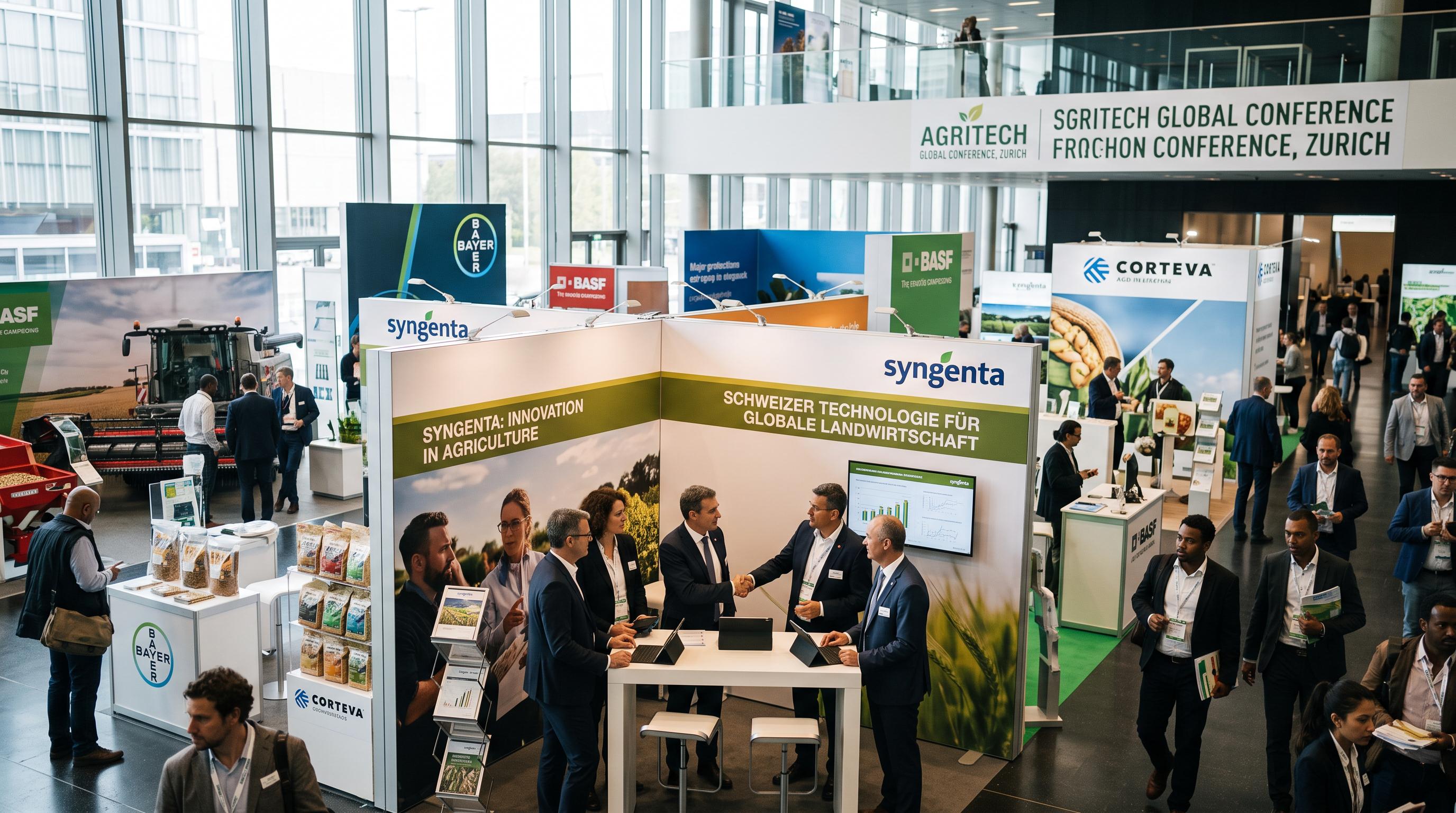
Map the power behind the farm
The top four pesticide companies control 56% of the global market. That concentration gives a small group of suppliers influence over the products farmers use to protect crops, manage disease and secure yields. Seeds, fertiliser, machinery and food processing are also dominated by a limited number of companies, according to agricultural researchers cited by Swissinfo.
The Swiss connection is direct. In 2025, Basel-based Syngenta generated $13.7 billion, or CHF 11.3 billion, from crop-protection products, a 4% increase on the previous year. Its annual report recorded almost 1,800 plant-protection products that the company had registered, re-registered or extended.
Those figures matter because farmers often buy several essential inputs from markets with few major suppliers. Fewer competing products can narrow the practical choices available to farms and increase dependence on corporate approval decisions, pricing and distribution. The consequences move through the food chain, affecting producers first and potentially food costs later.
Robert Finger, an agricultural economist at ETH Zurich, describes the pattern as broad rather than confined to chemicals. The same pressure appears in commercial seeds and farm machinery, creating a global supply system in which corporate scale has become a central competitive advantage.
Watch seed power move upward
The seed market has compressed rapidly around its largest players. The ETC Group, an agricultural research collective, reported that the top two companies now control almost 40% of the global commercial seed market. A decade ago, the top ten companies held 40%, according to Taarini Chopra, a co-author of the report.
The comparison captures the speed of consolidation. Market share has shifted upward from a broader group of firms to the two largest companies. That shift can reduce the number of independent breeding programmes and commercial alternatives available to farmers, even when several brands remain visible in local markets.
The concentration extends across the farm gate. Companies that sell seeds may also offer crop-protection products or operate alongside firms with major positions in fertiliser, machinery, processing and retail. Such links can shape which technologies farmers receive, how they combine inputs and where they can sell their harvests.
For Switzerland, the issue reaches beyond Syngenta's headquarters. Swiss researchers, regulators and food companies operate within an international agricultural system. Imported seed, chemicals and machinery connect Swiss farms and consumers to decisions made in corporate offices, laboratories and regulatory agencies around the world. The available data show market power accumulating at several points in the chain, rather than in one isolated product category.
See how regulation rewards scale
European pesticide rules have made regulatory capacity a competitive asset. The EU has cut the number of authorised active substances from more than 1,000 to around 500 over the past 25 years. A new pesticide can take seven to ten years to secure approval, and each authorisation lasts for a maximum of 15 years.
The process is designed to assess risks to people and the environment. It also favours companies with the money, staff and data needed to maintain large product portfolios. Syngenta's nearly 1,800 registered, re-registered or extended products illustrate the scale of that administrative and scientific operation.
Large firms can spread the cost of studies, applications and renewals across many products and markets. Smaller competitors face the same regulatory requirements without comparable resources or global distribution networks. According to the analysis cited by Swissinfo, that imbalance can make entry into the crop-protection market harder and leave farmers with fewer suppliers.
The regulatory challenge is therefore double-sided. Authorities must remove products that fail health or environmental standards while preserving a market in which new companies can compete. The data do not establish that every large portfolio product is unsafe or every smaller product is preferable. They show why approval expertise and financial scale now influence who can remain in the market.
Follow the mergers that built the giants
A wave of mergers rebuilt agriculture's corporate map. The current structure developed over decades, with major consolidation accelerating during periods of technological change and economic pressure. Jennifer Clapp, a professor at the University of Waterloo, traces the pattern back around 150 years, when American farmers' movements challenged dominant equipment manufacturers, banks, railroads and commodity traders.
The merger cycle intensified in the late 20th century. Seed and agrochemical companies began combining in the 1980s. More recent transactions reshaped the industry's largest firms: Bayer acquired Monsanto in 2018, Dow and DuPont formed Corteva Agriscience in 2019, and Potash Corporation merged with Agrium to create Nutrien in 2018.
Syngenta followed its own path. ChemChina acquired the Swiss-headquartered company in 2017, and Syngenta later merged with Sinochem in 2022. Each transaction joined assets, research capacity, regulatory files and distribution networks under larger corporate structures.
Clapp says consolidation tends to arrive in spurts. Companies pursue acquisitions when new technologies create opportunities or when downturns push executives to seek profitability through greater market share. The result is a sector where historical mergers continue to shape the choices available to farms today.
Put farmer choice back in focus
Farmers face concentrated suppliers on both sides of the production cycle. Limited choice affects the purchase of seeds, pesticides, fertiliser and machinery. The same pattern appears further downstream, where a small number of companies dominate processing and retail. Producers therefore negotiate within a food system shaped by concentration before they plant and after they harvest.
That structure can raise concerns about prices, bargaining power and dependence. A farmer who cannot easily switch seed varieties, equipment or crop-protection products has fewer ways to respond when a supplier changes its price, withdraws a product or alters distribution. The available source material identifies these risks without assigning a single price effect to any one company or merger.
Switzerland has a particular stake in the debate. Syngenta is headquartered there, ETH Zurich contributes expertise on agricultural economics and policy, and Swiss consumers rely on food chains that cross national borders. Competition authorities and policymakers must therefore weigh market structure alongside food security, innovation, environmental protection and farmer choice.
The figures provide a clear test for future oversight: whether new entrants can reach farmers, whether approval systems remain rigorous and accessible, and whether producers retain meaningful alternatives. The market shares of the leading seed and pesticide companies make those questions difficult to postpone.