Sudan
Geneva meeting seeks to coordinate Sudan peace efforts
The UN and Switzerland are convening 27 delegations in Geneva to coordinate diplomatic efforts to end the war in Sudan. The meeting will focus on reducing clashes and aligning international initiatives, although the Sudanese conflict parties will not attend.
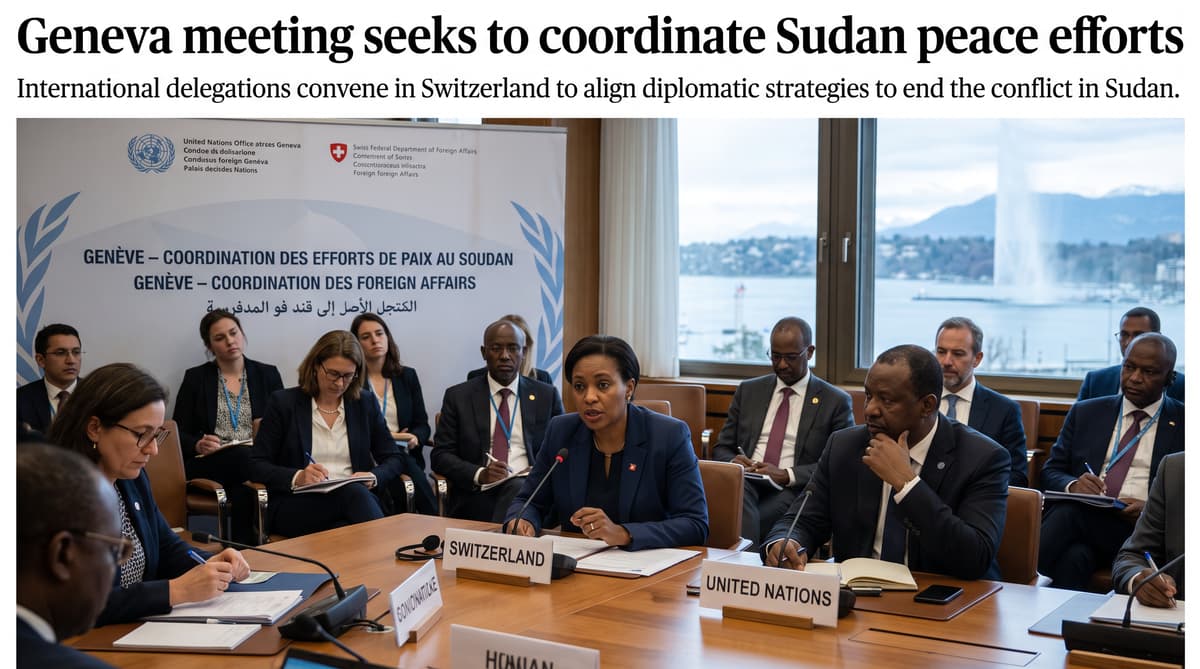
27 delegations will gather at Geneva's Palais des Nations as Switzerland and the United Nations try to bring order to the crowded diplomatic effort around Sudan's war. The meeting, scheduled for Wednesday, will focus on reducing clashes and supporting a political process after nearly three years of fighting.
Naila Hajjar, who works with UN Special Envoy for Sudan Pekka Haavisto, said the participants must assess how existing initiatives can strengthen one another. The gathering marks the sixth coordination meeting, with earlier sessions held in other countries.
Geneva will host senior representatives from governments and international organisations active in Sudan. Ministers, deputy ministers or senior officials are expected to lead the delegations. Switzerland's role reflects its established position as a host for international negotiations and humanitarian diplomacy.
The organisers are seeking a joint statement from the participants. They also plan to relay information to Sudan's conflict parties after the meeting. That sequence places the emphasis on coordination among outside actors before any direct engagement with the forces fighting inside Sudan.
Align the Mediators
The Sudanese government and the Rapid Support Forces will be absent from the room. The meeting is reserved for the mediators, with neither side of the conflict represented in Geneva.
That limitation narrows what the gathering can decide. The participants can compare proposals, coordinate pressure and discuss access for humanitarian operations, but they cannot sign a ceasefire on behalf of the armed parties. The organisers intend to pass information to both sides after the session, including through the joint statement expected from the delegations.
The United States, the United Arab Emirates, Egypt and Saudi Arabia will attend as members of the Quad, a group involved in diplomatic efforts on Sudan. Qatar, Turkey, Germany and Norway are also expected. The permanent members of the UN Security Council and international organisations working in Sudan will join them.
Neighbouring states will receive particular attention because the war has pushed millions of Sudanese across borders and affected regional security. Bringing these governments into the same coordination process could help reduce competing messages, although the source does not indicate that the meeting will produce a negotiated settlement.
Confront the Humanitarian Toll
Nearly 13 million people have been displaced by Sudan's war, including 4 million refugees. Tens of thousands have been killed, while tens of millions need humanitarian assistance, according to the information presented ahead of the Geneva meeting.
The displacement figures describe a crisis that extends well beyond Sudan's front lines. People have fled within the country or crossed into neighbouring states, making regional governments direct stakeholders in any attempt to halt the fighting. Their presence in Geneva is intended to bring that regional dimension into the diplomatic discussion.
Darfur remains a central concern. An International Fact-Finding Mission condemned what it described as a genocidal campaign by the RSF to seize control of El-Fasher a year ago. The mission's findings have added pressure for accountability as mediators pursue a political process.
The situation in El-Obeid, in Kordofan, has also drawn international attention. At the request of the UN Human Rights Council, the mission will conduct an urgent investigation there. Those inquiries will proceed alongside diplomatic efforts, leaving questions of civilian protection and accountability firmly on the agenda.