PostFinance
Swiss regulator again finds PostFinance emergency plans incomplete
FINMA says PostFinance still has not adequately specified what would happen if the bank could no longer be restructured or kept operating. The state-owned bank has met capital requirements, but its emergency plans must better address its statutory universal-service obligation.
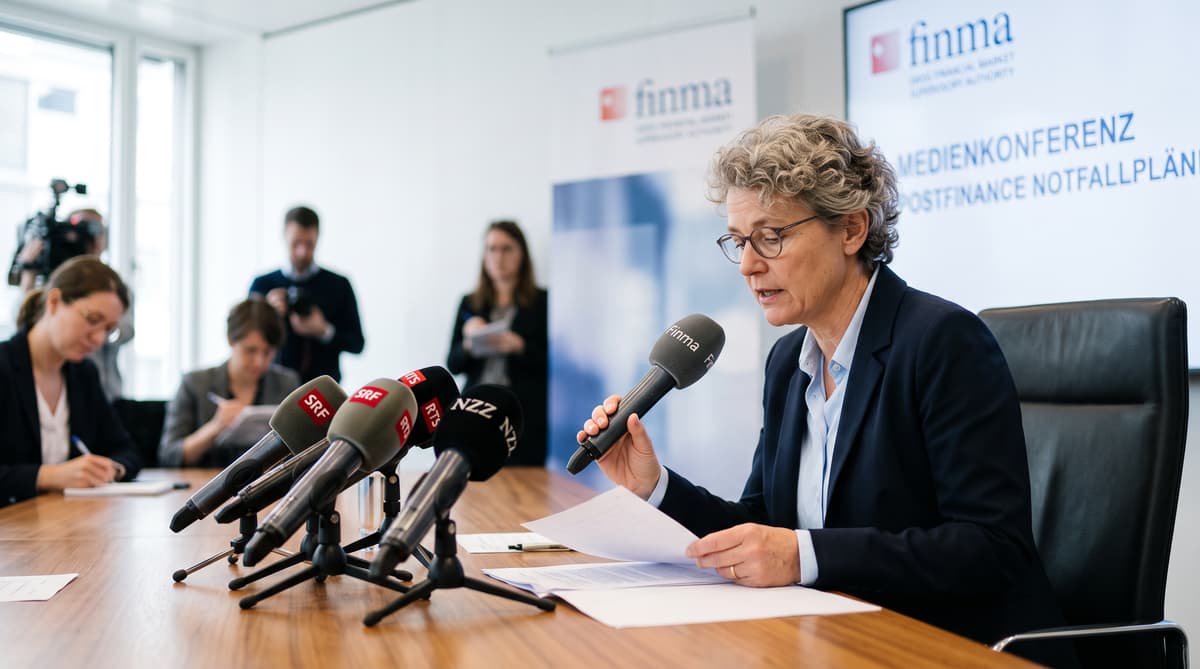
FINMA has again identified unfinished work in PostFinance’s crisis planning, keeping Switzerland’s state-owned bank under regulatory scrutiny even after it strengthened its financial buffers. The regulator said on October 14, 2026, that PostFinance had met requirements for additional loss-absorbing capital since the end of 2025 and had further developed its alternative strategy. Its emergency plan still falls short in a critical area: it does not adequately set out what would happen if the bank could no longer be restructured or kept operating.
That gap matters because PostFinance is both a large financial institution and a provider of services connected to Switzerland’s public infrastructure. Its statutory universal-service obligation must be reflected in any plan for a severe crisis, FINMA said. The regulator’s assessment does not signal an immediate capital shortfall. It points to the practical question of how essential functions would continue if the bank exhausted its available recovery options.
PostFinance is one of three domestically focused systemically important banks whose emergency and stabilisation plans FINMA reviews every year. Zurich Cantonal Bank and Raiffeisen met the regulator’s requirements in the latest assessment. PostFinance must now provide greater detail on its final fallback options.
Make the final fallback plan concrete
PostFinance’s remaining weakness concerns the last stage of a bank failure plan, after recovery and stabilisation measures have failed. FINMA said the bank still needs to specify the options available if restructuring is impossible and continued operation cannot be maintained. The statement did not identify a single missing mechanism or set a public deadline for completion.
A stabilisation plan is designed to keep a systemically important bank functioning during a crisis. An emergency plan addresses the consequences when that effort cannot secure the bank’s future. Swiss rules require both plans from domestically focused systemically important institutions. FINMA tightened its expectations after the collapse of Credit Suisse, where authorities faced intense pressure to protect critical services and contain wider financial disruption.
The regulator’s latest review found progress in stabilisation planning at all three banks. It also said that some elements of the revised requirements still need implementation across the group, including documentation of crisis exercises and crisis communication plans. FINMA expects those gaps to close in a timely manner.
The distinction between capital strength and operational readiness is central to the review. PostFinance has met its additional loss-absorbing capital requirements since the end of 2025, yet FINMA continues to demand a clearer account of what happens after those resources and strategies have been tested.
Tie the plan to Switzerland’s public-service duty
The universal-service obligation gives PostFinance’s emergency plan a distinctly Swiss complication. The bank cannot plan only for balance sheets, creditors and corporate restructuring. FINMA said its statutory duty to provide universal service must also be taken into account when the bank’s future becomes uncertain.
That obligation links a financial crisis to everyday access. PostFinance’s role sits within the wider Swiss postal and public-service network, making the continuity of essential banking functions a regulatory concern beyond the institution itself. FINMA did not specify which services would be prioritised or how they would be delivered in the worst-case scenario. The regulator said a proposed amendment to the Postal Services Act, currently under consultation, should reduce legal uncertainty.
The legislative process therefore has a direct bearing on crisis planning. Clearer rules could help determine which services must continue, who would be responsible for them and how authorities would manage the transition if PostFinance could no longer operate in its existing form. Until that framework is settled, the bank must work with obligations whose practical meaning remains partly unresolved.
FINMA’s finding does not say that PostFinance has failed its capital test. It shows that the public-service dimension remains insufficiently specified in the event of a full-scale resolution scenario.
Prepare for the next supervisory test
FINMA’s review leaves PostFinance with a clear supervisory task while the wider Swiss too-big-to-fail framework continues to evolve. The bank must further specify its options for a scenario in which restructuring and continued operation are no longer possible. The authority also expects improvements in crisis-exercise records and communication planning across the revised requirements.
The latest findings come with an important limitation. FINMA said that approving or assessing the plans does not guarantee the continuation of systemically important functions in every conceivable crisis. The three domestic systemically important banks have smaller financial buffers than globally active institutions. In an especially severe shock, that could restrict the choices available to management and authorities.
The next major regulatory update will concern UBS. FINMA said it intends to provide separate information on the globally active bank’s crisis planning in late autumn 2026. That assessment will add another test of how Switzerland applies the lessons of the Credit Suisse collapse to institutions with different sizes, structures and public responsibilities.
For PostFinance, the immediate issue is precision. FINMA has recognised stronger capital resilience and progress in the alternative strategy. The bank must now show, in operational terms, how essential services would be handled when ordinary recovery tools no longer work.