Politics
Explained: Switzerland's Role as Guardian of the Geneva Conventions and 74 Other Treaties
Switzerland acts as the 'depositary state' for 75 international treaties, including the renowned Geneva Conventions. But what does this responsibility entail? This article explains the unique diplomatic function and its significance for international humanitarian law.
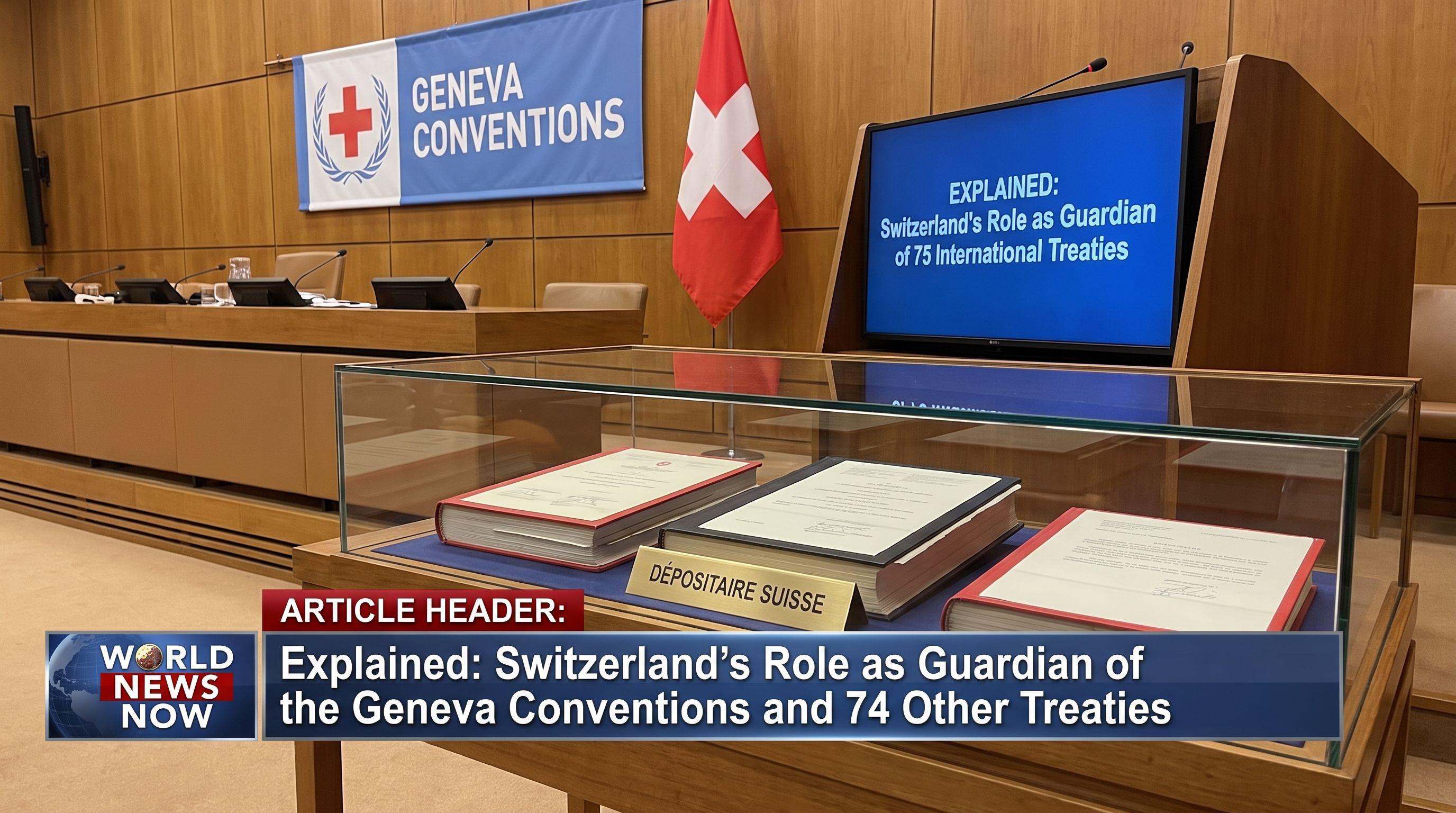
Switzerland Anchors Global Order as Guardian of 75 Treaties
Switzerland stands as the ultimate custodian of global stability, serving as the depositary state for a staggering 75 international treaties. While the world views Switzerland through the lens of alpine beauty and financial prowess, its most critical contribution to humanity lies in the silent vaults of Bern. These documents, ranging from technical standards for global telecommunications to the foundational Geneva Conventions, dictate the rules of modern civilization. This is not merely a historical relic; it is a living, breathing responsibility that places Switzerland at the epicenter of international diplomacy. As conflicts erupt across the globe, the weight of these 75 agreements surges, forcing the Alpine nation to confront its role as the neutral arbiter of the world's most vital promises. The Geneva Conventions alone represent the high-water mark of humanitarian law, making Switzerland the literal keeper of the rules of war.
Demystifying the Notarial Powerhouse in Bern
Legally, the Swiss role is a masterclass in administrative precision, functioning as a global 'notary' for the community of nations. Robert Kolb, a distinguished professor of international law at the University of Geneva, asserts that this is explicitly an administrative task, not a political one. Under the 1969 Vienna Convention on the Law of Treaties, Switzerland manages the grueling logistics of international law: safeguarding original texts, verifying translations, and processing instruments of ratification. It is a role defined by neutrality and meticulousness. The Swiss foreign ministry emphasizes that they do not review the content of these treaties; they ensure the process remains unassailable. However, this 'administrative' label belies the immense trust required to hold the original signatures of world leaders. When a state joins a treaty or registers a formal protest, Switzerland is the first to know, acting as the central nervous system for 75 distinct global frameworks.
Navigating the Political Minefield of Humanitarian Law
The line between administration and activism blurs dangerously when the Geneva Conventions are invoked. While the legal framework demands a neutral 'notary' stance, political pressure often surges, demanding that Switzerland take a stand. Former Foreign Minister Micheline Calmy-Rey has famously argued that Switzerland bears a 'special responsibility' beyond mere paperwork, particularly concerning the Israeli-Palestinian conflict. This tension reached a boiling point last year when Switzerland grappled with a UN General Assembly request to organize a high-level conference on the war in Gaza. The event was ultimately derailed by intense geopolitical opposition, highlighting the critical friction between Swiss neutrality and the global expectation for moral leadership. Critics argue Switzerland lacks 'audacity,' yet the government maintains that its credibility as a depositary depends entirely on its refusal to weaponize its position. This delicate balancing act is the true price of Swiss diplomatic prestige.
Evolving the Swiss Legacy in a Digital Age
Even as the digital revolution transforms diplomacy, international treaties remain anchored in the physical world of paper and ink. Switzerland’s role as a depositary state is not a relic of the past but a cornerstone of its future foreign policy. By maintaining the integrity of these 75 treaties, Switzerland ensures its continued relevance as a 'neutral platform' in an increasingly polarized world. The implications are profound: as new treaties emerge to govern AI, space exploration, and climate change, Switzerland’s proven track record as a reliable guardian makes it the natural choice for future depositary roles. The nation is not just protecting history; it is securing its seat at the table where the future of global governance is written. As long as the world requires a safe harbor for its most solemn promises, Switzerland will remain the indispensable guardian of the international order.