Swiss politics
Eight candidates enter race for Federal Council seat
Eight candidates have entered the Swiss People’s Party contest to replace Guy Parmelin in the Federal Council, including two from French-speaking Switzerland and one from Ticino. The party’s nomination committee will hold hearings in the coming weeks.
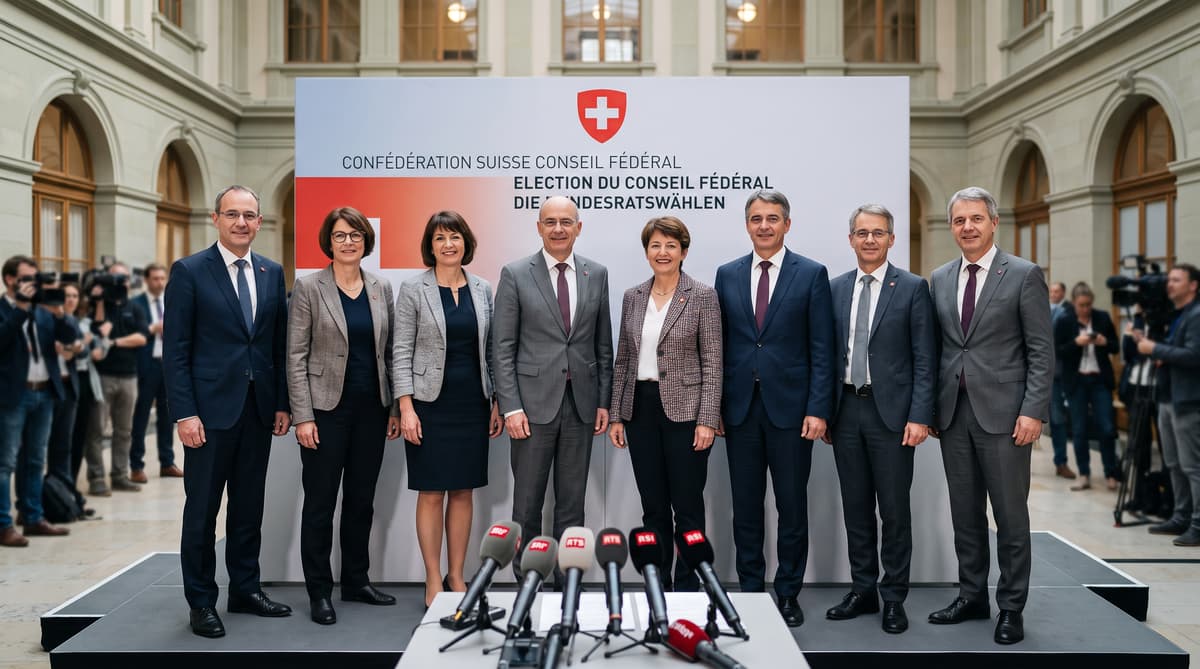
Eight candidates are now competing to succeed Guy Parmelin, after the Swiss People’s Party’s deadline closed at noon on Friday, October 23. The party’s nomination committee announced a field spanning Switzerland’s language regions: five candidates from German-speaking Switzerland, two from French-speaking Switzerland and one from Ticino.
The choice will shape the SVP’s bid to retain its place in the seven-member Federal Council, Switzerland’s governing body. The committee will hear all eight contenders in the coming weeks, then assess their political positions and leadership credentials. The process culminates on November 20, when the party’s parliamentary group will decide which names to present to parliament for election.
The group includes national parliamentarians and members of cantonal governments. The party says the candidates’ ability to lead matters particularly for the Justice and Defence ministries, raising the stakes of the committee’s review beyond party loyalty alone.
Meet the contenders
The eight contenders represent three language regions and a mix of national and cantonal experience. National parliamentarians Thomas Aeschi of Zug, Michael Graber of Valais, Rémy Wyssmann of Solothurn, Céline Amaudruz of Geneva and Marco Chiesa of Ticino have put themselves forward.
They are joined by three members of cantonal governments: Jean-Pierre Gallati of Aargau, Franz Ruppen of Valais and Pierre Alain Schnegg of Bern. The lineup includes seven men and one woman, Amaudruz. In regional terms, five candidates come from German-speaking Switzerland, two from French-speaking Switzerland and one from Ticino.
The mix puts candidates with different cantonal and parliamentary roles before the party’s selectors. The nomination committee will conduct hearings with every candidate, chaired by former SVP parliamentary group leader Caspar Baader. It also retains the option of approaching other individuals if necessary, according to the party’s statement.
Committee sets the test
The committee will test candidates against the SVP’s central policy priorities. The party says hearings will examine positions on armed neutrality and Switzerland’s self-determination, as well as the EU treaty package, asylum and migration policy, the armed forces and internal security.
The party’s stated agenda also includes financial relief for the middle class and businesses, alongside a secure and affordable energy supply. These issues will provide the framework for comparing the candidates, while the committee also weighs leadership experience and skills.
The SVP has singled out the Justice and Defence ministries as areas where leadership capacity is particularly important. That makes the review both a test of alignment with party positions and an assessment of who could take on the responsibilities attached to those portfolios. Former parliamentary group leader Caspar Baader will chair the hearings, which are scheduled to take place over the coming weeks.
Prepare for the November decision
The SVP parliamentary group is due to settle its candidate list on November 20. The nomination committee’s hearings come first, giving members time to assess all eight contenders against the party’s policy priorities and leadership requirements.
After the group chooses its list, it will put those candidates before parliament for the Federal Council election. The committee can also approach other individuals if it considers that necessary, leaving the field open to adjustment during the selection process.
For now, the contest includes representatives from Geneva, Valais, Ticino, Zug, Solothurn, Aargau and Bern. The final decision on the SVP’s ticket will mark the next formal step in choosing who will seek to succeed Parmelin in the national government. The party’s evaluation will focus on both political positions and the experience needed for senior executive responsibilities.