culture
After a Century, Historic Saint Statue Returned to Valais Chapel
The ALPS Alpine Museum in Bern has returned a 15th-century saint statue to the municipality of Baltschieder in canton Valais, its original home. The repatriation, celebrated with a helicopter transport, marks a shift in how museums handle cultural artifacts from Alpine regions.
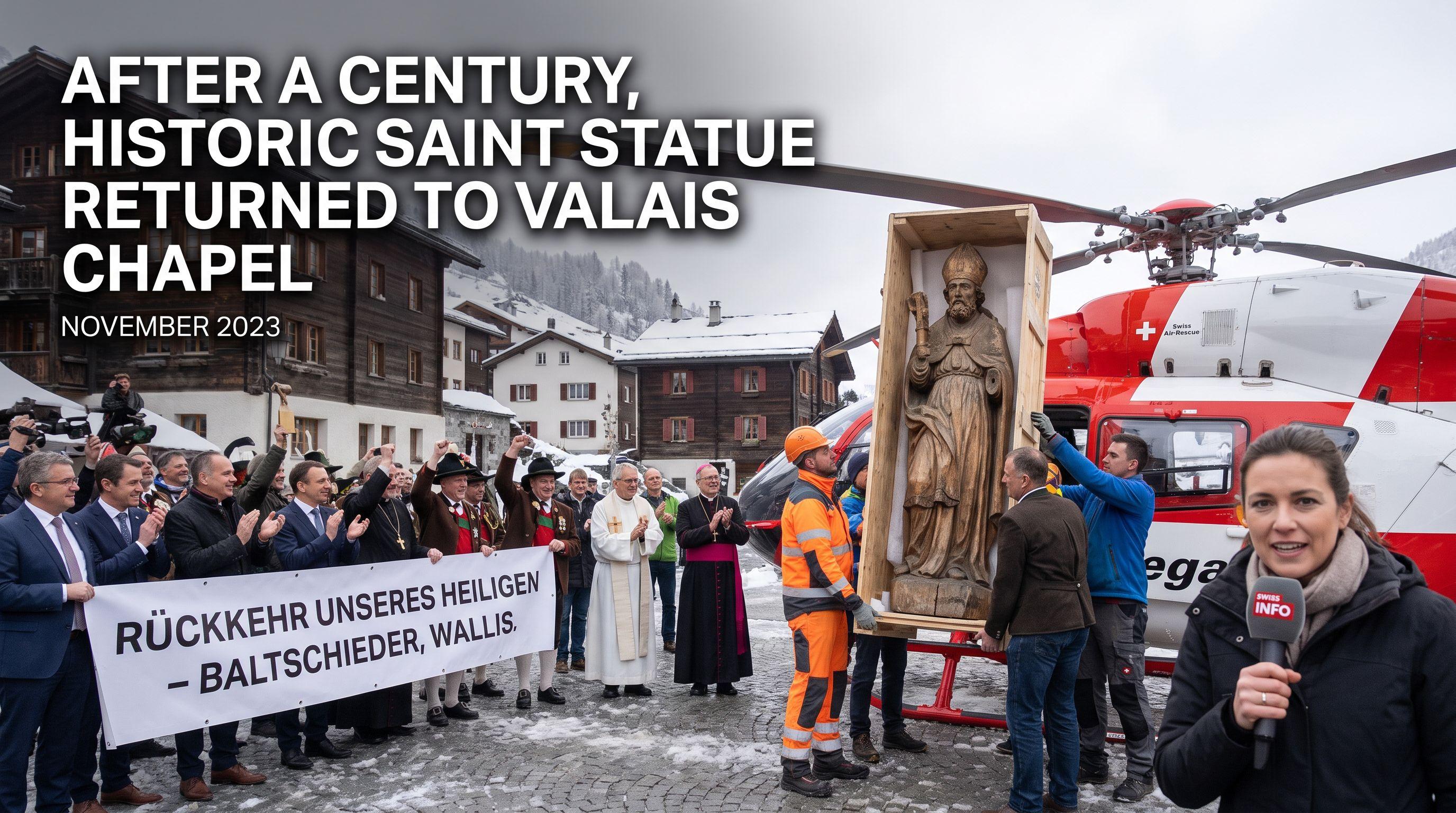
A Century of Exile Ends in the Clouds
More than 100 years of separation ended with a dramatic flight over the Bernese Alps. On Monday morning, a late-Gothic saint statue, dating back to the 15th or 16th century, was liberated from a warehouse in Zollikofen and hoisted into the sky. This was no ordinary logistics operation; it was a high-stakes repatriation that saw the sacred figure transported by helicopter directly to the Upper Valais. The return of this artifact to the municipality of Baltschieder marks a definitive victory for regional identity over centralized curation. While the statue spent over a century as a museum piece in Bern, it has now reclaimed its status as a living piece of Valaisan history. The community center in Baltschieder erupted in celebration as the helicopter touched down, signaling the start of an official reception that felt more like a homecoming for a long-lost citizen than a delivery of wood and paint. This event underscores a powerful shift: the mountains are reclaiming what the cities once took.
Reclaiming the Sacred from Urban Vaults
Urban centers have long dominated the cultural narrative, but the tide is turning. The ALPS Alpine Museum of Switzerland’s decision to comply with Baltschieder’s request for the statue’s return serves as a landmark precedent for Swiss cultural policy. For decades, thousands of artifacts from peripheral regions were funneled into metropolitan institutions, often under the guise of 'preservation.' However, the museum now describes this return as a prime example of a changing approach to cultural heritage. The focus is shifting from mere possession to regional origin and contextual integrity. By returning the statue to its original chapel in the Baltschieder Valley, the museum acknowledges that an object’s true value is often tied to the specific soil and community from which it emerged. This move confronts the historical imbalance between the urban 'collectors' and the rural 'creators,' proving that even century-old acquisitions are not immune to the modern demands of restitution.
The Montandon Legacy and the Ethics of Acquisition
History is rarely simple, and the statue’s journey to Bern began with a pioneer of Swiss mountaineering. Paul Montandon, a co-founder of the Alpine Museum, acquired the figure following the reconstruction of the Baltschieder chapel in the early 1900s. While Montandon’s intentions were rooted in the preservation of Alpine culture, the act reflects an era where mountaineers and explorers viewed the Alps as a treasure trove for urban collections. Today, we grapple with the ethics of these early 20th-century acquisitions. The statue wasn't 'looted' in the colonial sense, yet its removal left a void in the local spiritual and cultural landscape of Valais. The ALPS museum’s willingness to relinquish this piece of its founding collection demonstrates a bold maturity. It recognizes that the mountaineers of the past, while heroic in their exploration, participated in a system that prioritized the museum display case over the chapel altar. This restitution is a direct confrontation with that legacy.
Redefining the Future of Alpine Heritage
This is not just about one statue; it is about the future of how Switzerland views its own history. The repatriation to Baltschieder is a signal fire for other municipalities across the country. As the statue is once again opened to the public in its original chapel, it serves as a reminder that cultural artifacts are not static relics but active participants in a community's life. The successful helicopter transport and the museum's cooperation suggest that the 'limits to restitution' are indeed expanding. We are entering an era where the regional origin of an object carries more weight than the legal title held by a distant institution. Moving forward, expect more Alpine communities to audit their lost treasures and demand their return. The message from Valais is clear: our history belongs at home, and no mountain range is too high to prevent its return. The precedent set this week will echo through the halls of Swiss museums for decades to come.