civil rights
Amnesty International Warns of Eroding Protest Rights in Switzerland
New restrictions on demonstrations in Zurich and Geneva spark concerns from Amnesty International about the deterioration of civil liberties in Switzerland.
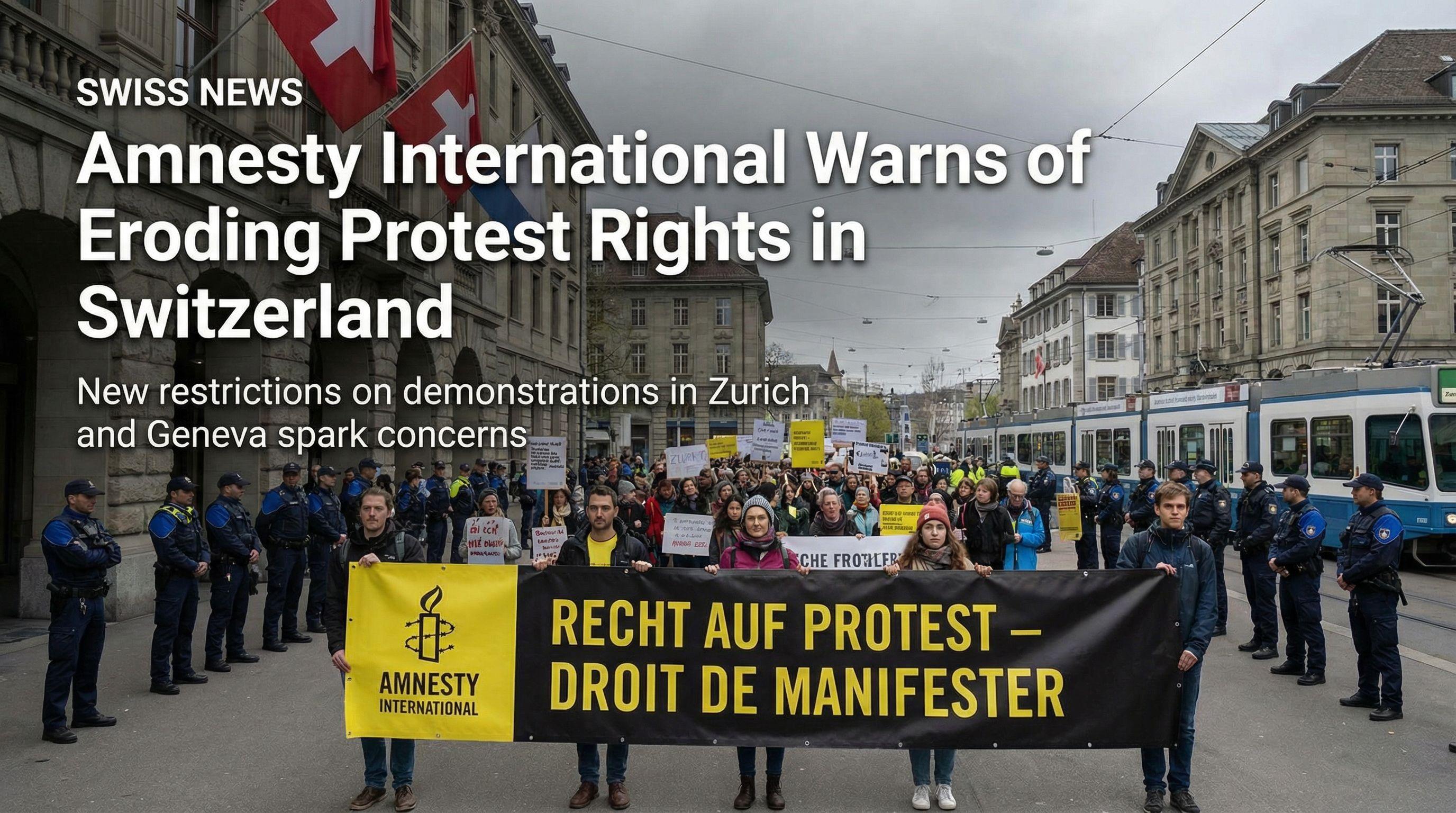
Growing Concerns Over Protest Rights
Amnesty International has raised significant concerns about the deteriorating state of protest rights in Switzerland, traditionally known for its strong democratic values and civil liberties. The organization's annual report highlights a troubling trend of increasing restrictions on public demonstrations, particularly in major urban centers. This development marks a significant shift in Switzerland's approach to civil liberties and has sparked debate about the balance between public order and democratic freedoms.
New Restrictions in Major Cities
The most significant changes have occurred in Zurich and Geneva, Switzerland's largest cities. Zurich has implemented a new law requiring prior authorization for demonstrations and introduced a controversial measure allowing authorities to charge organizers for police costs. Geneva has imposed limitations on demonstration locations and timing, particularly affecting the city center, following complaints from local businesses about disruption. These measures represent the most substantial restrictions on protest rights in recent Swiss history.
Impact on Civil Society
The new restrictions have had immediate effects on civil society, particularly affecting student activists and political demonstrators. Students faced threats of sanctions and legal consequences for participating in Gaza-related protests, raising concerns about youth political engagement. Alexandra Karle, director of AI Switzerland, emphasizes that these restrictions threaten the fundamental pillars of Swiss democracy. The measures have created uncertainty among activist groups and civil society organizations about organizing future demonstrations.
International Humanitarian Commitments
The report also scrutinizes Switzerland's international humanitarian commitments, particularly regarding the UNRWA funding controversy. Initially earmarking CHF 20 million for 2024, Switzerland reduced its contribution to CHF 10 million following international pressure. This decision, combined with the country's response to the Climate Seniors' ECHR ruling, has led Amnesty to question Switzerland's commitment to its humanitarian traditions and international human rights obligations.
Future Implications
The current trajectory of protest rights in Switzerland raises serious questions about the future of civil liberties in the country. Amnesty International warns that these restrictions could set a concerning precedent for other democratic nations. The organization calls for Swiss authorities to reassert their commitment to protecting fundamental rights and to take a stronger stance in defending the global system of human rights protection. The ongoing debate between security concerns and civil liberties continues to shape Switzerland's approach to public demonstrations.