social issues
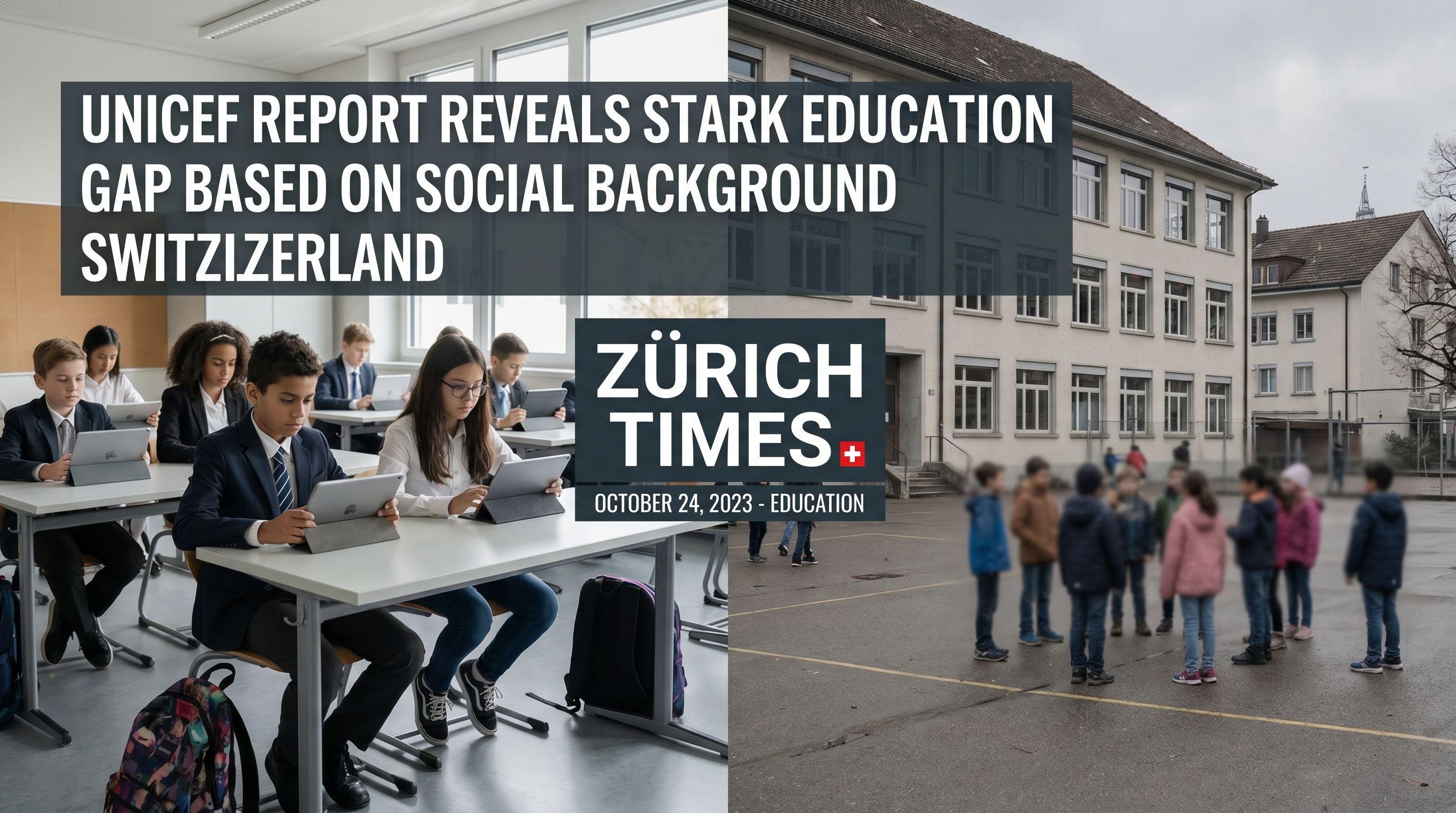
UNICEF Report Reveals Stark Education Gap Based on Social Background in Switzerland
According to a new UNICEF analysis, educational opportunities for children in Switzerland are heavily dependent on their family's socioeconomic status. The report shows a significant disparity in the acquisition of basic skills between privileged and disadvantaged youth.
The Great Divide Shatters the Swiss Meritocracy
Switzerland’s reputation as a land of equal opportunity is facing a brutal reality check. A new, damning analysis from UNICEF reveals that educational success in the Alpine nation is not a matter of merit, but a lottery of birth. While the Swiss social state works tirelessly to mitigate absolute poverty, it is failing to bridge a widening chasm at the very start of life. In an international comparison that should alarm every policymaker in Bern, Switzerland now ranks as one of the countries where the gap between privileged and disadvantaged youth is most extreme. This is no longer a quiet concern; it is a systemic crisis. The report underscores that a child's destiny is being written by their parents' bank accounts and education levels long before they sit for their first exams. As the nation grapples with these findings, the myth of the 'level playing field' is evaporating, replaced by the stark reality of a two-tier society that begins in the classroom.
Statistical Failure: The 45-Point Skill Chasm
The numbers are nothing short of staggering: 91% of young people from privileged Swiss households master basic skills, while a dismal 46% of disadvantaged youth reach the same milestone. This represents a massive 45-percentage point gulf that threatens the future of the Swiss workforce. Financial resources, parental education, and the capacity for day-to-day academic support are the decisive factors driving this wedge. While the wealthy can afford private tutoring and enriched environments, children from low-income families are left to navigate a complex system with dwindling resources. This disparity does not just affect grades; it dictates who gets to enter high-value apprenticeships and universities, effectively gatekeeping the Swiss middle class. The data suggests that nearly half of the nation's disadvantaged talent is being squandered before they even reach adulthood. This is a critical failure of the educational infrastructure that demands immediate, aggressive intervention to prevent a permanent underclass from forming in one of the world's richest nations.
Poverty Poisoning the Well of Well-being
Inequality in Switzerland is not confined to the classroom; it is invading the dinner table and the mental health of the next generation. Disadvantaged youth are reporting significantly lower life satisfaction, a trend that suggests the psychological toll of poverty is deepening. The contrast extends to basic nutrition: while 52% of privileged youth eat vegetables daily, that figure plummets to 43% for those in lower socioeconomic brackets. This is not merely a lifestyle choice; it is a reflection of the 'food insecurity' creeping into wealthy Swiss cantons. When children are less satisfied with their lives and lack proper nutrition, their ability to compete academically and socially is further compromised. The UNICEF report paints a grim picture of a childhood defined by lack—lack of support, lack of health, and lack of hope. This holistic decay of well-being among the poor is a ticking time bomb for the Swiss healthcare and social systems, as these early-life disadvantages compound into chronic adult struggles.
Confronting a Decade of Economic Decay
Switzerland is currently witnessing an unprecedented surge in inequality, with child poverty and income disparity soaring by more than 10% over the last decade. UNICEF warns that Switzerland is now among the OECD countries seeing the most dramatic increases in these areas. This is a shocking reversal for a nation that prides itself on stability and social cohesion. The trend is not slowing; it is accelerating. As the cost of living in hubs like Zurich and Geneva reaches new heights, the floor is falling out from under the most vulnerable families. The implications are clear: without a radical shift in how Switzerland supports low-income households and integrates them into the educational success story, the social fabric of the country will continue to fray. The time for incremental change has passed. Switzerland must now decide if it will remain a bastion of shared prosperity or continue its slide toward a fractured society where your zip code and your parents' diploma are the only things that matter.