Finance
UBS Pushes Back Against Government's Proposal for $20 Billion Capital Increase
UBS has voiced strong opposition to the Swiss government's proposal to tighten capital requirements for systemically important banks. The bank criticizes the plan, which could require it to increase its capital by around $20 billion, as 'extreme' and potentially damaging to the Swiss economy.
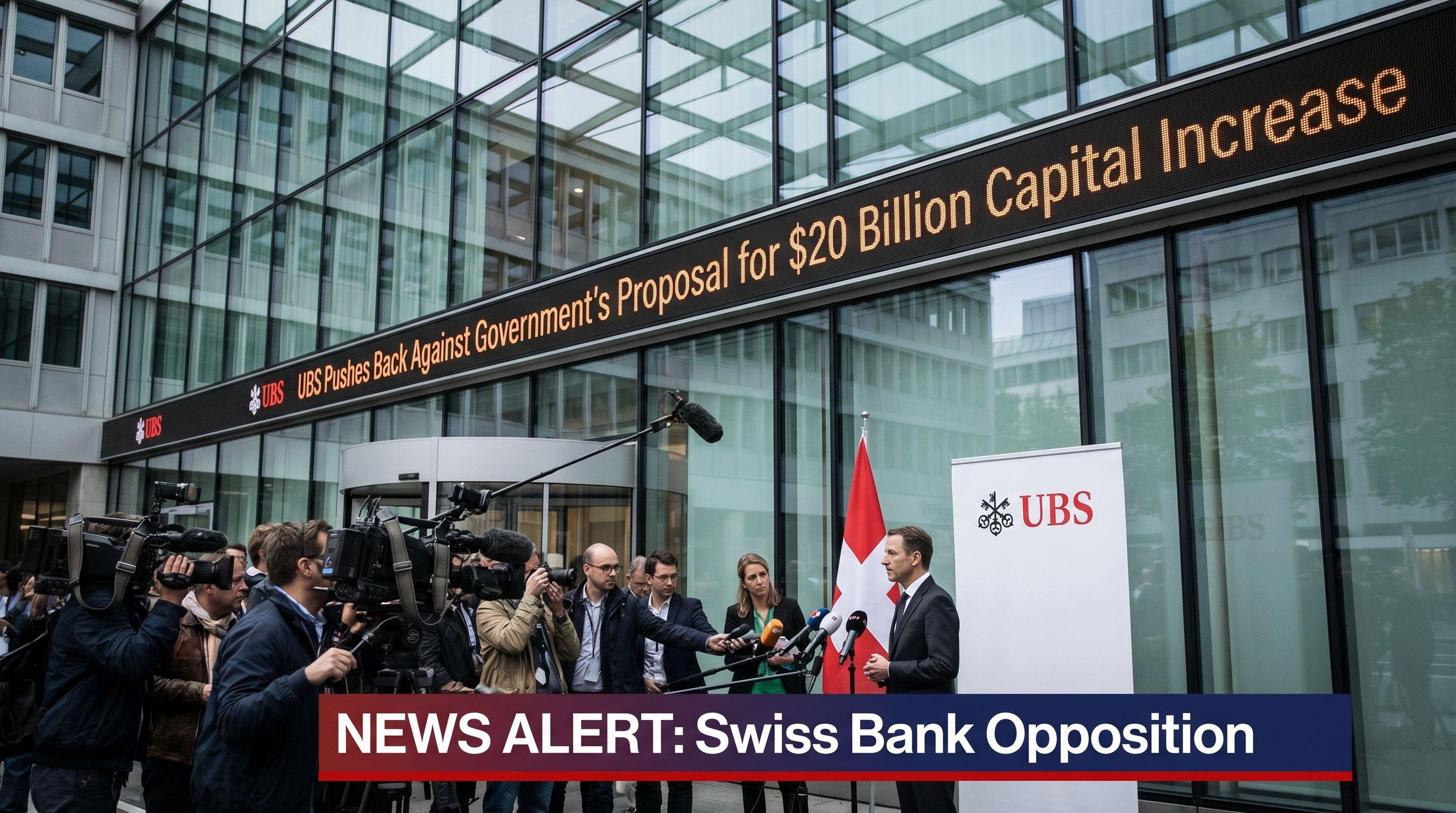
Bern Ignites a $20 Billion Financial Firestorm
A staggering $20 billion capital cushion now stands between UBS and the Swiss government as a high-stakes legislative battle erupts in Bern. The Federal Council has officially approved a dramatic tightening of the screws on systemically important banks, moving to prevent a repeat of the Credit Suisse catastrophe that nearly crippled the nation's reputation. This is not a mere suggestion; it is a direct assault on the status quo of Swiss banking. The government’s proposal demands that the nation's sole remaining global banking titan fully back its foreign subsidiary holdings with hard core capital, effectively ending an era of leveraged risk. While the move aims to shield taxpayers from future bailouts, it creates an immediate and massive financial hurdle for the world's largest wealth manager. The urgency is palpable as Parliament prepares to debate the law starting this summer session, signaling that the age of 'too big to fail' without 'too much to lose' is over.
UBS Slams 'Extreme' Mandates as Economic Threat
UBS is punching back with unprecedented ferocity, labeling the government’s $20 billion demand as 'extreme' and detached from reality. In a scathing position paper, the bank warns that such a massive capital hike will trigger 'considerable consequences' for the Swiss economy, potentially choking off credit and stifling growth. UBS executives are not just disagreeing; they are accusing the government of publishing 'misleading' statements that fail to account for the bank's existing stability. This confrontation represents a historic rift between the Swiss state and its most powerful financial institution. As the bank prepares to present its first-quarter results next Wednesday, the financial world is bracing for a defensive masterclass. UBS argues that the proposal ignores the nuances of global banking, asserting that forcing such a massive capital increase could actually weaken the bank's competitive edge on the world stage, ultimately hurting the very economy the government seeks to protect.
Closing the 50% Debt Loophole for Global Giants
At the heart of this conflict lies a technicality with billion-dollar implications: the 50% debt financing loophole. Currently, Swiss regulations allow systemically important banks to cover up to half of their foreign subsidiary holdings with debt rather than pure equity. The government’s new mandate obliterates this flexibility, requiring 100% coverage with 'hard core capital.' This shift is designed to ensure that if a foreign branch collapses, the parent company has the actual cash—not just more IOUs—to absorb the blow. For UBS, which operates a vast network of international subsidiaries, this change is transformative. By forcing the bank to swap debt for equity, the government is effectively demanding a fortress-like balance sheet. Critics within the banking sector join UBS in arguing that this 'over-collateralization' traps capital that could be used for investment, while proponents argue it is the only way to ensure the Swiss taxpayer is never again asked to foot the bill for a banking failure.
The Seven-Year Countdown to a New Banking Era
Switzerland is entering a transformative seven-year transition period that will redefine its global financial standing. If Parliament clears the proposal, UBS will have until the early 2030s to amass the required $20 billion, a timeline that suggests the government recognizes the magnitude of the shift. This is a marathon, not a sprint, but the starting gun has already fired. The implications for the Swiss people are profound: a more stable banking sector comes at the cost of a potentially less aggressive, less profitable national champion. As the debate moves to the parliamentary floor this summer, the core identity of Switzerland as a global financial hub hangs in the balance. Will the nation prioritize absolute security through rigid capital requirements, or will it blink in the face of UBS’s warnings about economic stagnation? The outcome of this $20 billion gamble will determine whether Switzerland remains a playground for global finance or becomes its most strictly guarded fortress.