Environment
Switzerland to Push for Global Fossil Fuel Phase-Out at International Summit
Ahead of a first-of-its-kind conference in Colombia, Switzerland is advocating for a clear global roadmap to transition away from fossil fuels, framing the move as a 'prerequisite for global peace' amid ongoing geopolitical tensions.
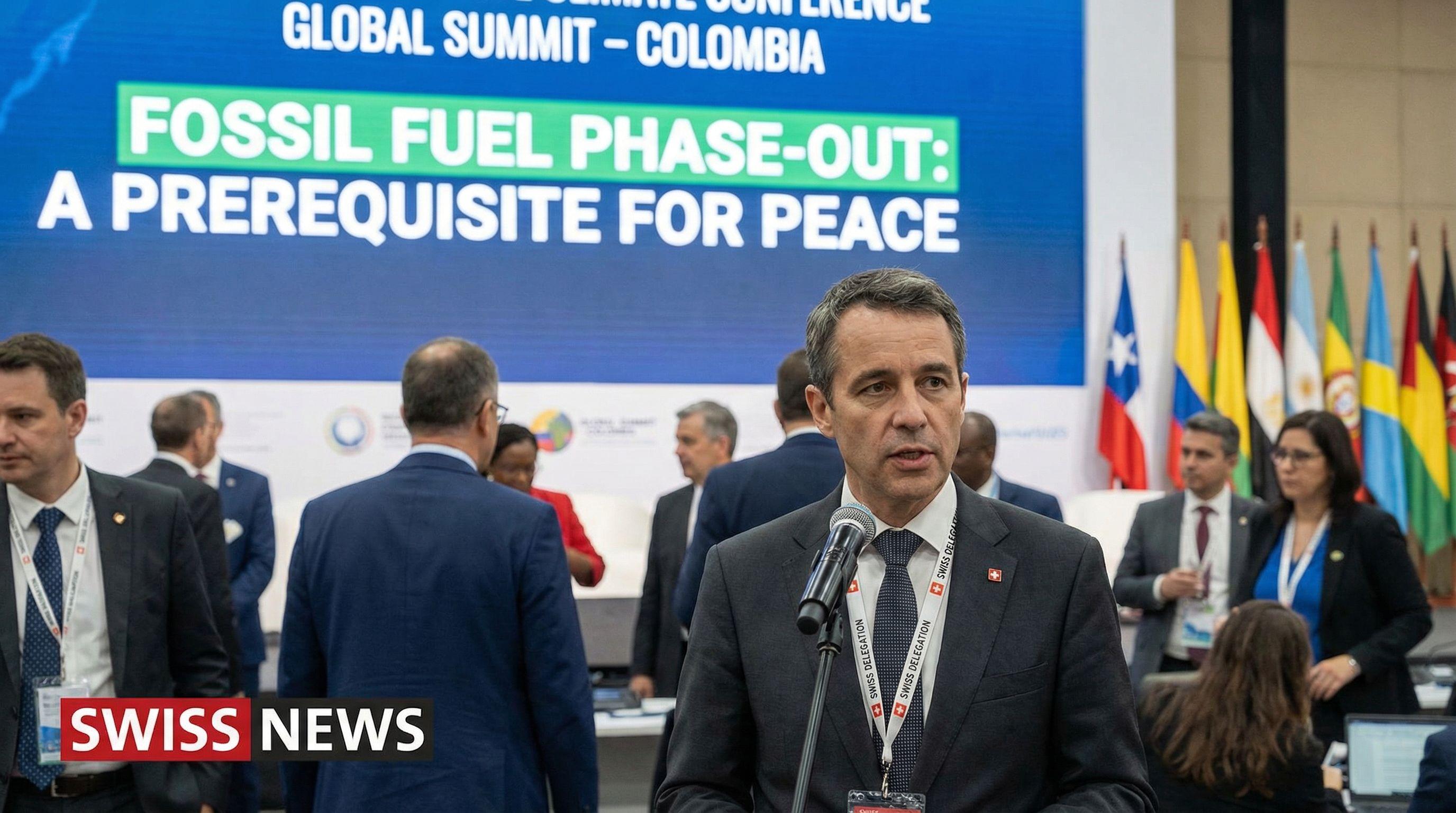
Switzerland Confronts the Global Carbon Addiction
A staggering 68% of global greenhouse gas emissions originate from a single source: fossil fuels. As the world grapples with this existential reality, Switzerland is stepping onto the front lines of climate diplomacy. From April 24 to 29, Swiss Ambassador for the Environment Felix Wertli will join representatives from 45 other nations in Santa Marta, Colombia, for a historic first. This is not just another climate talk; it is the first international summit dedicated exclusively to the controlled demise of coal, oil, and gas. While previous UN negotiations have often been criticized for moving at a glacial pace, the Santa Marta Conference aims to bypass the gridlock and establish a definitive global roadmap for a fossil-free future. Switzerland’s presence signals a bold shift in foreign policy, moving beyond mere emission targets toward a direct confrontation with the production of the fuels themselves. The stakes could not be higher as the 1.5°C warming limit hangs in the balance, demanding an immediate and orderly transition that the Swiss government is now prepared to champion on the world stage.
Energy Sovereignty as the New Peace Treaty
The transition away from fossil fuels is no longer just an environmental goal—it is a 'prerequisite for global peace.' This provocative stance, championed by the Fossil Fuel Treaty Initiative and echoed in the halls of Swiss diplomacy, gains terrifying relevance as conflict in the Middle East sends shockwaves through global energy markets. Recent disruptions, including the blockade of the Strait of Hormuz, have exposed the fragility of a world powered by extraction and scarcity. Alex Rafalowicz, executive director of the Fossil Fuel Treaty Initiative, argues that an energy system built on geopolitical competition inevitably leads to war. Switzerland, a nation that prides itself on neutrality and stability, views this summit as an opportunity to redefine security. By advocating for a legally binding treaty to halt the expansion of oil and gas, Bern is betting that decentralized, renewable energy is the ultimate safeguard against the volatility of petro-dictatorships. The Santa Marta summit serves as a strategic opening to forge new collaborations outside of traditional frameworks that have long been stifled by powerful oil lobbies.
The 68 Percent Crisis: Breaking the Extraction Cycle
More than 80 countries, including Switzerland, are now demanding a clear, actionable roadmap to dismantle the fossil fuel economy. The Santa Marta summit aims to provide exactly that, focusing on the legal tools and economic measures required to ensure the transition is 'just and orderly.' This means addressing the economic diversification of nations that currently rely on oil exports, including summit participants like Canada and Norway. The conference seeks to create a complementary intergovernmental platform that functions alongside the UN, providing a space for 'high-ambition' nations to coordinate finance and technology transfers. While the COP30 negotiations in Brazil were seen by many as stalled, the Colombian summit represents a surge of momentum for a Fossil Fuel Non-Proliferation Treaty. This proposed framework would manage the decline of existing production while scaling up renewable alternatives. For Switzerland, supporting such a treaty is a move toward systemic change, recognizing that individual national efforts are insufficient without a global, binding commitment to leave remaining carbon reserves in the ground.
Navigating the Swiss Paradox: Ambition vs. Dependency
Despite its bold international stance, Switzerland confronts a sobering internal reality: petroleum products still account for nearly 50% of the nation’s energy needs. This dependency is most acute in the transport sector and building heating, where oil and gas remain the dominant fuels. While the Swiss government pushes for a global phase-out, it must simultaneously grapple with its own reliance on imports, which have recently shifted toward US oil to buoy the market amid Middle Eastern instability. This 'Swiss Paradox'—advocating for the end of an industry it still heavily relies on—will be a central theme for the Swiss delegation in Colombia. The path forward requires a dramatic acceleration of domestic renewable projects and a total overhaul of the heating infrastructure. As Ambassador Wertli negotiates in Santa Marta, the pressure at home will intensify to align Switzerland's internal energy policy with its ambitious global rhetoric. The outcome of this summit will not just influence international law; it will set the pace for the transformation of Swiss cities and industries for decades to come.