Switzerland
Swiss drone defence lacks a central picture of potential threats
A Swiss security expert says the country lacks a centralised record of drone sightings, leaving authorities with an incomplete picture of potential threats to critical infrastructure. The army estimates that many reported incidents involve harmless hobbyists, while some may involve state-linked activity.
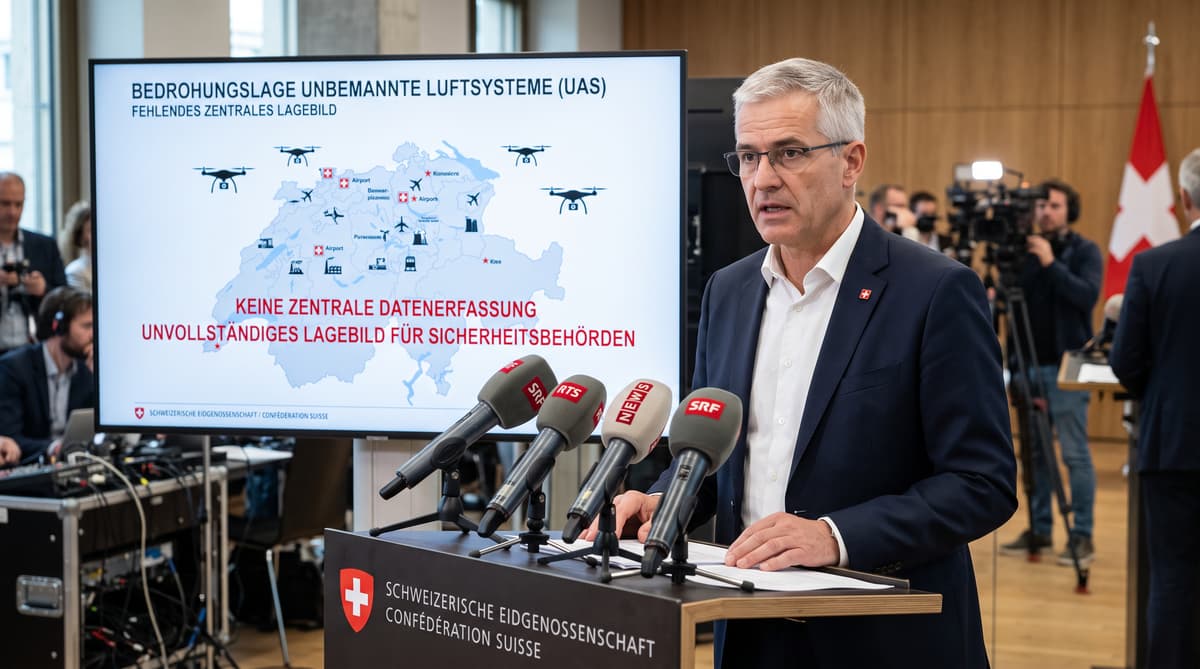
Switzerland’s authorities are tracking drone incidents without a shared national picture. A drone over an airfield or nuclear power plant may be a hobbyist’s mistake, or it may be gathering information. Security researcher Ivo Capaul says the country has lost some sense of the threat and needs to take it seriously. The army records incidents, but Capaul says the figures do not always make clear what is behind them. Its estimates suggest around 80% involve misidentifications or harmless hobbyists. In 20% of cases, a state-linked hybrid attack is considered possible. Those estimates indicate why a sighting alone cannot establish intent, while also showing why authorities need a clearer account of incidents around sensitive sites. Capaul spoke to Swiss public broadcaster SRF in an interview published on October 22, 2026.
Build a Shared Reporting Picture
Capaul wants critical-infrastructure operators to report every drone they spot. He proposes a reporting obligation similar to the one that applies to cyberattacks. A centralised record, he argues, would give Switzerland a national view of sightings and allow authorities to act on it. He also calls for sensors at critical sites to detect what is happening in the sky. Those measures address two parts of the same problem: detecting drones locally and sharing information nationally. In Capaul’s assessment, the army’s incident records do not by themselves give a clear account of what lies behind the figures. A reporting duty for infrastructure operators could bring sightings into a common picture, while sensors would help identify activity at the sites most exposed to risk. Capaul says that picture is needed before Switzerland can decide where to focus its response.
Identify the Drone and Its Purpose
A drone’s appearance does not reveal who is operating it or why. Commercial models can be registered and identified by sensors, Capaul told SRF. But an operator can build a drone from off-the-shelf parts or tamper with its control system, making identification harder and requiring sophisticated radar sensors. The possible aims of state-linked flights also extend beyond an attack with explosives. Capaul lists espionage, testing a facility’s security measures, undermining the credibility of security authorities and sowing public uncertainty among the potential objectives of hybrid operations. Attribution, he says, is difficult and time-consuming. He cited the case at Leipzig Airport, where Germany identified Russia as the perpetrator, as an exception. In most cases, establishing whether a state actor was responsible, and which one, is difficult. That uncertainty makes dependable detection and reporting central to assessing incidents.