Iran
Switzerland Halts Expulsions of Iranian Citizens Amid Regime Crackdown
In response to the ongoing violent repression of protests in Iran, the Swiss State Secretariat for Migration (SEM) has frozen the expulsion of Iranian nationals, including rejected asylum-seekers, granting them provisional admission.
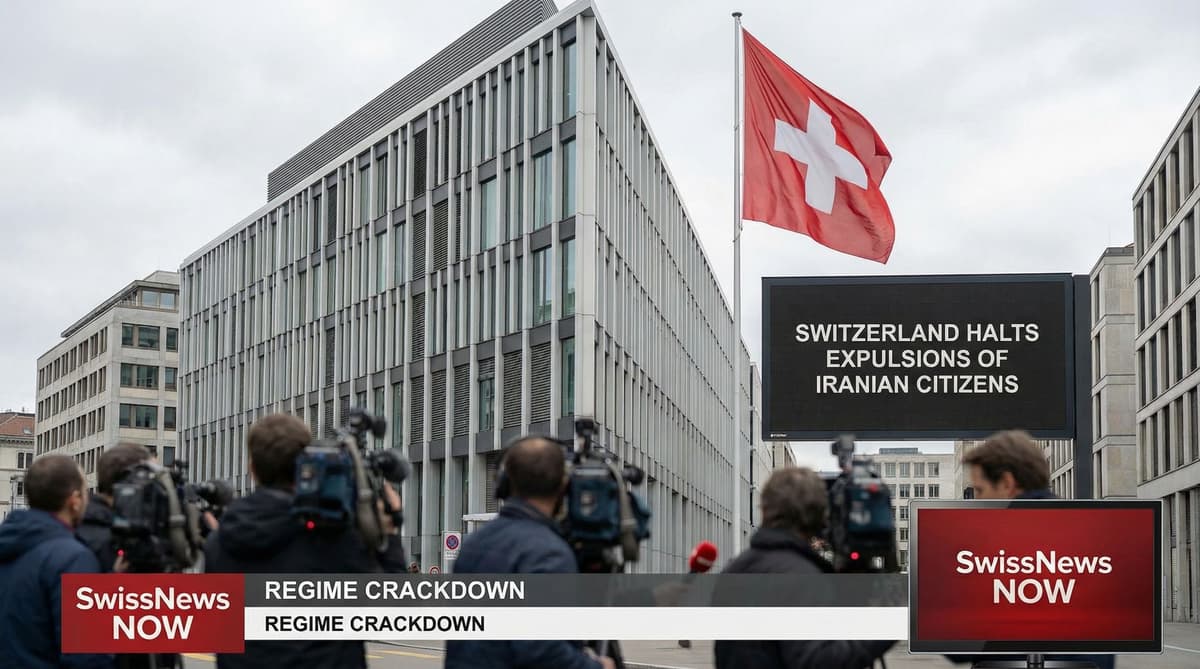
Switzerland has officially halted the forced return of Iranian nationals, a decisive move that underscores the severity of the crisis unfolding in Tehran. Effective immediately, the State Secretariat for Migration (SEM) has frozen expulsions, a policy shift that extends a critical lifeline to those fleeing the regime's iron-fisted crackdown. This directive, quietly enacted on January 13, 2026, represents a stark departure from standard protocol, acknowledging that the ground reality in Iran has shifted from unstable to perilous.
For rejected asylum-seekers, this decision changes everything. Instead of facing a forced flight back to a nation gripped by violent unrest, these individuals are now being granted provisional admission. The SEM has made it clear: sending people back into the eye of the storm is no longer an option. This is not merely a bureaucratic pause; it is a recognition that the "uncertain and difficult" situation on the ground, which has escalated since demonstrations began in December, poses an existential threat to returnees. Switzerland is effectively closing its doors to deportation flights, prioritizing human safety over strict migration enforcement in this volatile window.
Regime Brutality Triggers Global Alarm
The Swiss decision does not exist in a vacuum; it is a direct response to a staggering escalation of violence that has horrified the international community. The repression of protests in Iran has reached such critical levels that the United Nations has been forced to intervene with urgency. In Geneva, the UN Human Rights Council has launched a blistering investigation, strongly deploring the violence and demanding an immediate halt to extrajudicial executions.
By a decisive vote of 25 to 7, the Council has extended its International Fact-Finding Mission for another two years, signaling that the world is watching—and documenting—every violation. The resolution paints a grim picture of a state at war with its own people, citing enforced disappearances, sexual violence, and arbitrary detentions. Switzerland, aligning its domestic policy with this international outcry, has already summoned the Iranian ambassador to protest the bloodshed. The message from the international community is deafening: the aggressive rhetoric and threats from Tehran are unacceptable, and the safety of Iranian citizens can no longer be guaranteed within their own borders.
National Security: The Critical Exception
While humanitarian concerns are driving this policy shift, Bern remains uncompromising on one front: national security. The SEM has explicitly stated that this freeze on expulsions is not a blanket amnesty for criminals. Any Iranian national who has committed crimes or is deemed a threat to Switzerland’s internal or external security will find no sanctuary under this new rule.
This distinction is crucial. The Swiss government is balancing its humanitarian obligations with a rigorous mandate to protect its own borders and citizens. The spokesman for the SEM emphasized that those who pose a danger are "excluded from this change in practice." This ensures that while Switzerland acts as a haven for the persecuted, it does not become a refuge for those who violate Swiss law. The policy is precise and targeted—offering protection to the vulnerable while maintaining a zero-tolerance stance toward criminal elements.