climate
Swiss government backs CO₂ levy on cement imports
The Federal Council is backing a CO₂ levy on cement imports above a set quantity, intended to offset differences between Swiss and foreign production costs. The proposed border adjustment aims to prevent cement production from shifting to countries with less ambitious climate policies.
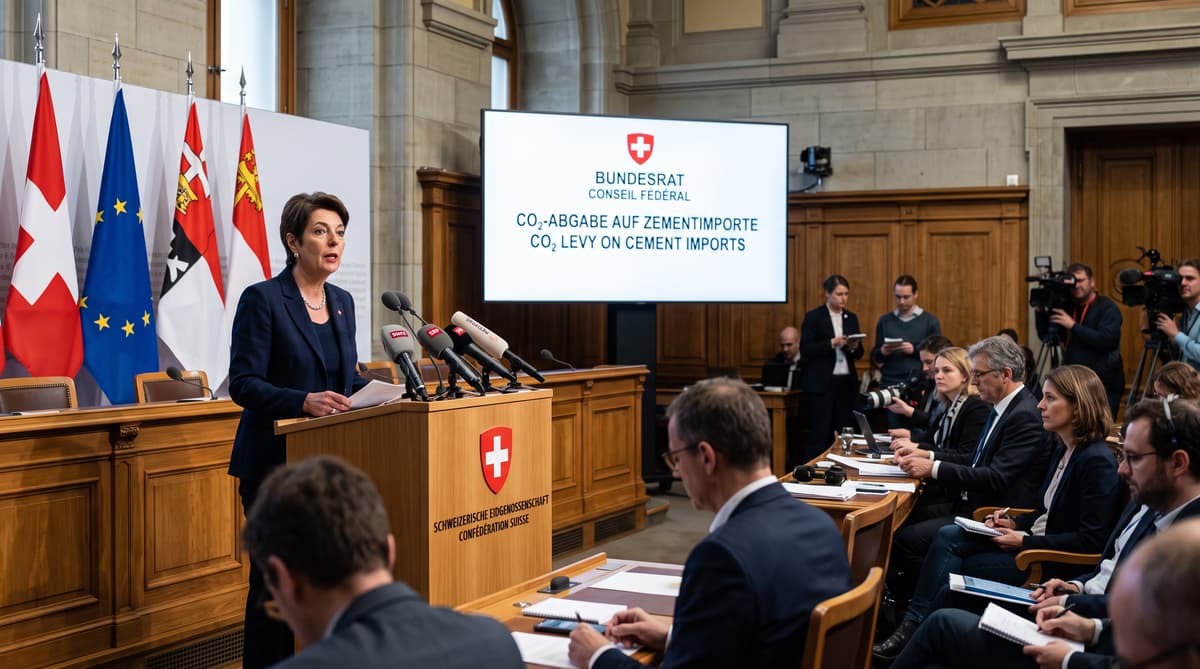
The Federal Council wants a carbon levy on cement imports above a set quantity, bringing foreign cement into a system designed to account for Swiss production costs. The government announced its backing on Wednesday, October 21, and recommended that parliament approve a bill put forward by the National Council’s Environment Committee.
The proposal is framed as a way to maintain a level playing field between cement made in Switzerland and cement produced abroad. Swiss manufacturers operate under an emissions trading scheme that puts a price on CO₂ emissions. The border adjustment would address differences between that system and the policies of countries with less ambitious climate rules.
The measure is also intended to limit the incentive to move production to countries without an emissions trading scheme. Its focus is cement imports, with the levy applying above a specified quantity. The Federal Council’s endorsement moves the proposal into parliamentary consideration, where the bill will be weighed by lawmakers.
Put carbon costs on the same footing
Swiss cement production already carries a carbon price through the country’s emissions trading scheme. The ETS sets a price on CO₂ emissions and is intended to encourage producers to cut them. That system forms the basis for the Federal Council’s argument that imported cement should face an adjustment when it comes from countries with less ambitious climate policies.
The proposed border measure would compensate for differences in CO₂ costs between Swiss production and production in third countries. The government says this would help keep the competitive conditions fair for cement made under Switzerland’s ETS. The levy would apply only to imports above a set quantity.
That link between domestic carbon pricing and imports is central to the proposal. The Federal Council says a border adjustment could reduce the incentive to relocate cement production to countries without an ETS. The announcement does not describe a change to Switzerland’s existing emissions trading scheme. It instead positions the import levy as a way to address the cost difference faced by producers operating under different climate policies.
Target imports beyond the threshold
The proposal targets cement imports above a certain quantity, rather than every shipment. The Federal Council describes the measure as a CO₂ compensation levy intended to narrow the gap between the carbon costs faced by Swiss producers and those in countries with less ambitious climate policies.
The government has recommended that parliament approve a bill from the National Council’s Environment Committee. That recommendation gives the proposal backing from the executive as lawmakers consider the committee’s bill. Its stated purpose is to preserve a level playing field for Swiss cement production while addressing the risk that production could shift to countries without an emissions trading scheme.
The proposal connects trade policy with the carbon price already applied to domestic cement production. In Switzerland, the ETS sets a price on emissions, providing producers with an incentive to reduce CO₂. The proposed border adjustment would extend the effort to account for those costs at the point where cement enters the country, once imports exceed the quantity set for the levy.