AI
Written with AI assistance•September 9, 2025•
New legislation introduces 'Professional Bachelor' and 'Professional Master' designations for vocational qualifications, aiming to enhance the status of practical education.
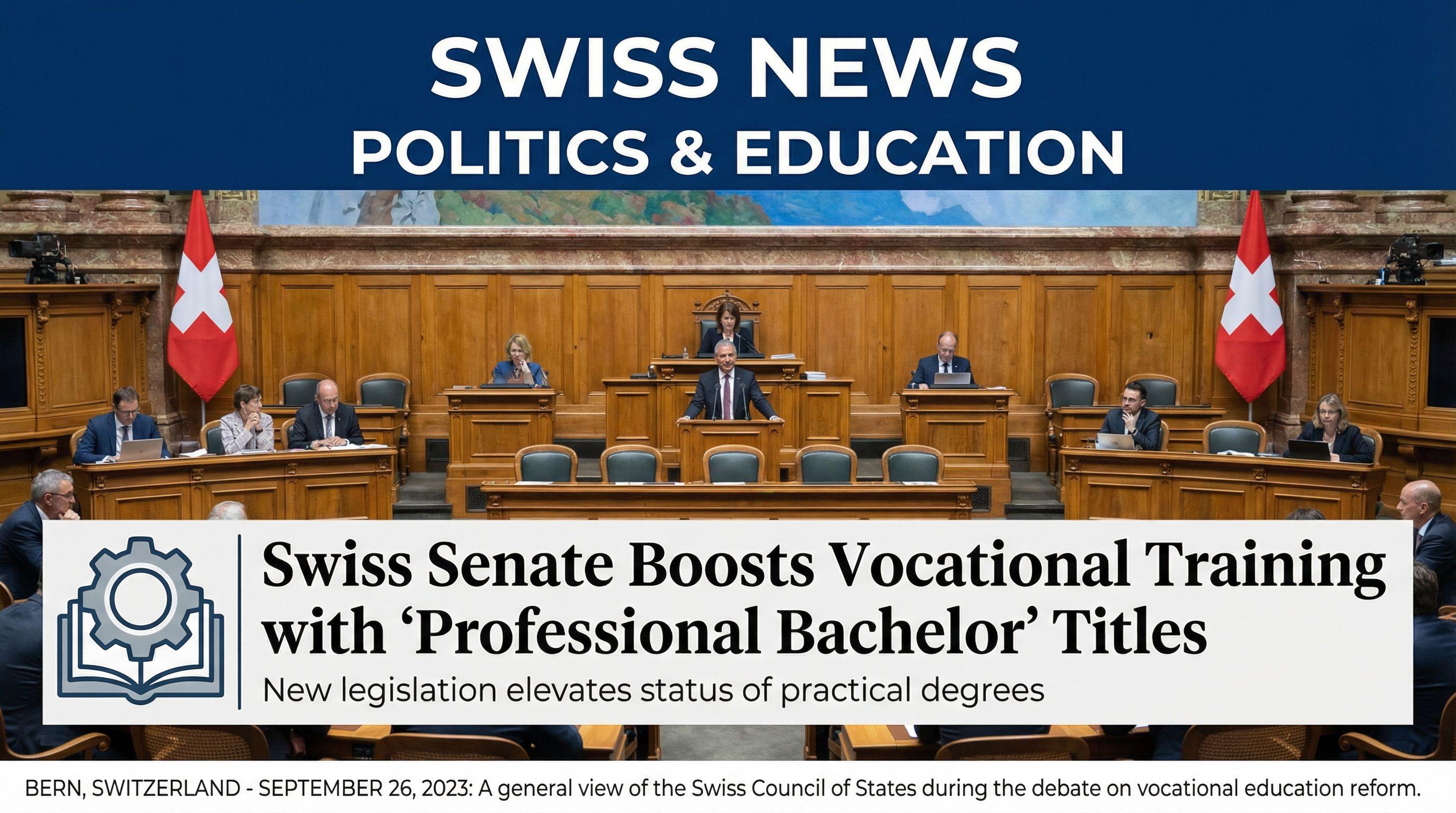
"Higher vocational training diplomas must be supplemented with the terms 'Professional Bachelor' and 'Professional Master'."
In a decisive victory for Switzerland's renowned dual education system, the Senate has overwhelmingly backed a bold government proposal to elevate vocational training. By a crushing margin of 32 votes to 10, lawmakers signaled that the days of viewing practical education as secondary to university degrees are numbered. This isn't just a bureaucratic tweak; it is a fundamental shift in how Switzerland values its workforce.
The government's plan, now ratified by the Senate, aggressively targets the "attractiveness gap" between academic and vocational paths. For too long, highly skilled Swiss professionals have grappled with international confusion regarding their credentials. This vote represents a critical first step in a four-measure strategy designed to fortify the nation's educational backbone. The message from Bern is crystal clear: vocational training is not a consolation prize—it is a pillar of the Swiss economy that demands equal prestige.
The era of the "Professional Bachelor" and "Professional Master" has arrived. Under the newly adopted measures, higher vocational diplomas will now carry these internationally recognized titles, finally bridging the linguistic and prestige gap that has plagued Swiss professionals abroad. This is a massive leap forward for the thousands of specialists who keep the Swiss economic engine running.
However, the legislation comes with a crucial stipulation: these new designations cannot stand alone. To maintain the integrity of the specific trade, the titles must be used exclusively in conjunction with the protected diploma titles. This ensures that while the status is elevated to a global standard, the specific, hard-earned Swiss qualification remains the core identity of the graduate. It is a strategic hybrid approach—keeping the Swiss tradition of specificity while adopting the global language of higher education success.
Switzerland is tearing down linguistic walls in professional testing. In a move that acknowledges the reality of a globalized economy, the draft legislation introduces English as a permissible supplementary examination language for federal professional and higher professional exams. This aligns vocational testing with other tertiary-level qualifications where English has long been a staple.
This modernization is long overdue. As Swiss industries—from precision engineering to finance—operate increasingly in English, restricting exams to national languages has become an archaic constraint. By integrating English, the government is ensuring that Swiss vocational graduates are not just technically proficient, but linguistically equipped to lead in international markets. This shift confronts the modern workforce's needs head-on, ensuring that a Swiss diploma remains a passport to global opportunity.
The Senate has spoken, but the battle for educational reform is not yet won. The dossier now hurtles toward the House of Representatives, where it faces its final test. While the Senate's 32-10 approval provides significant momentum, the National Council must now scrutinize the details to ensure the legal certainty promised to higher education institutions is watertight.
The stakes are high. This legislation does more than just hand out fancy titles; it solidifies the legal framework for institutions and validates the career paths of future generations. As the debate moves to the lower house, the pressure is on lawmakers to maintain this momentum. A rejection or dilution at this stage would be a devastating blow to the modernization of Switzerland's prized vocational system. The country watches and waits—will the House complete the transformation the Senate has started?