Business
Swiss Pharma's Global Gambit: Basel Hub Fights for Position as Firms Expand in US
While Basel's world-beating pharmaceutical hub adapts to a new global order, major Swiss firms like Roche and Novartis are aggressively expanding their footprint in the United States, particularly North Carolina, signaling a strategic shift to secure future growth.
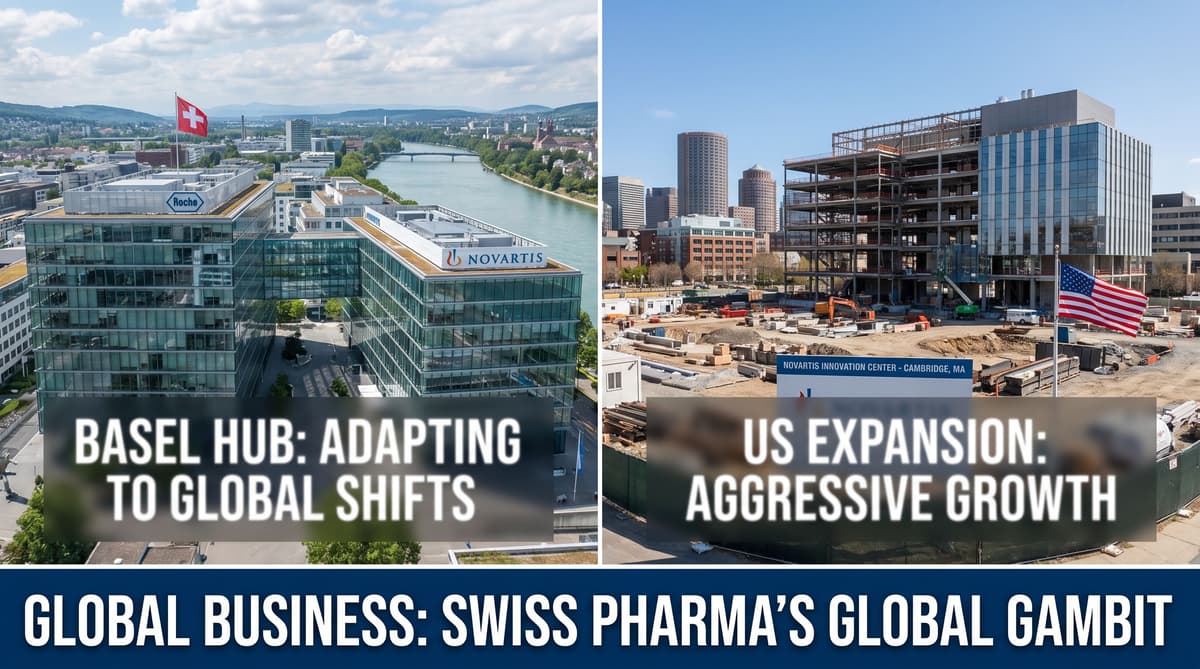
Basel City is a titan of wealth, boasting a staggering GDP per capita of CHF 204,070—more than double the Swiss national average. For nearly two centuries, this Rhine-side enclave has dictated the pulse of global medicine, with the white towers of Roche and the sprawling Novartis campus serving as monuments to Swiss industrial supremacy. Today, however, that dominance is under unprecedented pressure. Basel City alone generates 36% of Switzerland’s total exports, but as artificial intelligence and geopolitical volatility rewrite the rules of drug discovery, the city’s legacy is becoming a vulnerability. New competitors from Suzhou to Madrid are moving faster and cheaper, forcing Basel to fight a multi-front war to retain its status as the world's premier pharma hub. The industry is at a turning point where history is no longer a guarantee of future prosperity.
The $200 Billion American Exodus
A massive wave of Swiss capital is surging across the Atlantic, with companies pledging a monumental $200 billion in US investments by 2028. This is not a gradual shift; it is a strategic stampede. By the end of 2026, over $67 billion will already be deployed on American soil. Driven by a 'tariff headlock' and the lure of massive market access, Swiss giants are prioritizing US expansion to secure their future growth. While firms like Ypsomed remain committed to Swiss R&D, the reality is stark: production is migrating. CEO Simon Michel’s CHF 200 million investment in Holly Springs is a clear signal that the local markets of the US and China are now the primary targets for manufacturing. The Swiss pharma machine is no longer just exporting pills; it is exporting its very infrastructure.
North Carolina's Aggressive Charm Offensive
North Carolina has emerged as a formidable rival, weaponizing tax incentives and a specialized workforce to lure Swiss industry leaders. Governor Josh Stein is leading an aggressive campaign that has already captured 80 Swiss companies, employing over 8,100 residents. Roche and Novartis are currently pouring hundreds of millions into massive new production facilities in the state, drawn by the promise of stability and a location that puts 150 million consumers within a day's drive. Unlike the traditional hubs of Boston or Cambridge, Raleigh offers a lethal combination of top-tier research and lower operational costs. The message from the US Southeast is clear: they aren't just looking for partners; they are looking to replace Basel as the center of gravity for the next generation of life sciences.
A Precarious Crossroads for the Rhine
The warning from industry leaders is blunt: 'If we don’t act, the golden age will be over.' René Buholzer of Interpharma describes a nation at a critical crossroads where the old certainties have evaporated. Switzerland’s high-cost environment is grappling with a world where AI-driven drug discovery and national security-driven manufacturing are the new norms. While Basel remains a powerhouse of innovation, the aggressive expansion of its flagship firms abroad suggests a hedging of bets that should alarm policymakers in Bern. To survive, Basel must evolve beyond its 19th-century chemical roots and embrace a radical digital transformation. The fight for the next century of medicine has moved beyond the Rhine, and Switzerland must now prove it can still lead in a world that is no longer waiting for it.