Environment
Switzerland's 'Forever Chemical' Crackdown Faces Resistance from Farmers
A federal government plan to mandate testing for PFAS 'forever chemicals' in food and to ban contaminated products is meeting opposition from cantonal authorities and farming groups, setting up a contentious debate between public health protection and agricultural interests.
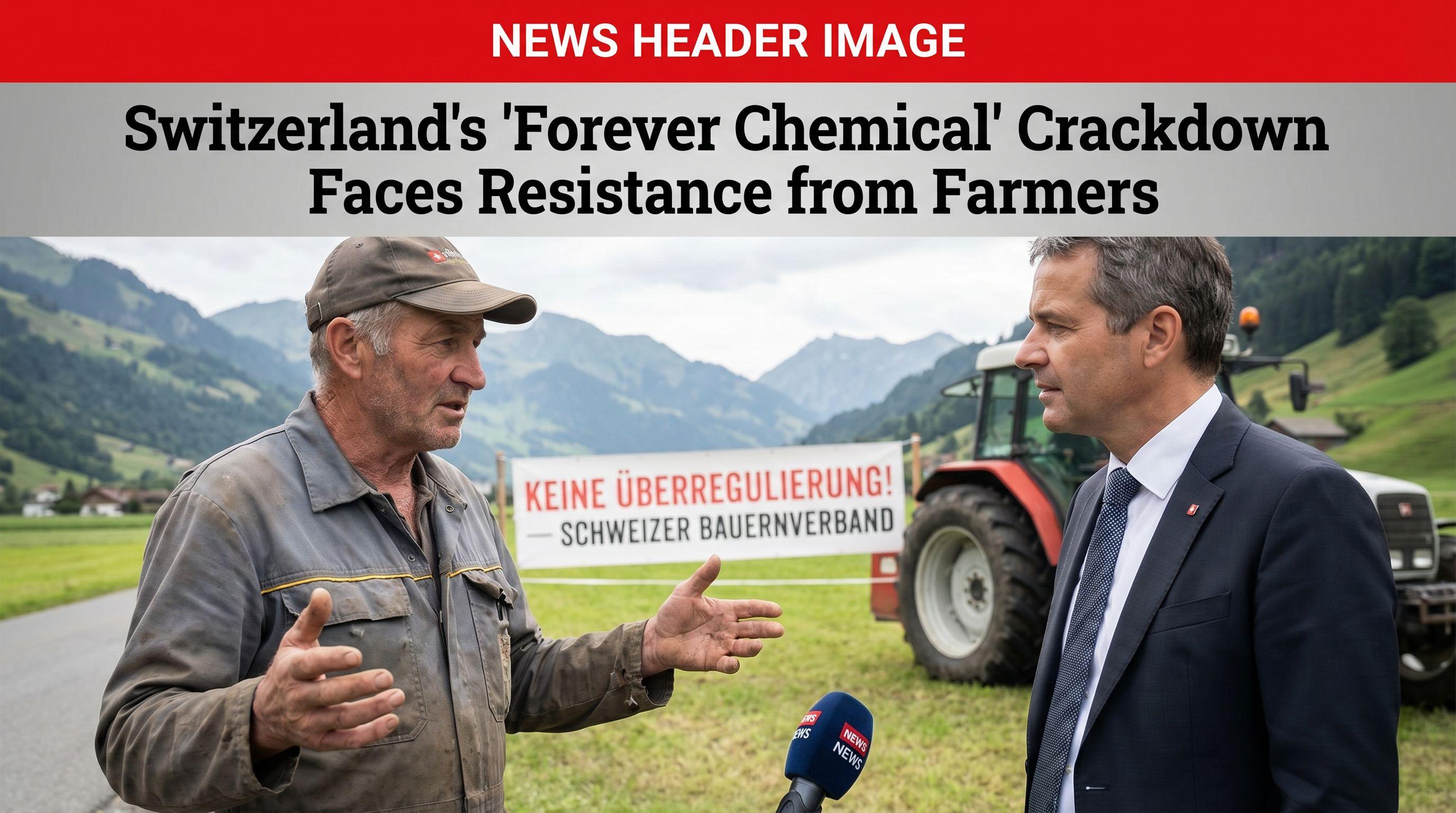
Bern Ignites a Food Safety Firestorm
Switzerland is at a breaking point as the federal government prepares to drop a regulatory hammer on the nation’s food supply. The Federal Food Safety and Veterinary Office (FSVO) is moving with unprecedented speed to mandate that cantons hunt down PFAS—the notorious 'forever chemicals'—in every steak and egg destined for Swiss dinner tables. This isn't just a suggestion; it is an ultimatum. Officials are demanding that cantonal authorities enforce immediate sales bans on any product exceeding legal limits. The FSVO’s stance is uncompromising: 'Waiting is not a solution.' While the government insists it is merely enforcing existing laws, the sudden shift toward aggressive testing represents a dramatic escalation in the war against industrial pollutants. For decades, these synthetic compounds have leached into the environment, and now, the bill has finally come due. The move targets a massive range of synthetic chemicals used in everything from firefighting foams to non-stick pans, substances that refuse to break down and instead accumulate relentlessly in the human body. As Bern tightens the noose, the administrative machinery of the Swiss Confederation is bracing for a collision with the very people who feed the country.
Farmers Confront Financial Ruin
A staggering wave of anxiety is sweeping through the Swiss countryside as farmers face the prospect of total economic collapse. In cantons like St. Gallen, Zurich, and Fribourg, the agricultural sector is sounding a frantic alarm: a single positive PFAS test could result in an entire herd being barred from sale, effectively bankrupting family farms overnight. This is not a theoretical threat; it is a clear and present danger to the Swiss pastoral way of life. Cantonal governments are now pushing back against Bern, demanding to know who will pay the price for a contamination problem that farmers did not create. While the federal government views this as a localized issue, regional leaders argue the impact is systemic. Glarus and Fribourg have joined a growing chorus calling for a national compensation fund to shield producers from the fallout of these bans. Without financial guarantees, the crackdown risks transforming a public health victory into an agrarian catastrophe. The tension is palpable as the Swiss farming lobby, one of the nation's most potent political forces, prepares to dig in its heels against the federal directive.
The Toxic Legacy in Swiss Soil
PFAS are the invisible invaders of the Swiss landscape, and their persistence is terrifying. These chemicals, prized since the mid-20th century for their resistance to heat, water, and grease, have become a permanent fixture in our ecosystem. They do not degrade; they only accumulate. From industrial landfills to wastewater treatment plants, these toxins leach into the very soil and groundwater that sustain Swiss agriculture. The health implications are alarming: sustained exposure is linked to liver damage, hormonal disruption, and even certain cancers. Most concerning is the impact on the next generation, with data showing a direct correlation between PFAS levels and lower birth weights. Because these chemicals move through the food chain—concentrating in fish, meat, and dairy—the Swiss diet has become a primary vector for exposure. The FSVO’s crackdown is a desperate attempt to sever this link, but the sheer scale of environmental saturation suggests that the problem may be far more widespread than currently admitted. We are grappling with a legacy of industrial convenience that now threatens the fundamental safety of our food supply.
Parliamentary Compromise or Public Health Risk?
In a move that has stunned health advocates, the Swiss Parliament has endorsed a controversial 'dilution' strategy to keep meat on the shelves. Lawmakers have backed a proposal that would allow contaminated meat to be mixed with clean products until the overall PFAS concentration falls below legal thresholds. It is a pragmatic, if polarizing, attempt to balance economic survival with consumer safety. While this 'flexible' approach offers a lifeline to struggling farmers, critics argue it gambles with public health by allowing known toxins to remain in the food supply. The FSVO now finds itself in a high-stakes balancing act, tasked with implementing this parliamentary decision while maintaining the integrity of Swiss food standards. Proposals for the final directive are expected later this summer, and the eyes of the nation are on Bern. Will Switzerland set a global gold standard for chemical regulation, or will economic pressure force a compromise that leaves citizens at risk? The outcome of this debate will define Swiss environmental and agricultural policy for the next generation. One thing is certain: the era of ignoring 'forever chemicals' is officially over.