politics
Swiss Parliament Divided Over How to Fund 13th Pension Payment
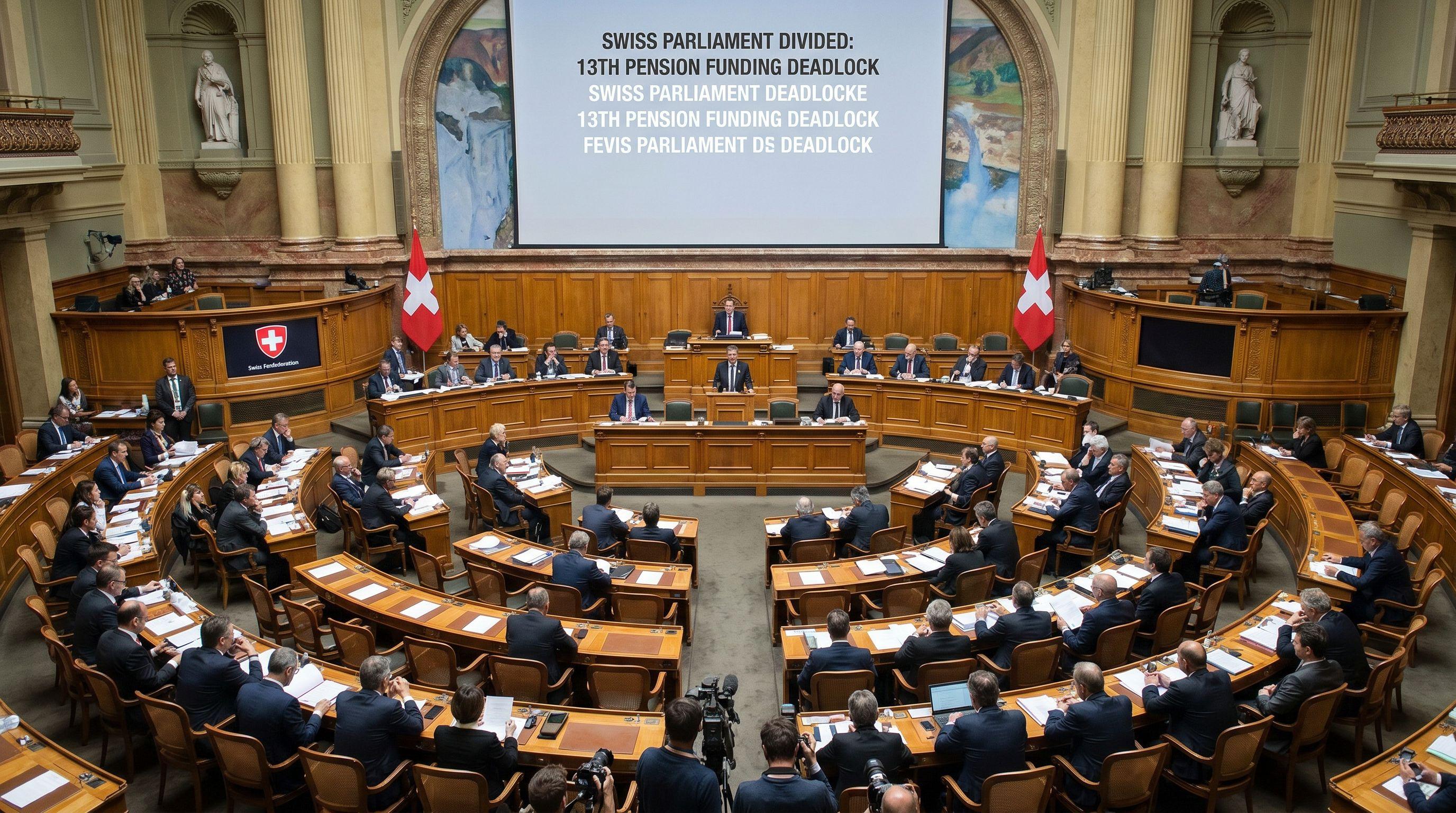
The Swiss Senate and House of Representatives are at odds over how to finance the voter-approved 13th monthly pension payment. The Senate backs a mix of increased VAT and higher employee contributions, while the House had previously favored a VAT-only solution, setting the stage for a critical political decision on the future of the pension scheme.
A Nation at a Fiscal Crossroads
Switzerland confronts a high-stakes political deadlock that threatens the very stability of its social contract. Following the historic voter approval of a 13th monthly pension payment, the Swiss Parliament is now locked in a fierce ideological battle over who will foot the multi-billion franc bill. This is not merely a budgetary dispute; it is a fundamental clash over the future of the Swiss economy. While the people have spoken, demanding relief for pensioners struggling with soaring living costs, the mechanism to deliver that relief remains dangerously undecided. The clock is ticking toward a December deadline, and the failure to reach a consensus could leave the state pension scheme (AHV/AVS) in a precarious financial limbo. The tension in Bern is palpable as lawmakers grapple with the reality that there is no such thing as a free lunch in social policy.
The VAT-Only Gamble
A razor-thin margin of 99 votes to 97 recently saw the National Council double down on a VAT-only solution. By rejecting a more diversified funding model, the lower house is betting everything on a consumption tax hike that would last until 2033. Proponents argue this protects the shrinking working population from direct salary deductions, but critics see it as a regressive move that hits the poorest hardest at the checkout counter. This temporary fix aims to buy time—nearly a decade of it—to overhaul a pension system that many experts warn is fundamentally unsustainable. However, Federal Councillor Elisabeth Baume-Schneider has issued a stinging reminder: the 13th pension payment is permanent, while this proposed funding is merely a stopgap. The National Council's refusal to blink sets the stage for a dramatic showdown with the Senate.
Senate Demands Shared Sacrifice
In stark contrast, the Council of States is championing a 'shared sacrifice' model that refuses to let payrolls off the hook. The Senate's proposal demands a 0.2 percentage point increase in employee contributions alongside a 0.4 percentage point VAT hike. This mixed approach seeks to balance the burden between consumers and the workforce, ensuring that those with higher salaries contribute more to the collective pot. Left-wing parties are rallying behind this payroll-heavy strategy, accusing conservative rivals of using the funding crisis as a Trojan horse to eventually raise the retirement age. The Senate argues that relying solely on VAT is a fiscal fantasy that ignores the long-term math of an aging society. As June 17 approaches, the pressure on the House of Representatives to accept this compromise or face a total collapse of the funding plan is reaching a fever pitch.
The Looming Demographic Shadow
Beyond the immediate political bickering lies a staggering demographic reality: Switzerland's pay-as-you-go system is under unprecedented strain. As the 'baby boomer' generation enters retirement, the ratio of workers to pensioners is plummeting, creating a structural deficit that no single tax hike can fully bridge. If the House rejects the Senate's proposal on June 17, the 13th pension will still be paid out starting this December, but the lack of a clear funding source will force the government to dip into reserves or increase debt. This is a critical moment for the Swiss Confederation. The decision made in the coming days will not only determine how much more a cup of coffee costs or how much is deducted from a monthly paycheck; it will define whether Switzerland can maintain its reputation for fiscal discipline while honoring its promises to the elderly. The eyes of the nation are on Bern.