International
Swiss National Killed in Attack in Central African Republic
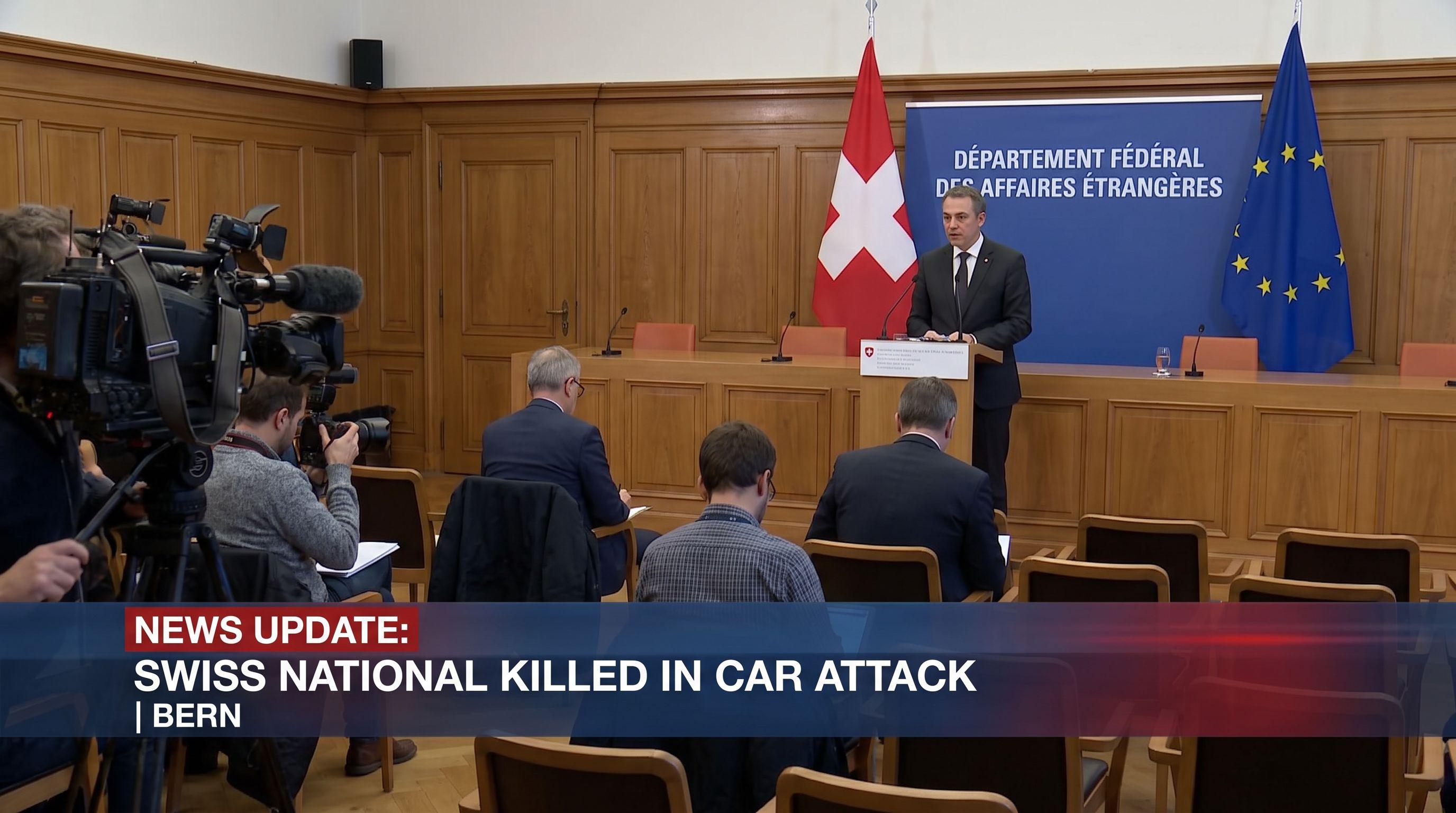
A Swiss national has been killed in an attack near Damara in the Central African Republic. The individual was reportedly in the region for mineral prospecting and was traveling with a military escort who was also killed. The Federal Department of Foreign Affairs has confirmed the death.
Tragedy Strikes in the Heart of Africa
Violence erupts with lethal precision just 50 kilometers north of Bangui, claiming the life of a Swiss citizen in a brutal ambush. The attack occurred near the town of Damara, a region now stained by a confrontation that left both a Swiss national and a Central African soldier dead. This isn't just a remote tragedy; it is a stark reminder of the volatile reality facing those operating in the world's most unstable frontiers. The victims were traveling through a landscape where security is often an illusion, and 'unidentified armed bandits' dictate the terms of survival. While the Central African Republic has seen marginal improvements since the bloody civil wars of the 2010s, this latest bloodshed proves that peace remains a fragile commodity. The bodies have already been transferred to the capital, marking the beginning of a grim judicial process. Local authorities now grapple with the daunting task of identifying the perpetrators in a region where lawlessness frequently evades the reach of the state. For Switzerland, this event serves as a harrowing wake-up call regarding the safety of its citizens abroad in high-risk zones.
Blood for Minerals: The High Price of Prospecting
Mineral prospecting is a high-stakes gamble that has turned fatal. The Swiss national was reportedly in the region to locate lucrative mineral deposits—a venture that requires venturing deep into territories where the promise of gold and diamonds attracts both legitimate investors and violent predators. Despite the presence of a military escort, a non-commissioned officer who also perished in the assault, the protection was insufficient against the sudden ferocity of the attackers. This incident highlights the extreme risks inherent in the extraction industry within the Central African Republic. The country sits atop vast natural wealth, yet it remains one of the poorest nations on the planet, creating a desperate environment where resource exploration is often met with armed resistance or banditry. The Swiss prospector was not merely a traveler but a participant in a high-risk economic frontier. The contrast is jarring: a citizen of one of the world's wealthiest and most stable democracies losing their life in a pursuit of wealth in a nation defined by its lack of both. This tragedy underscores the lethal intersection of global commodity demand and local instability.
Diplomatic Machinery Grinds into Action
Bern has officially confirmed the nightmare scenario. The Federal Department of Foreign Affairs (FDFA) reacted swiftly, acknowledging the death of the Swiss national following inquiries from Keystone-SDA. Currently, the Swiss Cooperation Office in Bangui and the Swiss Embassy in Yaoundé, Cameroon, are operating at full capacity to coordinate consular protection and assistance. This diplomatic surge is critical, as Switzerland maintains no full embassy within the Central African Republic itself, relying instead on regional hubs to manage such crises. The FDFA is now in direct contact with local authorities to ensure a thorough investigation is launched. Central African judicial officials have pledged to prosecute the perpetrators, but the path to justice in a region plagued by 'armed bandits' is notoriously arduous. Swiss officials are navigating a complex web of international protocol and local instability to provide support to the victim's family. This case puts the Swiss consular network to the test, demanding seamless communication across borders to manage the repatriation and the legal aftermath of a crime committed in a jurisdictional gray zone.
Navigating a Fragile Security Landscape
The Central African Republic remains a land of profound contradictions and persistent peril. Bordered by volatile neighbors like Sudan and the Democratic Republic of the Congo, the nation is a geopolitical tinderbox. While the security situation has technically improved since the peak of the civil war a decade ago, this latest attack near Damara exposes the hollow nature of that 'improvement.' The presence of unidentified armed groups continues to undermine the central government's authority, making every journey outside the capital a calculated risk. For the Swiss community and international investors, this event serves as a critical warning: the allure of the CAR’s rich mineral resources is inextricably linked to its endemic violence. As the investigation unfolds, the international community will be watching to see if the Central African government can actually hold the 'bandits' accountable or if this will become another cold case in a history of impunity. Switzerland’s ongoing aid and cooperation efforts in the region face a new, grim context. The future of Swiss involvement in such high-risk environments will undoubtedly be shaped by the fallout of this tragedy, forcing a re-evaluation of how citizens are protected when they venture into the world's most dangerous territories.