Environment
Switzerland Unlikely to Meet 2030 Climate Goals, Admits Environment Minister
Environment Minister Albert Rösti has stated that Switzerland will struggle to meet its 2030 emissions reduction targets due to budget constraints, raising questions about the nation's climate strategy amidst a summer of extreme weather.
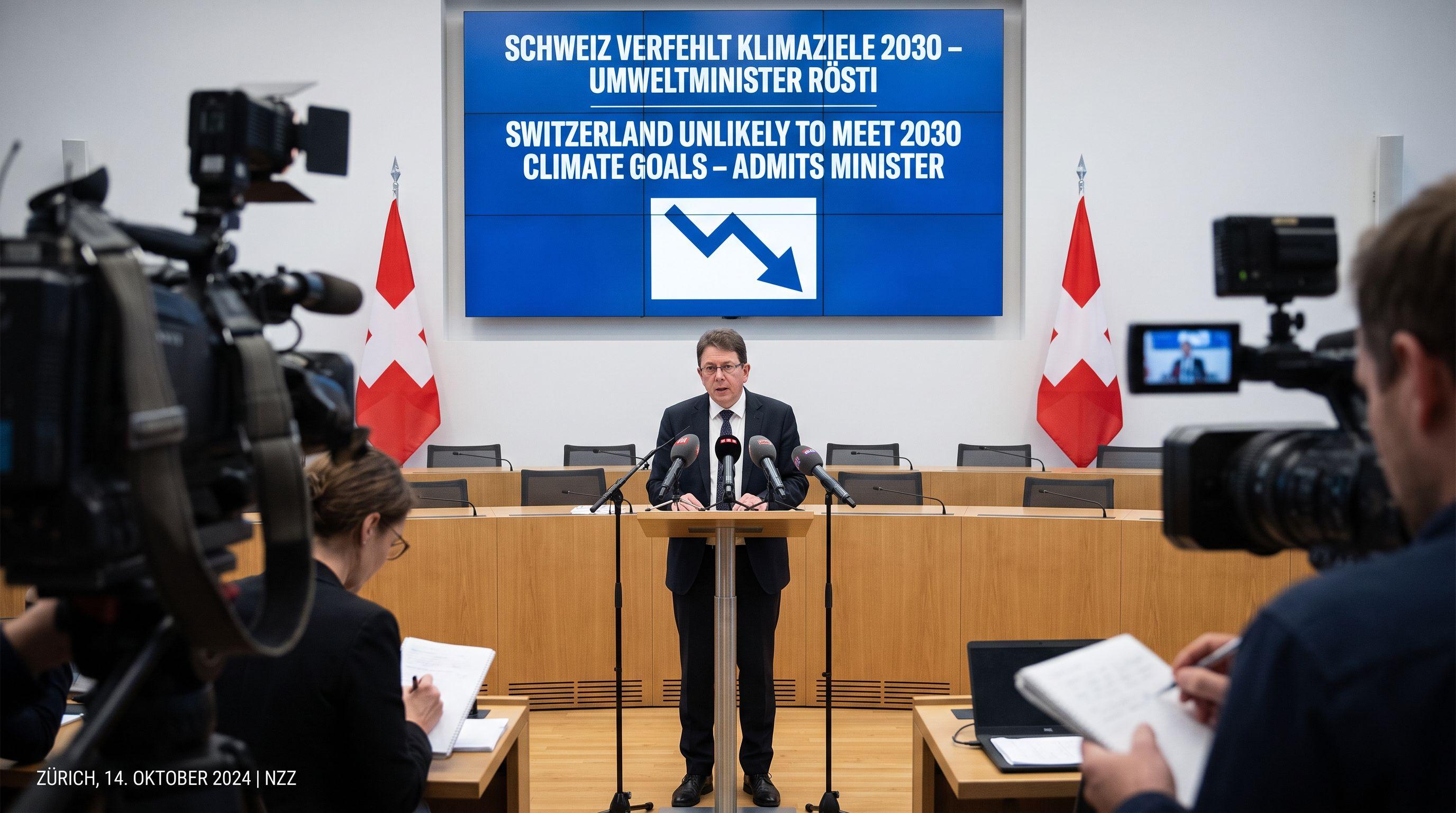
The Climate Reality Check
Switzerland’s green reputation is colliding with a cold, hard fiscal wall. Environment Minister Albert Rösti has delivered a blunt admission: the nation is on track to fail its 2030 emissions targets. While the government officially remains committed to halving greenhouse gas emissions by the end of the decade, the political will to fund that promise has evaporated. This admission comes at a critical juncture as the country grapples with a summer defined by unprecedented heat and record-shattering droughts. The gap between climate rhetoric and budgetary reality has never been wider. Switzerland, a nation that prides itself on precision and reliability, now faces the humiliating prospect of missing a landmark international commitment. This is not just a policy failure; it is a signal to the global community that even the wealthiest nations are flinching when the bill for carbon neutrality arrives. The targets set under the Paris Agreement are slipping through our fingers, leaving the 2050 net-zero goal looking increasingly like a fantasy.
The Price of Inaction
A staggering CHF 400 million shortfall stands between Switzerland and its climate obligations. Minister Rösti confirmed that the federal government simply cannot find the additional funds required to purchase the international carbon credits that underpin the Swiss reduction strategy. These credits are the 'dirty work' of Swiss climate policy, allowing the nation to offset its domestic footprint by financing green projects abroad. Without this annual investment of CHF 300 to 400 million, the math for 2030 fails to add up. Critics argue that relying on foreign offsets was always a precarious gamble, and now, that gamble is failing. While the government maintains a strict 'debt brake' policy, the environmental cost of this frugality is soaring. The minister suggests that if the 2030 targets are missed, the subsequent decade will require a radical intensification of measures, potentially extending emissions trading to everyday essentials like heating and transport. We are choosing to save centimes today only to pay billions in environmental and economic penalties tomorrow.
Parched Alpine Landscapes
More than 150 Swiss towns are currently rationing water, a shocking statistic for a country often called the 'moat of Europe.' As the government admits it cannot afford its CO2 targets, the physical consequences of climate change are already draining the nation's reservoirs. From the Jura to the Alps, 151 municipalities have been forced to ban residents from filling swimming pools or watering gardens. This is no longer a distant threat; it is a daily reality for thousands of Swiss citizens. The Environment Ministry is now scrambling to submit a new national strategy for water supply to the Federal Council, aiming to improve inter-cantonal coordination before the taps run dry in even more regions. While the current adaptation fund sits at a modest CHF 30 million, Rösti acknowledges that resources for adaptation must increase dramatically. The contrast is jarring: while the state hesitates to spend on prevention, it is being forced to spend on survival. Switzerland is water-rich, yet it is failing to manage the very resource that defines its geography.
The 2040 Pivot
The focus is now shifting to a new, aggressive CO2 Act for the 2030–2040 period. Minister Rösti, a prominent figure in the right-wing Swiss People’s Party, is preparing to put this legislation out for consultation shortly. The message is clear: the 2020s may be a lost decade for Swiss climate ambition, but the 2030s will be a decade of reckoning. This new law will likely introduce more stringent domestic measures to compensate for the current shortfall, including the potential expansion of emissions trading into the transport and building sectors. This move would represent a significant shift in Swiss policy, placing the burden of reduction directly on the shoulders of consumers and industry. As the government pivots, the pressure from the streets and the scientific community is mounting. Switzerland stands at a crossroads. Will it continue to manage its decline through budgetary excuses, or will the new CO2 Act provide the teeth necessary to bite into the carbon crisis? The next four years will determine if Switzerland remains a leader in innovation or becomes a cautionary tale of missed opportunities.