Switzerland
Three Swiss cantons face complaint over alleged historical links to slavery
Zurich, Bern and Solothurn are facing a criminal complaint over allegations that their historical predecessors helped finance slavery in the 18th century. The Swiss Office of the Attorney General must now determine whether an investigation is warranted.
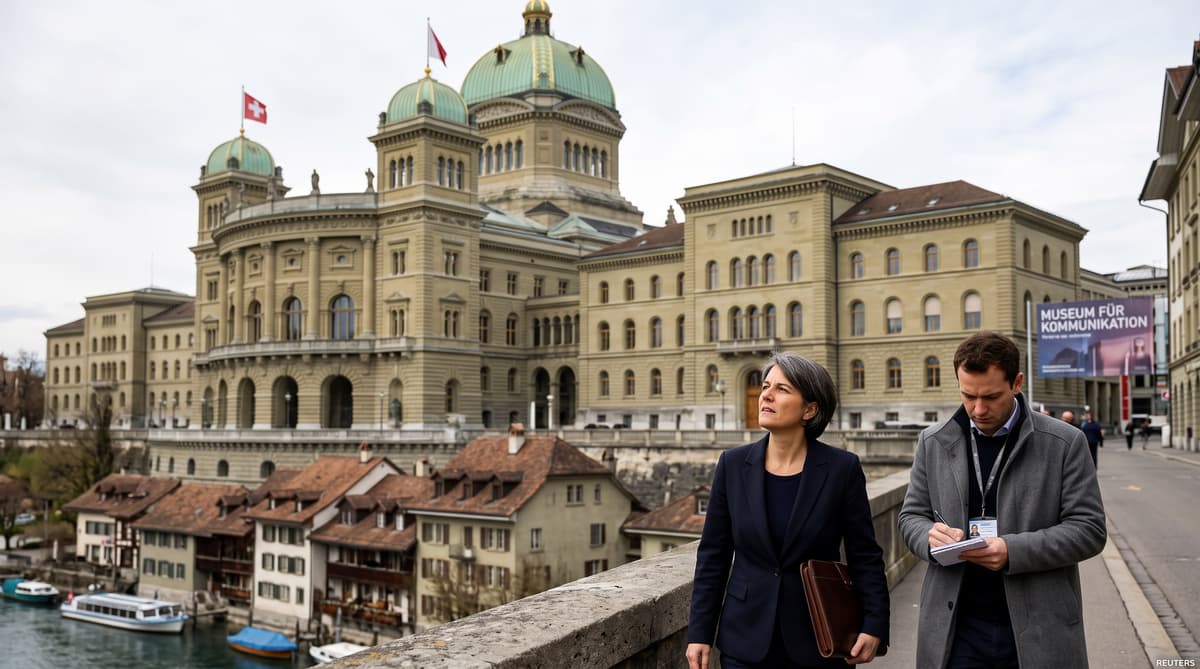
A complaint filed in early September has placed Switzerland's colonial past before federal prosecutors. Lawyer Catherine Reiter submitted the filing on behalf of activist Shelley Moorhead, naming the cantons of Zurich, Bern and Solothurn. The complaint alleges that the historical predecessors of the three cantons helped finance institutions and governments connected to slavery during the 18th century.
The Swiss Office of the Attorney General must first determine whether the allegations meet the threshold for a criminal investigation. The filing does not establish that the cantons committed a crime, and the legal assessment remains pending. It asks prosecutors to examine conduct carried out by earlier political entities, including city-states that formed part of the Old Swiss Confederacy before the creation of modern Switzerland.
The case joins a growing European debate over how public institutions should account for wealth accumulated through colonial commerce. In Switzerland, the issue has particular force because the country had no formal overseas empire, yet merchants, investors, soldiers and financial institutions participated in wider European economic networks. The complaint seeks to test whether those historical connections can still carry legal consequences.
Follow Zurich's financial trail
Hans Fässler's report traces the allegations through investments, loans and state finance. The St Gallen historian, writer and political activist has spent years studying Switzerland's connections to colonialism and slavery. His work examines how members of the Old Swiss Confederacy participated in an economic system that extended well beyond Swiss borders.
For Zurich, Fässler cites investment in the British South Sea Company, an enterprise involved in the transatlantic slave trade. He also examines the later activities of Bank Leu, a state-owned institution that conducted business with the Danish Crown and lent money to companies and banks tied to plantation agriculture and the slave trade. Fässler says these transactions allowed Zurich to benefit from colonial structures.
His account treats public finance as a central part of the story. The alleged connection does not depend on Zurich operating plantations itself. It rests on the claim that investments and credit helped sustain institutions whose revenues depended on forced labour. Prosecutors would have to assess the historical evidence, the role of each institution and the legal responsibility of the political entities that inherited or represented those interests.
Trace Bern's investments
Bern's alleged involvement reaches back to an investment cited from 1719. Fässler's report says the city-state invested substantial sums in the British South Sea Company and held Danish government bonds for decades. Denmark's Caribbean colonies relied on enslaved labour, and the report argues that Bern's investments helped finance a state connected to that system while producing returns for the Bernese treasury.
The claim places public investment decisions inside the broader financial architecture of European colonialism. Bonds and company shares could move money across borders without requiring investors to travel to, administer or directly own a plantation. That distance, Fässler argues, did not erase the economic relationship between capital and forced labour.
The report also examines the Karrer Marine Infantry Regiment, later known as the Hallwyl Regiment. Swiss troops in French service were stationed at naval depots and colonial garrisons in North America and the Caribbean. Fässler writes that units fought Indigenous populations and helped suppress slave rebellions. The cantons tolerated these deployments, although the source says they were not covered by the mercenary contracts then in force. The legal significance of those actions is now part of the complaint's wider argument.
Map Solothurn's colonial connection
Solothurn's alleged link runs through the French Mississippi Company. Fässler identifies holdings in the company, which supported France's colonial expansion in North America and relied on enslaved labour. The report presents those holdings alongside Zurich's financial dealings and Bern's investments as evidence that several Swiss political centres gained exposure to colonial enterprises.
The historical record also raises a question about knowledge. Fässler reviewed travel accounts, newspapers, scholarly works, correspondence and biographies. He concludes that educated circles in Switzerland knew about the slave trade, plantation agriculture and the conditions endured by enslaved people. That finding matters to the complaint because it challenges any suggestion that slavery was entirely hidden from European investors and officials.
The case therefore involves more than tracing money through company registers. It asks what decision-makers understood when they bought shares, held government debt or approved military service. Historical evidence may show awareness, participation or profit, but prosecutors must still connect those facts to a criminal offence recognised by the relevant legal system. The distinction will be central to any decision by the Office of the Attorney General.
Test the case across centuries
The complaint's most consequential legal claim concerns the passage of time. Reiter argues that enslaving people was already prohibited under prevailing principles of international law and that a ban on slavery had entered customary international law by the 18th century at the latest. Her filing then advances a broader argument about crimes against humanity, which she says are not subject to statutes of limitations.
That position would allow the complaint to proceed despite the centuries separating the alleged conduct from the present day. The Office of the Attorney General must assess whether the historical acts described by Fässler fall within the relevant legal categories and whether modern prosecutors can attribute responsibility to today's cantons for decisions made by their predecessors.
The authority will also have to examine jurisdiction, evidence and the identity of the entities involved. Zurich, Bern and Solothurn today operate within the Swiss federal state established in 1848, while the complaint concerns earlier city-states and officials. The source does not report a prosecutorial decision or an investigation. Until the authority rules, the allegations remain claims presented by Reiter, Moorhead and Fässler, with their legal validity still to be tested.