Swiss National Bank
Swiss National Bank reports CHF44.2bn profit for first nine months
The Swiss National Bank reported a CHF44.2 billion profit for the first nine months of 2026, including about CHF19 billion in the third quarter. Gains on foreign currency positions accounted for most of the result, but the SNB cautioned that interim figures offer only limited indication of its full-year outcome.
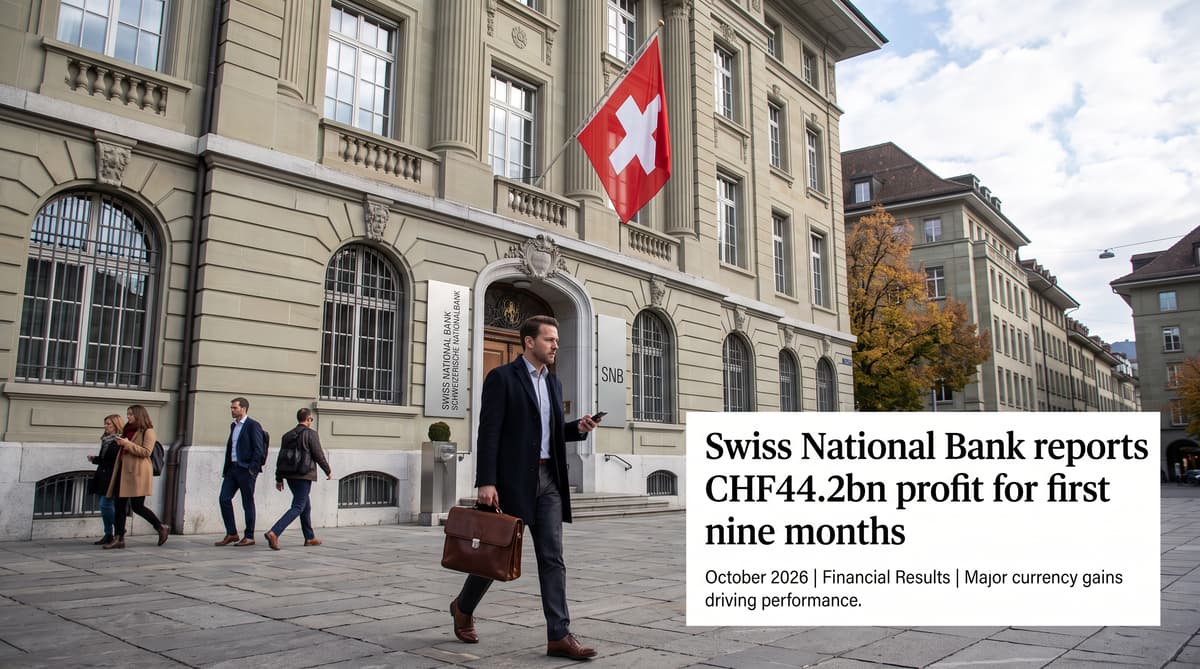
The SNB reported CHF44.2 billion in profit for the first nine months of 2026, extending a strong first-half result with another profitable quarter. The Swiss central bank said it earned around CHF19 billion in the third quarter, following CHF25.2 billion in the first six months. The figures were published on October 30.
The result reflects gains across the bank’s positions, led by foreign currency holdings. The SNB recorded a CHF43.3 billion gain on those positions over the first three quarters. Gold holdings added a CHF1.2 billion valuation gain, while Swiss franc positions contributed CHF100 million.
For Switzerland, the scale of the result matters because the SNB’s financial performance can affect distributions to the public sector. The bank’s strong 2025 profit, for example, was set to benefit the government and cantons. The latest nine-month figure, however, remains an interim result. The SNB cautioned that it offers only limited guidance on the full-year outcome.
Track the gains by position
Foreign currency positions generated CHF43.3 billion in gains, accounting for most of the SNB’s result through September. The bank also reported a CHF1.2 billion valuation gain on gold, whose holdings remained unchanged in volume. Swiss franc positions produced a smaller gain of CHF100 million.
The figures show how strongly the nine-month profit depended on movements affecting the SNB’s foreign currency positions. Gold added to the result through valuation, rather than a change in the amount held. The Swiss franc positions also ended the period in positive territory, though their gain was modest compared with the foreign currency result.
These are separate reported gains on the bank’s positions, alongside its overall profit figure of CHF44.2 billion. The SNB’s breakdown puts foreign currency gains far ahead of the other two categories. It also underscores why the headline result can move with developments in financial markets, as the bank says its performance depends predominantly on gold, foreign exchange and capital markets.
Read the result with caution
The SNB warned that interim figures offer only limited guidance on its full-year result. Its profits and losses depend predominantly on developments in the gold, foreign exchange and capital markets, where significant fluctuations are normal, the bank said.
That volatility gives the nine-month result a clear boundary: it records performance through the end of the third quarter, but does not settle the outcome for the whole year. The reported profit stood at CHF44.2 billion after a third quarter that contributed around CHF19 billion. The first half had already produced CHF25.2 billion.
The bank’s caution is particularly relevant given the weight of foreign currency gains in the result. Those positions delivered CHF43.3 billion over the first three quarters, while gold holdings and Swiss franc positions also posted gains. A change in market conditions can affect the SNB’s financial result, so the nine-month total should be read as a snapshot of the period rather than a forecast of the year-end figure.
Watch the public-sector implications
The SNB made a CHF26 billion profit in 2025, and the government and cantons were set to benefit accordingly. That recent annual result shows why the central bank’s profits draw attention beyond financial markets: they can have consequences for Switzerland’s public sector.
The CHF44.2 billion profit reported for the first nine months of 2026 is substantially larger than that previous full-year figure, but the periods are different and the current result remains provisional. The SNB said significant market fluctuations are normal and that interim figures provide only limited grounds for conclusions about the full-year result.
For now, the reported totals establish the scale and composition of the bank’s performance through September. Foreign currency positions supplied most of the gains, with positive contributions from gold and Swiss franc positions. Any assessment of the year as a whole will depend on how gold, foreign exchange and capital markets develop. The bank’s figures therefore offer a clear account of the first three quarters, while leaving the full-year result subject to market movements.