Business
Sandoz Accuses China of 'Dumping' Antibiotics, Seeks EU Action
Swiss generics giant Sandoz is escalating a trade dispute, preparing a complaint to the European Commission against what it calls heavily subsidised, low-priced penicillin imports from China that distort competition and create strategic health vulnerabilities.
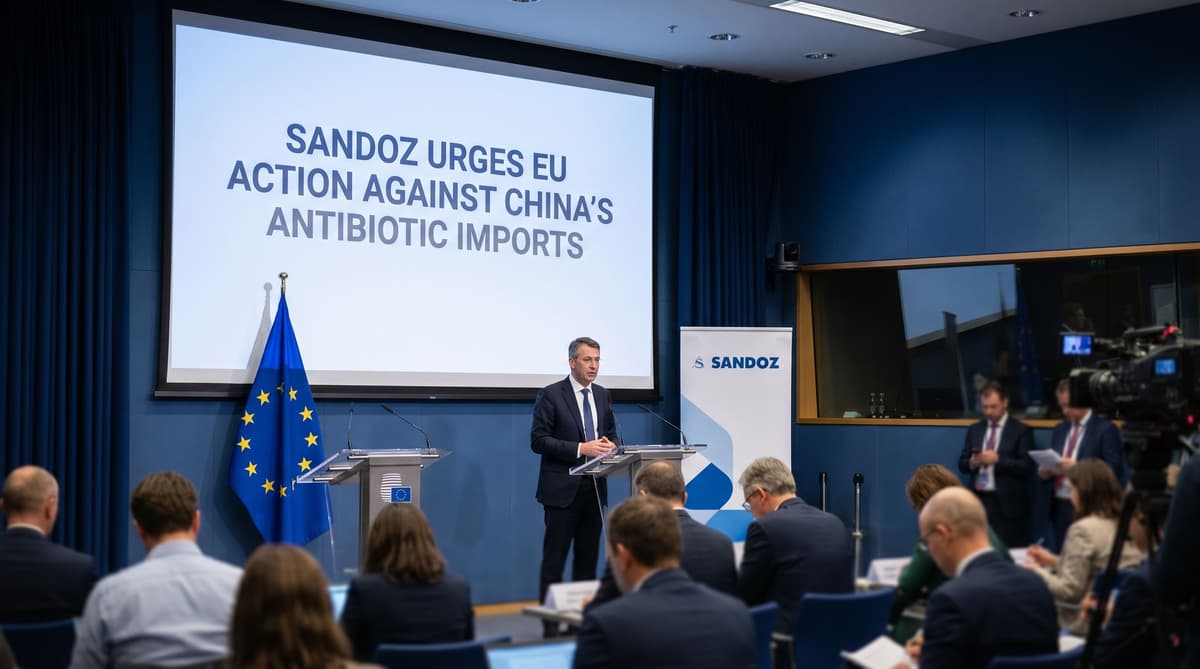
Swiss generics powerhouse Sandoz is no longer playing nice. The Basel-based giant has officially moved to strike against what it describes as a tidal wave of 'dumped' Chinese antibiotics flooding the European market. By submitting a draft complaint to the European Commission, Sandoz is sounding the alarm on heavily subsidized penicillin imports that are systematically dismantling fair competition. This isn't just a corporate spat; it is a high-stakes confrontation over the very future of Western medicine. Sandoz alleges that Chinese suppliers, backed by state coffers, are slashing prices to levels that make domestic production economically impossible. While consumers might enjoy short-term savings, the long-term cost is a hollowed-out European industrial base. CEO Richard Saynor is blunt: European decision-makers have been 'too hesitant for too long,' allowing market distortions to reach a breaking point. The company is now demanding immediate intervention to stop the bleeding and restore a level playing field before the continent's pharmaceutical sovereignty vanishes entirely.
The 90 Percent Vulnerability Gap
A staggering 90% of the world’s antibiotic active substances are now manufactured outside of Europe, primarily within Chinese borders. This statistic represents a terrifying strategic bottleneck for global healthcare. Sandoz leadership warns that this concentration of production creates a 'critical strategic vulnerability' that threatens public health and crisis preparedness. In a world of shifting geopolitical alliances and supply chain shocks, Europe finds itself dangerously dependent on a single external source for life-saving amoxicillin. This isn't a theoretical risk; it is an immediate threat to the ability of hospitals in Zurich, Paris, and Berlin to treat basic infections. The undervaluation of these drugs has led to a race to the bottom, where price is the only metric of success. However, the true price of cheap Chinese penicillin may be the total loss of European self-sufficiency. As the world grapples with rising antibiotic resistance, the loss of control over the manufacturing process leaves the West exposed to supply blackmail and quality fluctuations that could cost lives.
Defending the Last Bastion of European Production
The Kundl plant in Austria stands as the final line of defense, representing Europe's last remaining fully integrated antibiotics production site. As the facility celebrates its 80th anniversary this week, its survival hangs in the balance. Sandoz is fighting to keep this historic site operational against a backdrop of soaring energy costs and predatory import pricing. The plant is more than just a factory; it is a symbol of European industrial resilience. While the 'Alpbach Communiqué'—a memorandum suggesting that 30% of supplies should come from within the continent—offers a glimmer of hope, it lacks the legislative teeth to stop the Chinese onslaught. The proposed Critical Medicines Act is a step in the right direction, yet Sandoz argues that the implementation remains dangerously vague. Without concrete support, even the most efficient European plants cannot compete with state-subsidized foreign entities. The loss of Kundl would mean the total surrender of European penicillin production, leaving the continent entirely at the mercy of global trade winds.