geopolitics
Russia Designates Swiss Pro-Democracy Group 'Undesirable' Amid Broad Crackdown
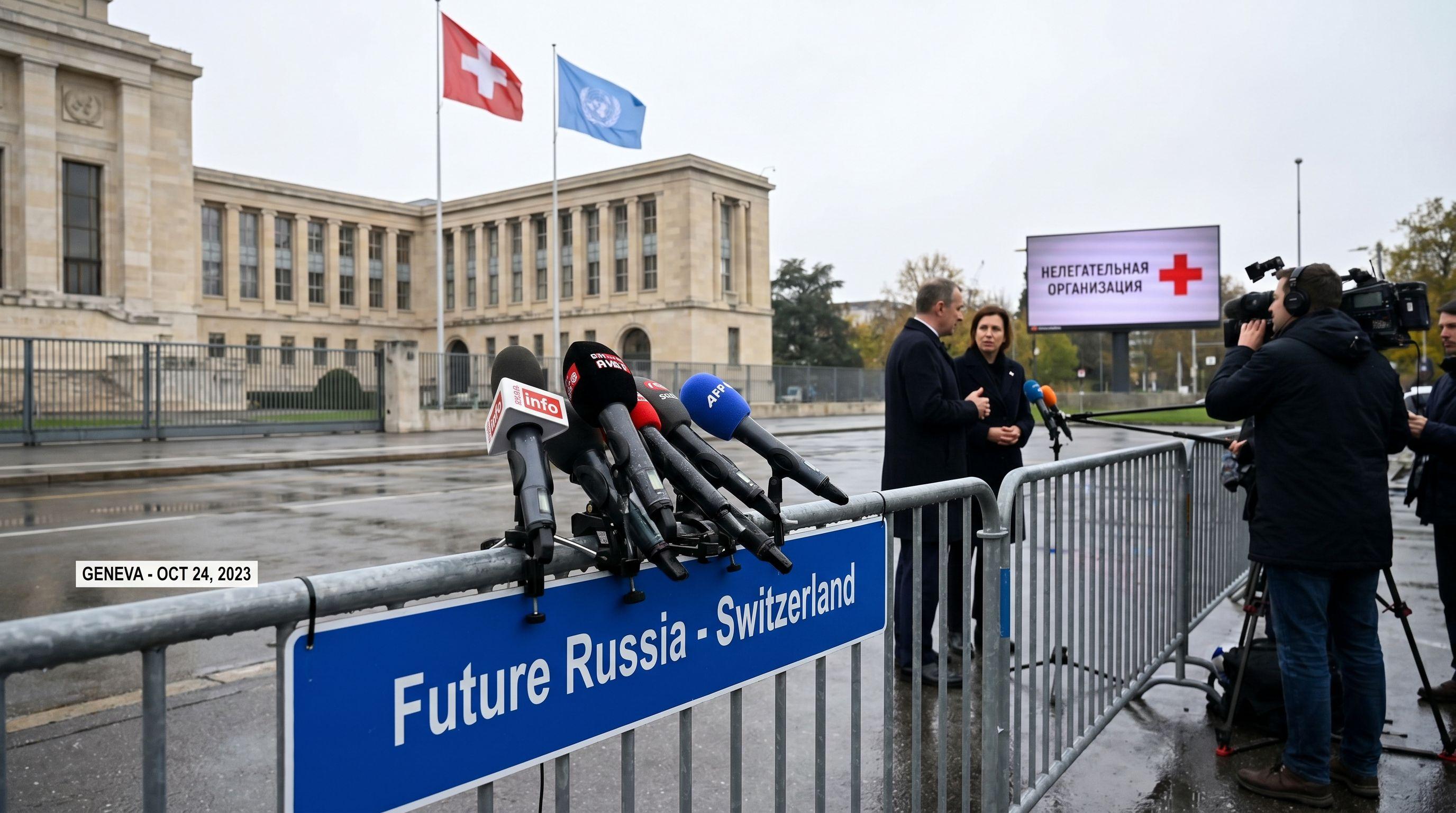
The Kremlin has proscribed 'Future Russia - Switzerland', a Geneva-based human rights group, as an 'undesirable organisation'. This move is part of an accelerating trend by Russia to target exiles and foreign groups, effectively banning the organization and exposing its supporters to prosecution.
The Kremlin Strikes Geneva: A New Front in the War on Dissent
Russia is aggressively expanding its shadow war against democratic values, and Geneva is now directly in the crosshairs. On April 12, 2026, Vladimir Putin’s government officially designated 'Future Russia – Switzerland' as an 'undesirable organisation,' effectively criminalizing its existence. This Geneva-based community, dedicated to promoting human rights and democratic reform, is the sixth Swiss-linked entity to be proscribed this year alone. The move is not merely a symbolic gesture; it is a calculated strike that exposes every donor, supporter, and participant to immediate criminal prosecution and heavy fines within Russian borders. By targeting a group operating on Swiss soil, the Kremlin is sending a chilling message: no exile is out of reach, and no sanctuary is sacred. This designation serves as a digital iron curtain, designed to sever the vital arteries of communication between the Russian diaspora in Switzerland and the citizens remaining within the federation who yearn for change.
Exponential Escalation: The Data Behind the Crackdown
The numbers are staggering and reveal a regime in a state of paranoid acceleration. In the first 105 days of 2026, Russia has already banned 55 organizations—a rate that puts the country on track to shatter all previous records. Contrast this with the pre-2020 era, when the Kremlin typically targeted no more than four groups per year. The trajectory is undeniable: from 67 designations in 2024 to a massive 101 in 2025, the state is now weaponizing the 'undesirable' label with industrial efficiency. This surge coincides directly with the aftermath of the 2022 invasion of Ukraine, as the government seeks to liquidate any remaining vestige of independent civil society. Switzerland has become a disproportionate target in this campaign, seeing its prestigious institutions like the International Baccalaureate and environmental giants like the WWF added to the same blacklist as political dissidents. This is no longer a selective policy; it is a total blockade of international cooperation.
Legal Weaponry: How 'National Security' Becomes a Dragnet
Moscow is using the veneer of legality to construct a comprehensive dragnet for its citizens abroad. The 2015 law, signed by Putin following the annexation of Crimea, is intentionally vague, allowing the Prosecutor General to target any entity deemed a 'threat to the foundations of the constitutional order.' Experts and lawyers warn that this ambiguity is the law’s primary feature, not a bug. It transforms routine civic engagement into a felony. For Russians living in the Swiss Confederation, engaging with 'Future Russia – Switzerland' now carries the same legal weight as high treason in the eyes of the Russian state. Tikhon Dzyadko, editor-in-chief of the exiled TV Rain, notes that this is a deliberate strategy to 'make life and work more difficult' for those who have fled. By criminalizing cooperation, the Kremlin forces exiles into a impossible choice: abandon their activism or face permanent exile and the potential imprisonment of their families back home. The law serves as a psychological tether, ensuring that even in the heart of Europe, the fear of the Russian state remains omnipresent.
A Stark Contrast: Embracing Militants While Banning Humanitarians
The hypocrisy of the Kremlin’s 'security' priorities has reached a fever pitch. While Russia systematically dismantles Swiss-based charities and educational foundations, it is simultaneously rolling out the red carpet for internationally recognized militant groups. In a move that has stunned the diplomatic world, the Taliban was removed from Russia’s list of banned terrorist organizations just one year ago. Today, Moscow openly consolidates ties with Hamas and Hezbollah, treating them as legitimate geopolitical partners while branding Geneva human rights activists as the true 'threats' to national security. This inversion of norms highlights the regime's shift away from the international rules-based order. By proscribing groups that promote transparency and democracy, the Kremlin is signaling its preference for a world governed by raw power and authoritarian alliances. The message to Switzerland is clear: Moscow no longer distinguishes between political opposition and humanitarian aid—both are now viewed through the singular lens of existential threats to the state.
The Swiss Implications: Protecting the Sanctuary of Ideas
For Switzerland, the proscription of 'Future Russia – Switzerland' is a direct challenge to its role as a global hub for diplomacy and human rights. As the Kremlin accelerates its crackdown, the Swiss government and its people confront a critical question: how to protect the safety and freedom of those who seek refuge within its borders. The designation of Swiss-linked groups is an affront to the neutrality and sovereignty of the Confederation, attempting to project Russian law into the streets of Geneva and Zurich. This trend necessitates a robust response to ensure that Switzerland remains a sanctuary where ideas can be exchanged without fear of foreign retribution. As we look toward the remainder of 2026, the pressure on Swiss-Russian relations will only intensify. Switzerland must stand firm in its commitment to civil society, recognizing that the defense of a small Geneva NGO is, in fact, the defense of the very international order that Switzerland helps to uphold. The battle for the future of Russia is being fought not just in Moscow, but in the heart of the Swiss Alps.