New Credit Suisse Archives Reveal Deeper Nazi-Era Connections
Fresh investigation uncovers previously unknown Nazi-linked accounts at Credit Suisse, including ties to SS units, expanding understanding of the bank's WWII history.

"The investigation has identified scores of individuals and legal entities connected to Nazi atrocities whose relationships with Credit Suisse had either been previously identified, or for which the relationship had been partially unidentified..."
"committed to contributing to a fulsome accounting of Nazi-linked legacy accounts held at predecessor banks of Credit Suisse"
A shocking revelation has shattered the assumption that Switzerland's banking history had been fully purged of its darkest secrets. Fresh evidence has surfaced linking Credit Suisse directly to a notorious German SS elite army unit, a discovery that rips open old wounds and demands immediate attention. This is not merely a clerical oversight; it is a direct line to the perpetrators of the Holocaust.
The explosive findings come from a renewed probe into the bank's archives, exposing that the institution's ties to the Nazi regime ran far deeper than previously admitted. While the world believed the books were closed on this chapter, the reality is starkly different. The investigation has identified "scores of individuals and legal entities" connected to Nazi atrocities, according to a letter sent to the US Senate. These are not just passive accounts; they represent an active financial infrastructure that supported the machinery of war and genocide. As Switzerland grapples with this new information, the question arises: how much more is hidden in the vaults?
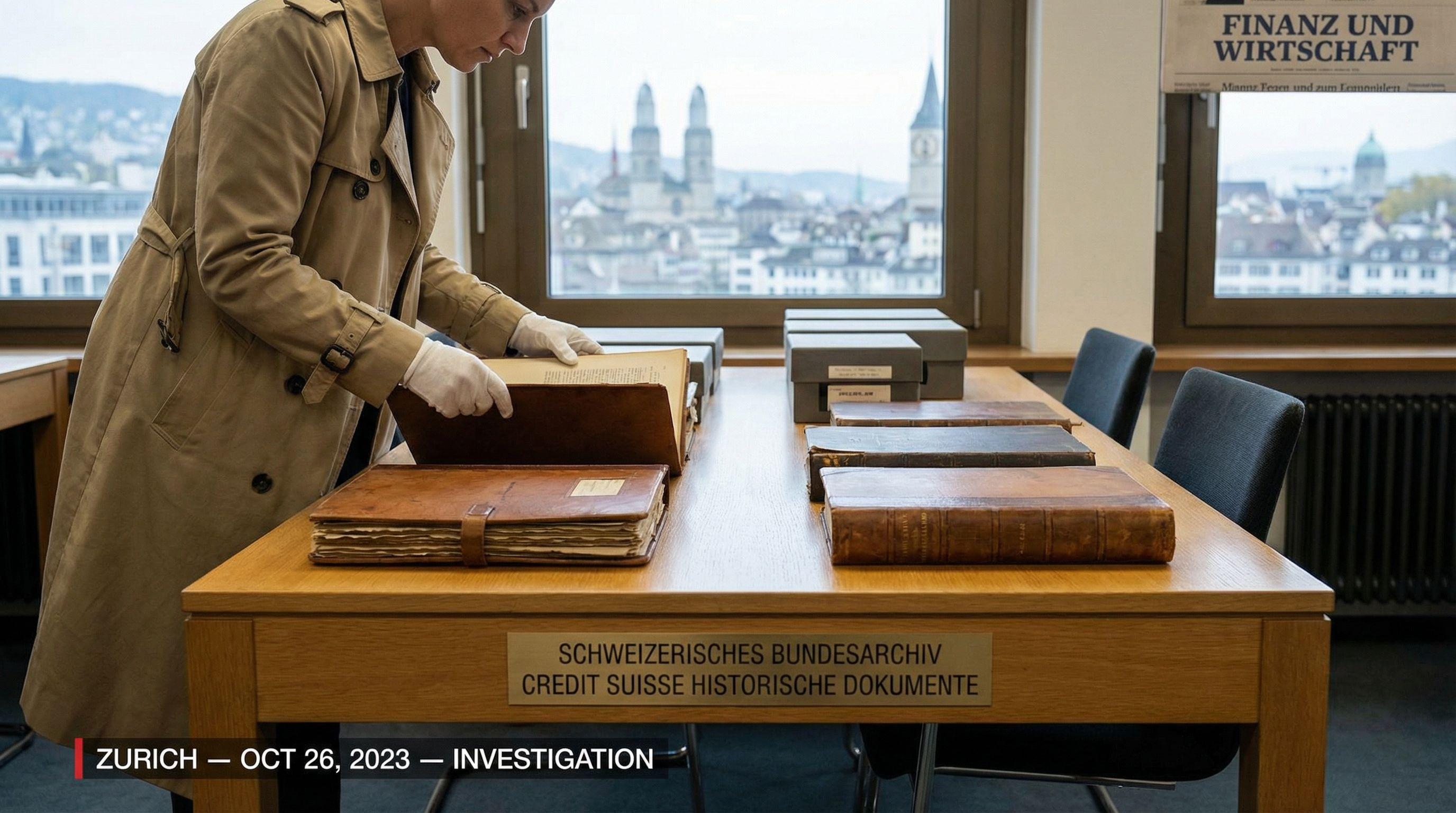
A staggering 3,600 boxes of files—previously untouched by the investigative panels of the 1990s—are now being pried open. This physical wall of silence, which stood unexamined for decades, is finally crumbling under the scrutiny of independent ombudsman Neil Barofsky. The sheer volume of this overlooked material suggests a systemic failure to confront the full extent of the bank's wartime activities.
Barofsky, a former US prosecutor, is methodically sifting through this mountain of evidence. His investigation, detailed in a December 2024 letter, vindicates long-standing US Senate allegations that Credit Suisse failed to fully cooperate with past inquiries. The existence of these files raises an alarming question: was this incompetence, or a calculated concealment? The probe reveals relationships that were either entirely unknown or whose sinister nature was significantly downplayed. As Barofsky digs deeper, the narrative of Swiss banking neutrality during WWII is being forcibly rewritten, document by document.
When UBS executed its emergency takeover of Credit Suisse, it didn't just acquire assets; it inherited a toxic legacy. The banking giant now finds itself in the crosshairs, responsible for the "fulsome accounting" of its fallen rival's Nazi-linked past. The corporate drama surrounding this probe is palpable: Credit Suisse had previously removed Barofsky from his watchdog role in 2021, only for UBS to reinstate him in 2023—a clear signal that the new ownership recognizes the reputational dynamite sitting in those archives.
UBS has publicly committed to transparency, stating it will contribute to a complete historical accounting. However, the pressure is immense. This is no longer just about history; it is about current corporate governance and the integrity of the Swiss financial center. By reinstating the independent overseer, UBS is attempting to cauterize the wound, but the revelations from the Barofsky letter prove that the infection runs deep. The bank must now navigate a minefield of moral and legal liability as it integrates the remnants of Credit Suisse.
In 1998, a historic $1.25 billion settlement was supposed to draw a line under the Holocaust assets controversy. Today, that figure looks less like a conclusion and more like a down payment on a truth that was not fully sold. The discovery of these new accounts implies that the scope of the original settlement may have been based on incomplete data, challenging the finality of the agreements made over two decades ago.
For Switzerland, this is a critical moment of reckoning. The narrative that the country has fully atoned for its wartime banking role is unraveling. While the financial settlements were significant, the moral debt remains unpaid so long as files remain hidden. As these 3,600 boxes yield their secrets, the Swiss banking sector faces a renewed credibility crisis. We are witnessing a painful but necessary correction of the historical record, proving that while banks can collapse, the truth about their actions possesses an indefinite shelf life.