AI
Written with AI assistance•21 gennaio 2025•
Geneva study reveals music therapy benefits for premature infants
University Hospitals research shows strengthened brain connections in preterm babies exposed to music
University Hospitals research shows strengthened brain connections in preterm babies exposed to music
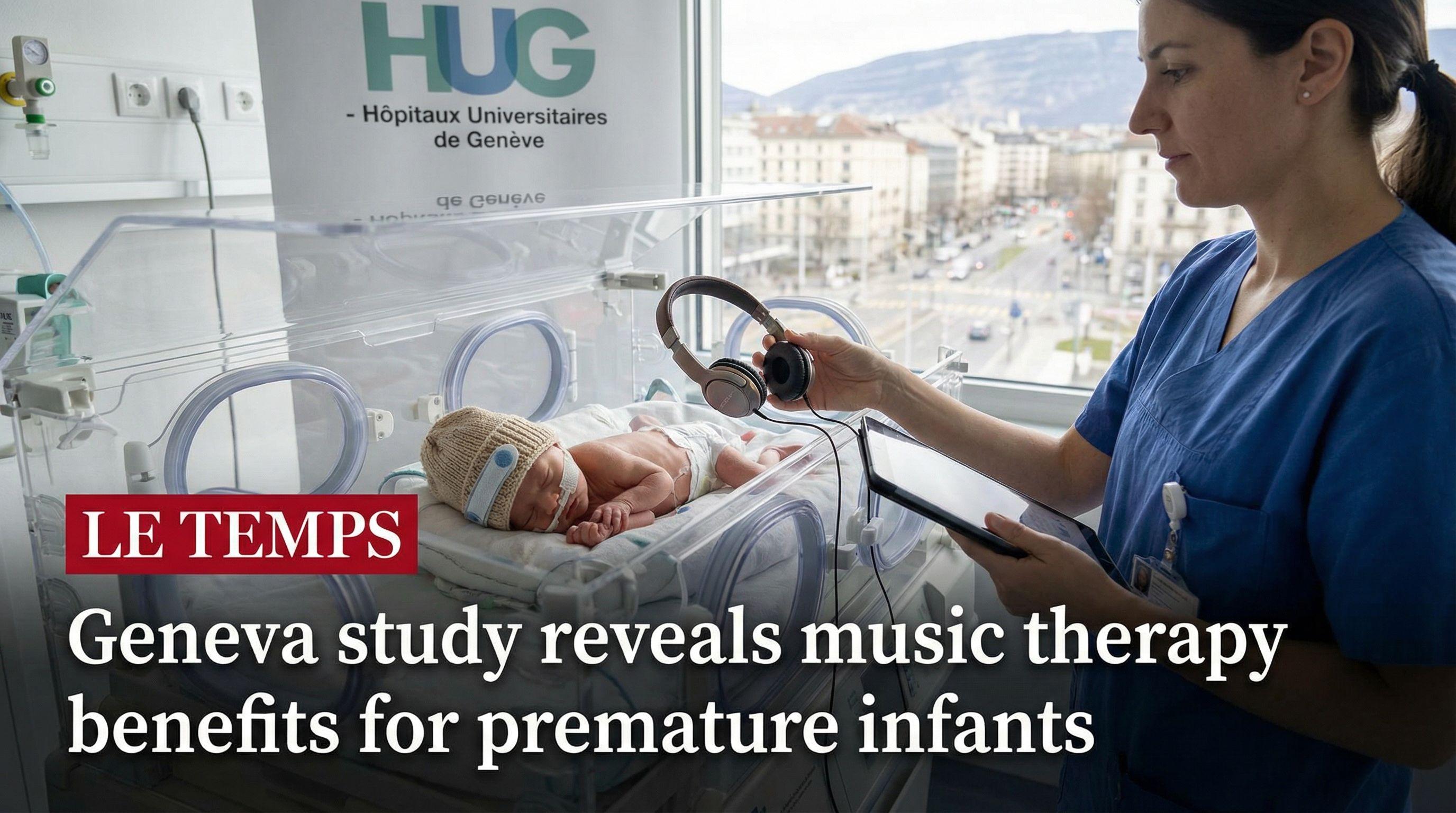
"Children born prematurely almost always show reduced connectivity in this network, and this characteristic persists into adulthood."
A groundbreaking discovery at the University Hospitals of Geneva (HUG) is shattering previous assumptions about neonatal development. In a critical study supported by the Swiss National Science Foundation (SNSF), researchers have demonstrated that music is not merely soothing—it is a potent neurological tool capable of physically rewiring the brains of premature infants. The study focused on a vulnerable cohort of 60 infants born at an average of just 29 weeks, a stage where brain development is precariously fragile.
The results are nothing short of remarkable. By exposing 32 of these infants to specially designed musical interventions, scientists observed a surge in brain connectivity that was absent in the control group of 28 babies. These structural improvements were visible on MRI scans as early as 33 weeks of age. This finding suggests that the window for effective intervention is immediate and powerful. While premature birth often predisposes children to deficits in attention and emotional control, this Geneva-led initiative offers a tangible, non-invasive solution to mitigate these risks before the infant even leaves the hospital.
This is not simply about playing Mozart in the ward; it is a precision-engineered auditory intervention. The scientific team collaborated with renowned Zurich-based composer Andreas Vollenweider to create a sonic environment tailored specifically for the premature mind. Vollenweider designed unique, eight-minute musical samples that were delivered to each newborn individually via headphones. These were not random melodies, but ad-hoc pieces composed to punctuate the infant's daily rhythm, specifically targeting the critical transitional moments between sleep and wakefulness.
The precision of this Swiss approach is key. The melodies were crafted to be soothing yet distinct enough for the babies to learn and recognize, effectively training their developing brains to process auditory stimuli. By integrating these sessions into the chaotic environment of an intensive care unit, the study provided a structured sensory anchor for the infants. The collaboration between high-level medical research and elite musical composition highlights a uniquely Swiss dedication to interdisciplinary innovation, turning the incubator into a symphony of developmental progress.
The study's most significant breakthrough lies in its identification of the specific neural networks being strengthened. Researchers pinpointed the "salience" network—a critical system involving the insular cortex and the anterior cingulate cortex. This network is the brain's command center for identifying stimuli and determining their socio-emotional relevance. In premature infants, this connectivity is notoriously weak, a deficit that often plagues them well into adulthood.
Petra Hüppi, head of the research programme, delivers a stark assessment: "Children born prematurely almost always show reduced connectivity in this network, and this characteristic persists into adulthood." However, the HUG study proves this trajectory is not inevitable. The music therapy acted as a bridge, forging robust connections between these vital brain regions. By stimulating the salience network during this window of extreme plasticity, the therapy effectively equips these children with the neurological hardware necessary for better emotional regulation and attention management later in life.
While the immediate MRI results are undeniable, the true measure of success is currently unfolding. The scientific team is now turning its gaze to the long-term horizon, re-evaluating the very first cohort of patients born in 2016. These children are now turning eight years old—a pivotal age for assessing complex cognitive and behavioral development. Work is currently in progress to subject this group to rigorous behavioral tests and fresh MRI scans to see if the benefits of those early musical sessions have stood the test of time.
The implications of this follow-up are staggering. If the long-term data confirms the structural benefits observed in infancy, it could revolutionize neonatal care standards globally. The SNSF concludes that confirmed benefits would justify integrating music therapy into neonatal intensive care units worldwide. What began as a specialized experiment in Geneva has the potential to become a universal standard of care, proving once again that Swiss innovation is at the forefront of protecting the next generation.