Health
Geneva Scientists Announce Breakthrough in Insulin-Free Diabetes Treatment
Researchers at the University of Geneva have developed an innovative hydrogel that successfully supported insulin-producing cell transplants in mice, paving the way for a bioartificial pancreas that could eliminate the need for insulin injections.
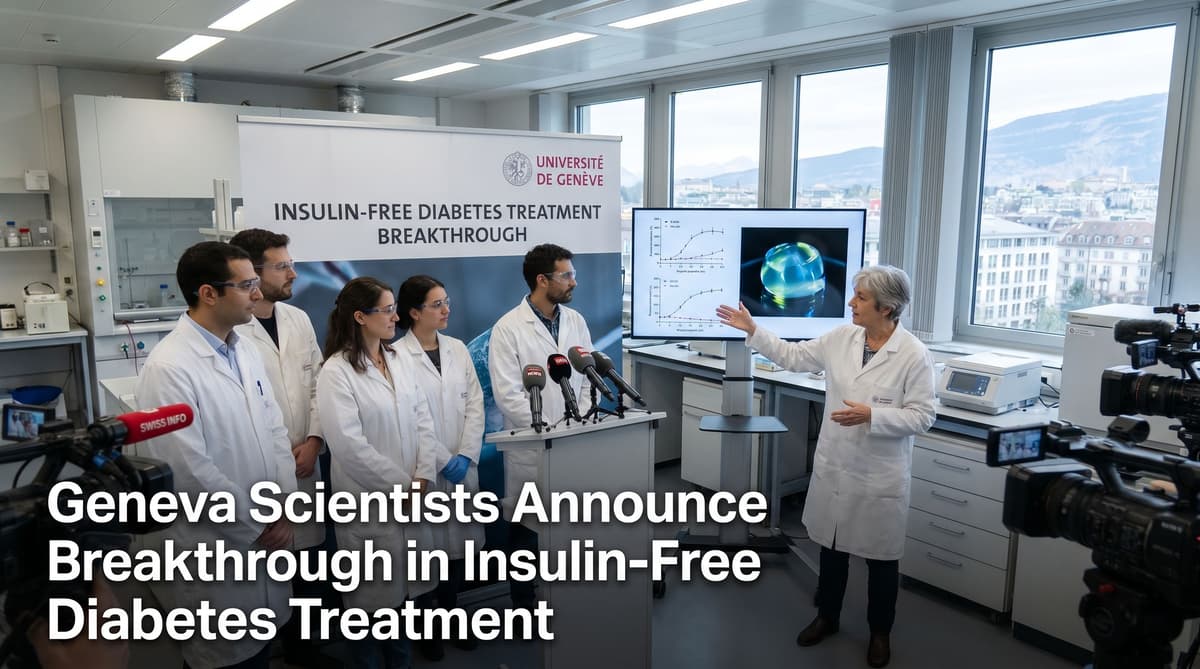
Geneva is rewriting the medical rulebook for Type 1 diabetes. Researchers at the University of Geneva (UNIGE) and Geneva University Hospitals (HUG) have just unveiled a breakthrough that could render the daily ritual of insulin injections obsolete. This is not a incremental improvement; it is a paradigm shift in how we treat chronic metabolic disease. By engineering a bioartificial pancreas, Swiss scientists are moving beyond symptom management and toward a functional cure. While millions of patients worldwide currently grapple with the constant threat of hypoglycemia, this Geneva-born innovation offers a future where the body once again regulates itself. The announcement, made on May 18, 2026, marks a decisive victory for Swiss biotechnology on the global stage. This research confronts the most stubborn obstacles in transplant medicine—rejection and poor blood supply—head-on, utilizing a revolutionary hydrogel that acts as a life-support system for insulin-producing cells. The era of the 'smart' biological implant has arrived, and it is being pioneered in the heart of Switzerland.
Amniogel Defeats the Body's Rejection Reflex
A staggering majority of previous pancreatic islet transplants failed due to one critical flaw: the host's own immune system. In the liver, these transplants often trigger violent inflammation and suffer from a fatal lack of oxygen. However, the Geneva team has deployed 'Amniogel' to neutralize these threats. Derived from the human amniotic membrane, this bio-engineered substance creates what Professor Ekaterine Berishvili describes as a 'protective environment.' This is a masterclass in bio-mimicry. Before the transplant even occurs, the gel promotes the formation of a dense microvascular network. Once implanted, it facilitates an immediate, seamless connection to the host’s bloodstream. This ensures that the transplanted cells are not only shielded from immune attacks but are also fully nourished from day one. While traditional grafts struggle to survive the body's natural defenses, Amniogel thrives by integrating into the biological infrastructure. It is a sophisticated armor for the cells that matter most, ensuring they can perform their vital function without interference.
One Hundred Days of Perfect Equilibrium
One hundred days of total stability—that is the benchmark set by the Geneva trials. In a series of rigorous tests, diabetic mice were fitted with 9mm diameter Amniogel discs, and the results were nothing short of extraordinary. These tiny bio-engines maintained perfect blood sugar levels for over three months without a single external insulin intervention. Contrast this with the current standard of care, where patients must monitor their glucose levels dozens of times a day and adjust their doses with surgical precision. The 9mm discs functioned as an autonomous unit, sensing glucose levels and secreting insulin in real-time. This success proves that the 'bioartificial pancreas' concept is no longer a theoretical dream but a functional reality. The data surges past previous milestones in regenerative medicine, demonstrating a level of durability that was previously thought unattainable in such a small form factor. For the first time, the biological machinery of a healthy pancreas has been successfully replicated and sustained in a living host for a significant duration.