economy
France Ups Pressure on Switzerland to Reform Cross-Border Jobless Benefits
France is urging Switzerland to accelerate the implementation of a new EU agreement that would shift the cost of unemployment benefits for cross-border workers to the country of employment, a reform Paris claims would save it €860 million annually.
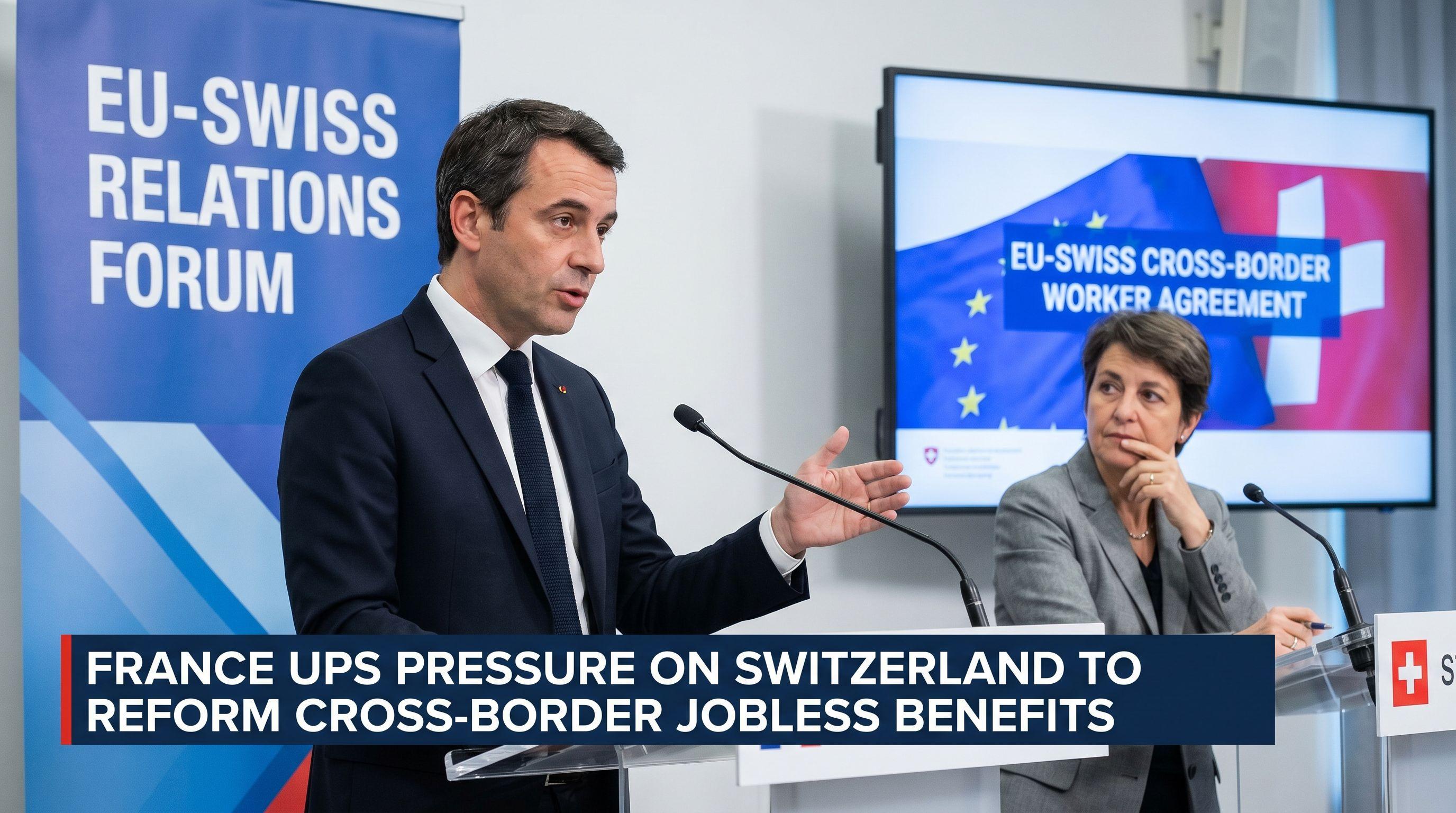
Paris Demands Nearly One Billion Euros in Policy Shift
France is no longer asking; it is demanding. French Labour Minister Jean-Pierre Farandou has launched a high-stakes diplomatic offensive, insisting that Switzerland stop dragging its heels on a reform that would fundamentally alter the cross-border labor market. At the heart of the dispute is a staggering €860 million annual drain on the French treasury—a sum Paris claims it loses every year by paying unemployment benefits to workers who contributed their labor and taxes to the Swiss economy. The current system, which mandates the country of residence to foot the bill, is being dismantled by a new EU agreement approved on April 29. Farandou’s message to the French parliament was crystal clear: the era of France subsidizing the Swiss labor market must end now. This is not just a policy adjustment; it is an economic ultimatum that threatens to strain the delicate bilateral relationship between Bern and Paris. As thousands of French citizens cross the border daily to power the Swiss economy, France is now moving to ensure that the financial responsibility for their social safety net follows the paycheck.
Switzerland Grapples with a CHF 900 Million Price Tag
The financial implications for the Swiss Confederation are nothing short of alarming. According to the Swiss State Secretariat for Economic Affairs (SECO), implementing this EU-led reform could trigger an unprecedented surge in domestic social spending, costing the country between CHF 600 million and CHF 900 million annually. This is a massive fiscal shock that Bern has been desperately trying to mitigate. While Switzerland has long benefited from the high-quality labor provided by French 'frontaliers,' the prospect of paying out benefits to non-residents who lose their jobs represents a critical threat to the stability of the Swiss unemployment insurance fund. The contrast is stark: while France sees an opportunity to reclaim nearly a billion euros, Switzerland sees a looming deficit. This reform turns the traditional economic advantage of cross-border labor on its head, forcing Swiss taxpayers to potentially underwrite the unemployment risks of a foreign workforce. The Swiss government now confronts a difficult choice: comply with the evolving European standards or risk a major diplomatic rift with its most vital neighbors.
EU Leverage Tightens on Bern’s Economic Ties
Bern’s legendary neutrality provides no shield against the economic gravity of the European Union. Minister Farandou was blunt in his assessment, noting that Switzerland 'benefits considerably from its good economic relations with the EU' and must therefore accept the responsibilities that come with that access. The pressure is mounting as the EU seeks to harmonize social security systems across the continent after a decade of grueling negotiations. France is effectively using Switzerland’s reliance on the single market as leverage, suggesting that the free movement of people cannot be a one-way street. The EU’s recent approval of these rules on April 29 has emboldened Paris to take a harder line. By framing the issue as a matter of fairness within the European economic area, France is mobilizing the collective weight of Brussels to force Bern’s hand. This is a critical moment for Swiss diplomacy; the country must navigate a path that preserves its economic sovereignty while acknowledging that its prosperity is inextricably linked to European cooperation. The message from Paris is undeniable: the price of admission to the European market is about to go up.
The Luxembourg Precedent Sets a Dangerous Timetable
Switzerland now finds itself isolated as other nations fall into line. Farandou pointed to Luxembourg as the blueprint for what is to come, noting that the Grand Duchy has already conceded to a timetable for implementation. 'Willingly or unwillingly,' Farandou remarked, Luxembourg will comply, and he expects Switzerland to follow suit. This precedent strips Bern of its ability to argue that the reform is unworkable or unique to its borders. As France successfully closes the loophole with Luxembourg, the spotlight intensifies on the Swiss-French border, where the highest volume of cross-border activity occurs. The implications are clear: the clock is ticking. Farandou has staked his personal reputation on this victory, promising the French parliament that he will 'see this reform through.' For Switzerland, the window for negotiation is rapidly closing. The next few months will be decisive as Bern must decide whether to fight a losing battle against a unified European front or begin the painful process of restructuring its social security budget to accommodate the new reality of cross-border employment. The status quo is no longer an option.