Basel Study Confirms No Tropical Virus Risk from Local Mosquitoes
Comprehensive analysis of over 5,000 mosquitoes finds no evidence of dengue, Zika, or chikungunya, though native Usutu virus detected.
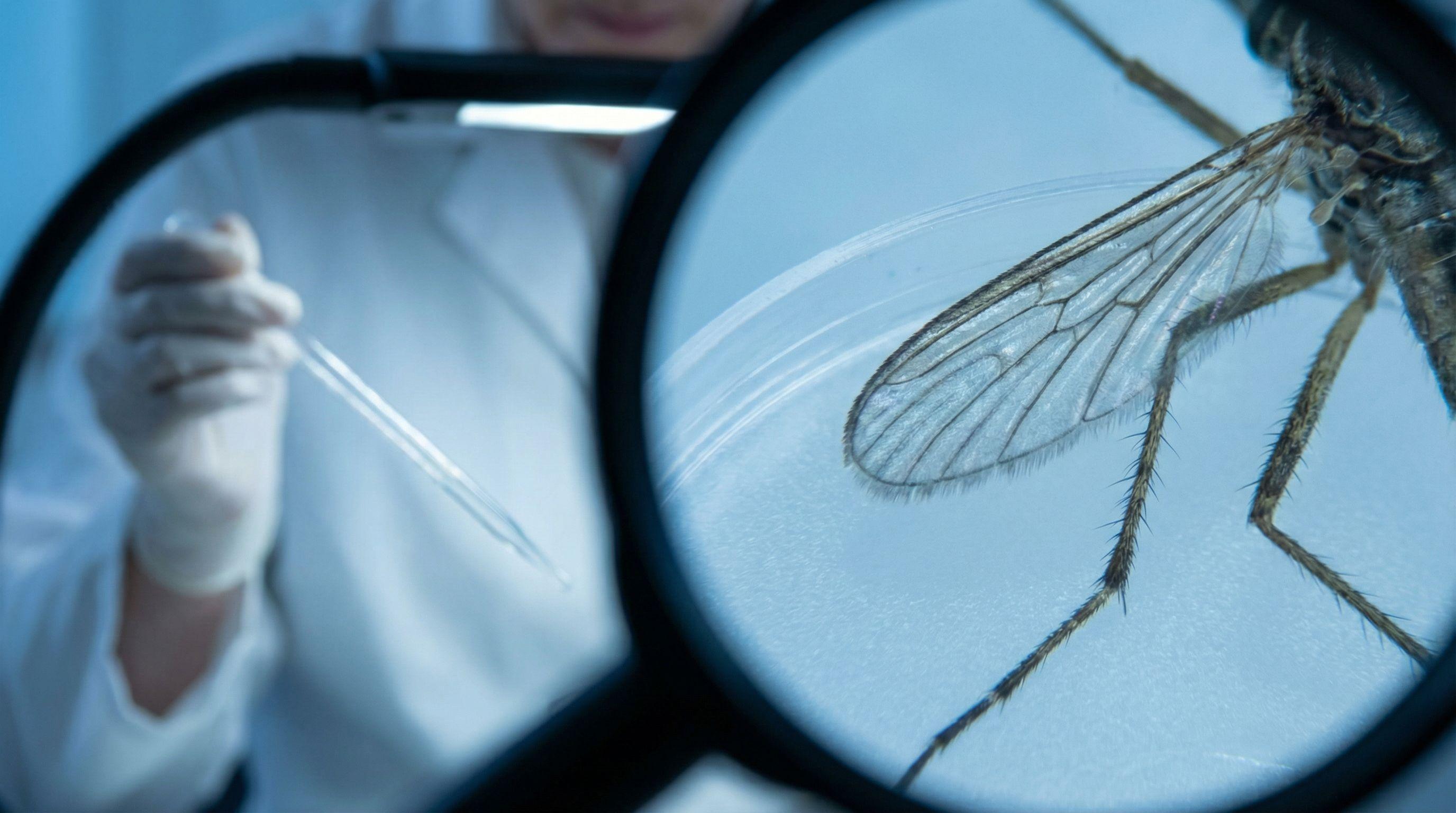

"The risk of local transmission of these pathogens by the tiger mosquito can therefore still be considered low."
"Only the Usutu virus, which is transmitted by the native mosquito species and mainly infects birds, has been detected."
In a decisive victory for public health, authorities in Basel-Stadt have confirmed that the region remains free from the grip of dangerous tropical pathogens. A comprehensive, high-stakes analysis conducted by the cantonal laboratory has returned a clean bill of health: zero traces of Dengue, Zika, Chikungunya, or West Nile virus were found in the local mosquito population. This critical finding comes after a rigorous screening process that ran from August to November, the peak season for vector-borne transmission.
The risk of local transmission is now officially classified as "low," providing a sigh of relief for residents who have watched the steady northward march of tropical diseases across Europe with growing unease. While the Asian tiger mosquito has established a foothold in Switzerland, this latest data confirms that—for the moment—these vectors are flying "unloaded," carrying no viral payload capable of sparking an epidemic in the canton. This result is not merely a statistic; it is a testament to the effectiveness of Switzerland's aggressive monitoring protocols.
The sheer scale of the operation was massive. The cantonal laboratory processed a staggering 5,674 mosquitoes, collected weekly from ten strategic trap locations across Basel, Riehen, and Allschwil. The data reveals a fascinating ecological battlefield: despite fears of an invasive takeover, native species are holding their ground with overwhelming force.
Native Culex mosquitoes comprised a massive 97.6% of the total catch, asserting absolute dominance over the local ecosystem. In stark contrast, the genus Aedes—which includes the notorious Asian tiger mosquito responsible for spreading tropical fevers—accounted for a mere 2.4% of the population. This disparity is critical. While the invasive vectors are present, their numbers remain suppressed compared to the indigenous population, significantly diluting the potential for a widespread outbreak of exotic diseases. However, the presence of Aedes requires continued, unblinking scrutiny to ensure this balance does not tip.
While the headline news is positive, the screening was not entirely devoid of viral activity. The native Usutu virus was detected within the sample pool, a reminder that Switzerland's ecosystem is not sterile. Transmitted primarily by the dominant Culex mosquitoes, Usutu is a pathogen that largely wreaks havoc on bird populations rather than humans.
For the public, the threat remains minimal; human infection typically results in no symptoms or only mild, flu-like indicators. However, the presence of Usutu serves as a biological proof-of-concept: local mosquitoes are biting and they are transmitting pathogens. This mirrors the situation in Ticino, where Culex mosquitoes carrying the more dangerous West Nile virus were identified for the first time in 2022. The detection of Usutu in Basel is a warning light on the dashboard—a signal that the biological pathways for transmission are open and active, even if the current cargo is largely benign to humans.
Switzerland cannot afford complacency. The viral landscape of Europe is shifting rapidly, and the threat is closer than many realize. Just across the border, the situation is far more volatile. According to the EU Centre for Disease Prevention and Control, France has grappled with multiple cases of Chikungunya this summer. Most alarmingly, a human infection was reported near Strasbourg—a mere 130 kilometers from Basel.
This proximity is a geographical wake-up call. Viruses do not respect national borders, and a distance of 130 kilometers is negligible in an era of high mobility and climate shifts. While Basel is safe today, the encroaching viral front in France underscores the absolute necessity of the laboratory's continued mission. Monitoring will persist at six key locations this year, a defensive line maintained by science to ensure that while the mosquitoes may arrive, the epidemics do not.