Climate Change
Switzerland Records Fourth-Hottest May Amidst Warnings of a New Climate Reality
With temperatures 1.8°C above average, Switzerland has experienced one of its hottest Mays since 1864. The unseasonal weather comes as climatologists warn that the heatwave season in Europe is expanding, signaling growing climate risks.
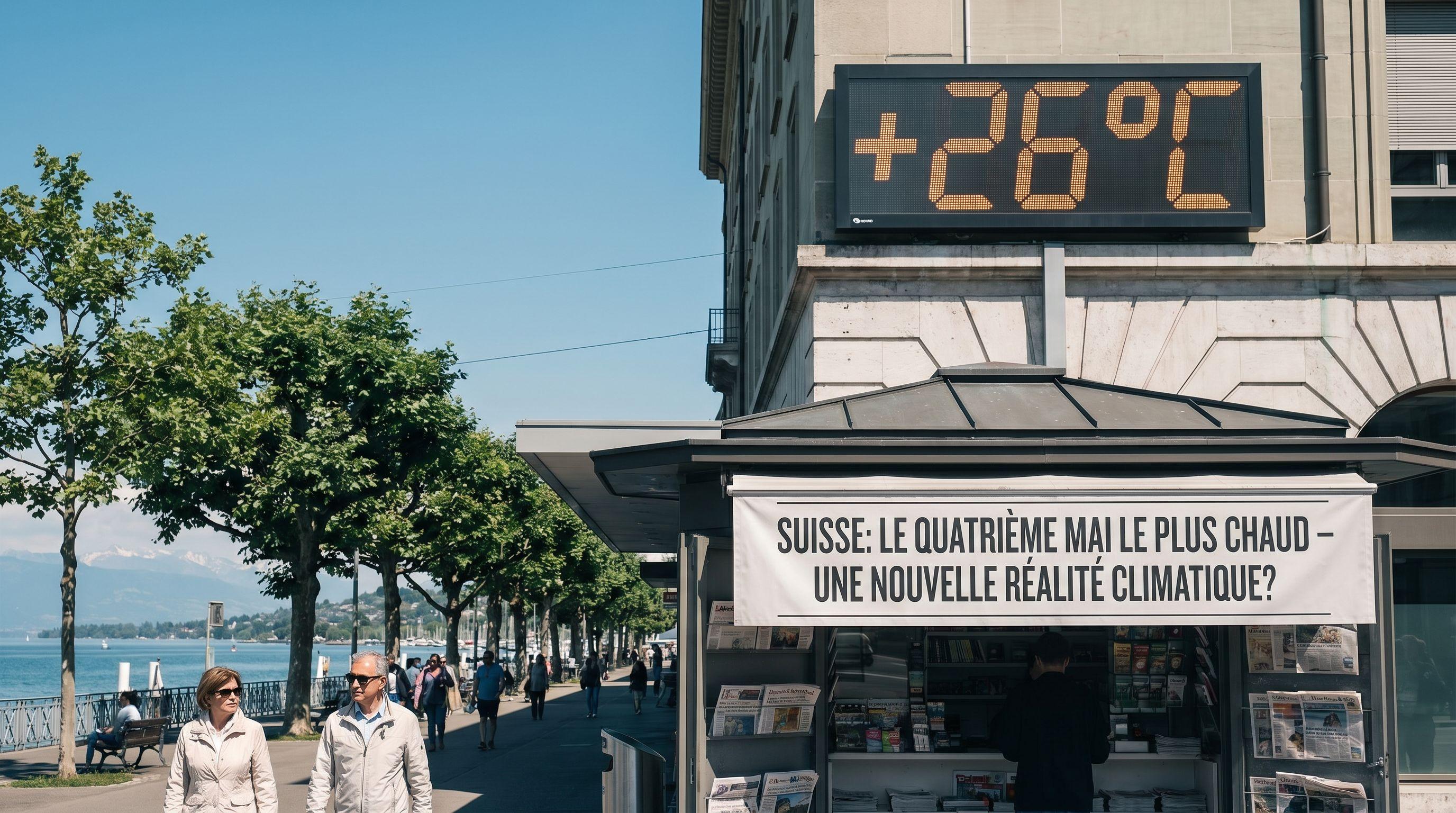
Switzerland Shatters Century-Old Temperature Records
Switzerland is confronting a blistering new reality as May 2026 enters the history books as the fourth hottest since records began in 1864. Temperatures surged to a staggering 1.8°C above the long-term average, transforming a typically mild spring month into a summer-like inferno. In the Valais capital of Sion, the mercury soared to an unprecedented 34.2°C, while regions north of the Alps and Ticino consistently breached the 30°C threshold. This is not merely a warm spell; it is a systemic shift. Climatologists warn that the 'heatwave season' is no longer confined to July and August. Instead, it is aggressively expanding its territory, claiming the month of May as its newest frontier. The speed of this transition is breathtaking, forcing the Swiss population to adapt to conditions that were once reserved for the height of summer.
The Great Dry: Spring Rainfall Vanishes
A historic drought is paralyzing the Swiss landscape, with rainfall levels plummeting to just 40% of the seasonal norm in several regions. This spring is poised to be one of the driest since 1901, leaving the earth parched and the government on high alert. Nationally, the precipitation deficit has hit a critical 150 millimetres, a shortfall that even early-month rains could not rectify. The Swiss government has been forced to issue a Level 2 drought alert for the Alps and the eastern Plateau, signaling a 'mild drought' that shows no signs of abating. The situation in Canton Graubünden and the Engadine is particularly dire, where less than half the usual rain has fallen. This lack of moisture echoes the catastrophic dry years of 1944 and 1976, threatening agriculture and hydropower reserves as the country enters the hottest months of the year.
Alpine Altitudes Grapple with Tropical Shifts
The heat is climbing higher than ever before, literally. On Whit Monday, the zero-degree isotherm—the altitude where temperatures drop below freezing—skyrocketed to a dizzying 4,328 metres. This is the third-highest level ever recorded in May, effectively pushing the 'winter' line above almost every peak in the Swiss Alps. For the nation's glaciers and high-altitude ecosystems, this is a death knell. ETH Zurich scientist Sonia Seneviratne notes that heat is arriving earlier, staying longer, and reaching higher elevations with terrifying intensity. The implications are clear: less snow in winter and more extreme temperatures in summer. The traditional Swiss landscape of snow-capped peaks is being replaced by a rugged, grey reality as the zero-degree limit is projected to climb another 550 metres by the end of the century. Switzerland is no longer just watching climate change; it is living it at double the global speed.
A Continent in the Crosshairs of Climate Change
Switzerland’s sweltering May is part of a broader, more ominous European trend. While the global average temperature has risen by 1.5°C, Switzerland has warmed by a staggering 3°C. Europe is currently warming faster than almost any other continent on Earth. 'An event that used to occur once every ten years now happens three or four times per decade,' warns Sonia Seneviratne, vice-chair of the IPCC. From London’s Kew Gardens hitting 35.1°C to the 'heat dome' suffocating southwest France at 36°C, the continent is grappling with a climate that is increasingly unrecognizable. For Switzerland, this means a future defined by unpredictability: more frequent droughts, violent storms, and the constant threat of flooding from extreme precipitation events. The record-breaking May of 2026 is not an anomaly; it is a loud, clear warning of the new climate reality that has arrived on Switzerland's doorstep.