technology
The Digital Paradox: Switzerland Gets New Siri AI as Parliament Buys 600M Sheets of Paper
In a striking contrast, tech-savvy Swiss residents will gain early access to Apple's new AI-powered Siri, while the national parliament has just ordered a massive stockpile of 600 million sheets of paper. This highlights a fascinating tension between digital adoption and entrenched administrative traditions.
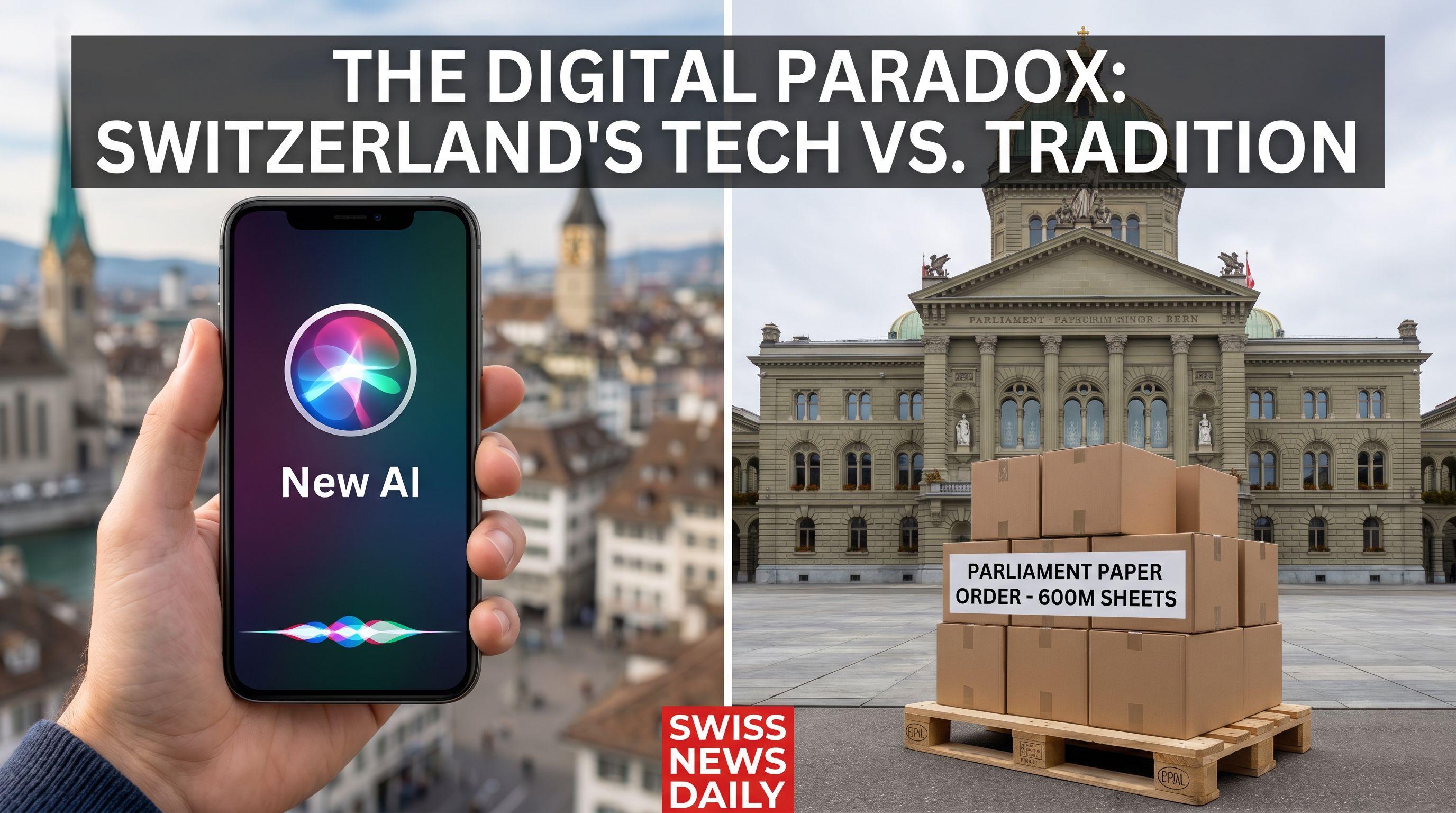
The Great Swiss Divide: Silicon Valley Tech Meets Bureaucratic Pulp
Switzerland is currently operating in two different centuries simultaneously. While Swiss citizens prepare to welcome the most advanced artificial intelligence ever integrated into a consumer device, the federal government in Bern is doubling down on 15th-century technology. This week, the contrast reached a fever pitch: Apple confirmed that Switzerland will leapfrog the European Union to receive the new AI-powered Siri, just as the Federal Assembly finalized a tender for a staggering 600 million sheets of paper. This is the Swiss Digital Paradox—a nation that leads the world in innovation yet remains tethered to a physical paper trail that could literally reach the edge of space. The tension is palpable as Bern attempts to reconcile a 'digital-first' strategy with the logistical reality of managing a 90-billion-franc annual budget that still demands ink and signatures.
Siri Surges Past the Border as EU AI Stalls
Swiss iPhone owners are about to become the envy of the continent. While the 27 nations of the European Union grapple with regulatory roadblocks that have halted Apple's AI rollout, Switzerland has secured a front-row seat to the future. Apple spokespeople confirmed that because Switzerland sits outside the EU's immediate regulatory jurisdiction regarding AI assistant interoperability, the new Siri AI will launch locally in beta later this year. This puts Swiss users of the iPhone 15 Pro and M1-powered iPads in a unique position of technological superiority over their neighbors in France, Germany, and Italy. The move underscores Switzerland's status as a 'tech island,' where a distinct regulatory environment allows for the rapid adoption of cutting-edge tools that are currently tied up in Brussels' red tape. As the language support expands beyond English, the integration of AI into the daily lives of Swiss residents is set to accelerate at an unprecedented pace.
A 70-Kilometer Tower of Paper Shadows Digital Strategy
While the private sector embraces the cloud, the Federal Office for Buildings and Logistics (FBL) is building a mountain of pulp. The recent tender for 600 million sheets of paper is not just a statistic; it is a physical manifestation of administrative inertia. If stacked, this paper would create a tower 70 kilometers high—surpassing the height of Mount Everest eight times over. This massive procurement, intended to last five years, serves a workforce of 40,000 employees who, despite digitalization efforts, still consume roughly 3,000 sheets per person annually. Green Party National Councillor Gerhard Andrey notes that while the volume is 'understandable' given the scale of the Swiss administration, the optics are jarring. The federal government has successfully slashed per-employee consumption from the 15,000 sheets seen twenty years ago, but the sheer scale of this new order suggests that the 'paperless office' remains a distant dream for the halls of power in Bern.
The Carbon Cost of the Analog Safety Net
The environmental price of Switzerland's paper habit is becoming impossible to ignore. Paper use currently accounts for nearly 8 percent of the federal administration’s total greenhouse gas emissions, a critical figure as the nation strives for climate neutrality. This highlights a deeper conflict: the administrative 'safety net' of physical documentation vs. the urgent need for sustainable operations. While AI and digital tools offer a path toward reducing this footprint, the transition is fraught with cultural and legal hurdles. Proponents of the paper order argue that a 90-billion-franc budget requires a level of tangible record-keeping that digital systems cannot yet fully replace. However, as Siri AI begins to manage the schedules and communications of the Swiss public, the pressure on the Federal Assembly to modernize its own workflows will only intensify. The future of Swiss governance lies in whether it can successfully trade its 70km paper tower for the efficiency of the silicon chip.