AI
Swiss Scientists Sequence 1918 Spanish Flu Virus Genome
Researchers from Basel and Zurich universities make breakthrough in understanding pandemic virus mutations through analysis of preserved Swiss sample.
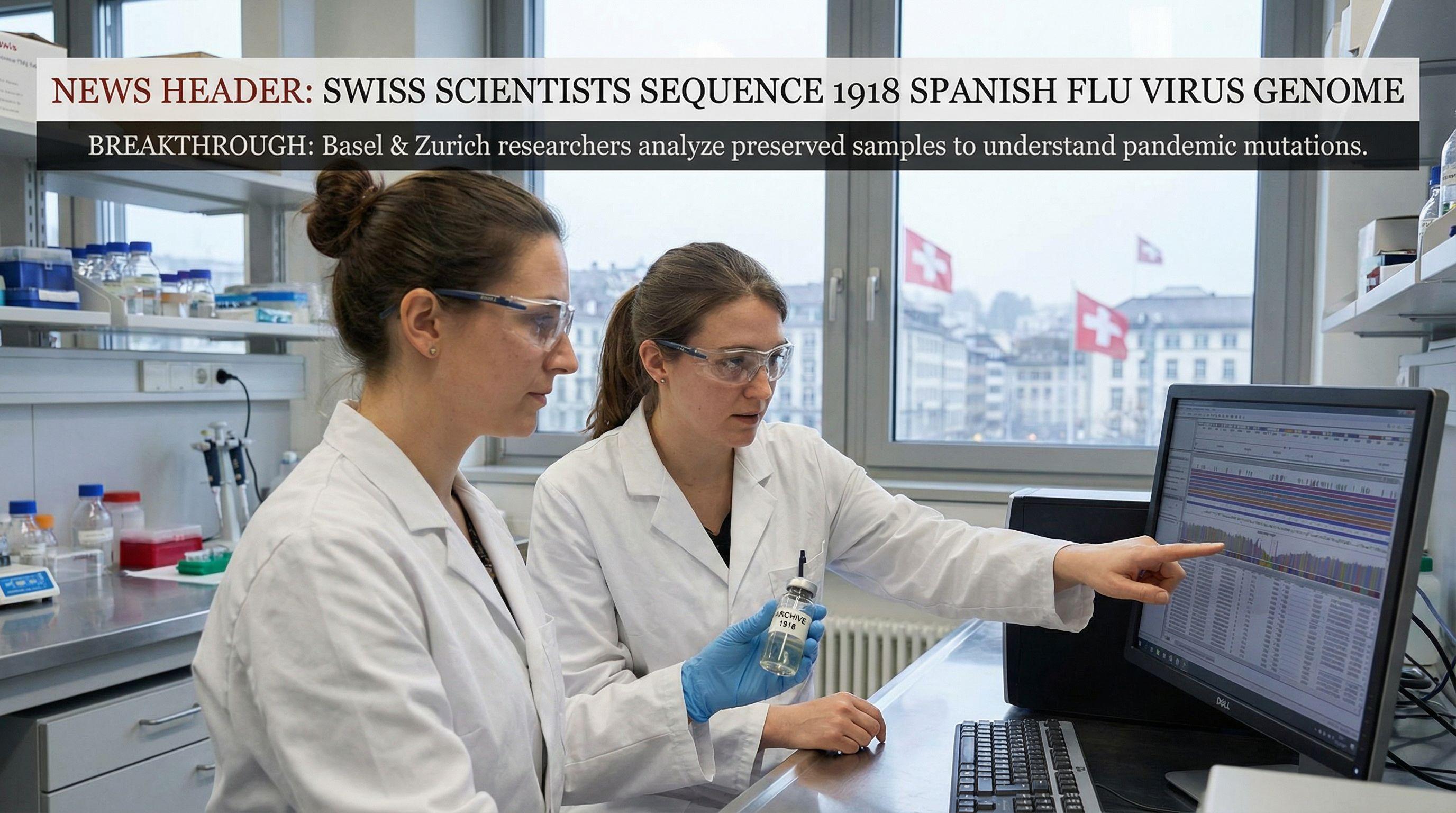
AI
Generated IllustrationKey Takeaways
AI
- Researchers from the Universities of Basel and Zurich have successfully sequenced the genome of the 1918 Spanish flu virus.
- The genetic material was retrieved from a preserved sample of an 18-year-old Swiss male who died in Zurich in 1918.
- Scientists identified three specific mutations that facilitated the virus's adaptation to human hosts.
- Two mutations increased resistance to the human immune system, while one enhanced cell receptor binding.
By The Numbers
25,000
deaths
50%
infection rate
3
key mutations
They Said
"A better understanding of the dynamics of how viruses adapt to humans during a pandemic over a long period of time enables us to develop models for future pandemics."