Politics
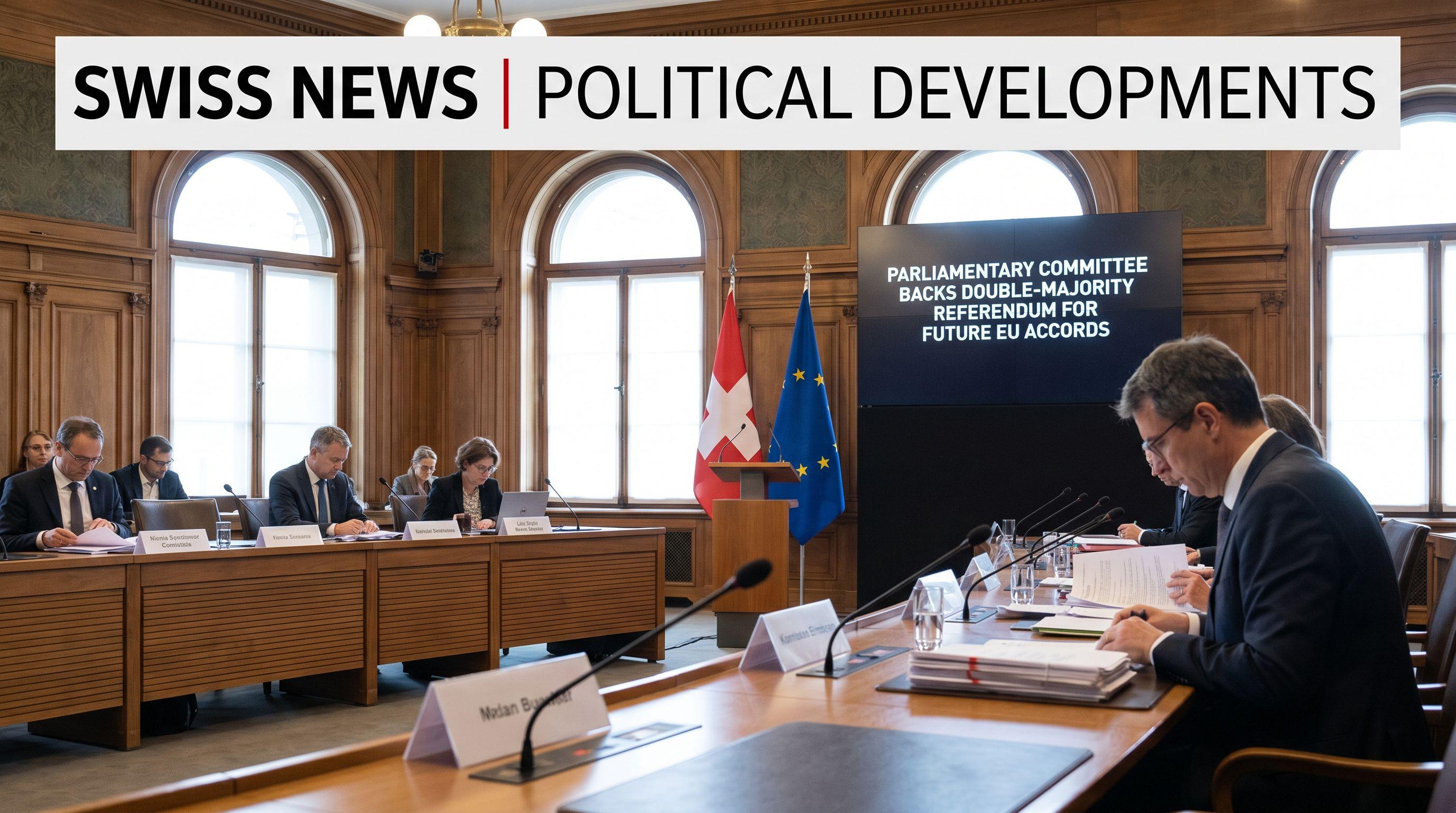
Parliamentary Committee Backs Double-Majority Referendum for Future EU Accords
A key parliamentary committee has supported a proposal requiring future bilateral agreements with the European Union to be approved by a double majority of Swiss voters and cantons. The move, which would anchor the accords in the constitution, signals the high political stakes of upcoming negotiations.
Parliament Ignites Constitutional Power Play
A decisive 15-to-10 vote has fundamentally shifted the landscape of Swiss-European diplomacy. The House of Representatives’ Committee of Political Institutions just threw its weight behind a high-stakes proposal: future bilateral accords with the European Union must survive a double-majority vote of both the people and the cantons. This is no mere procedural tweak; it is a bold assertion of Swiss direct democracy. By demanding that the Bilaterals III package be anchored directly in the Federal Constitution, the committee is raising the bar for approval to its highest possible level. This move mirrors a previous stance by the Senate, signaling a unified parliamentary front that views the upcoming EU agreements as a matter of supreme national importance. The stakes are staggering, as this decision transforms a standard referendum into a constitutional gauntlet that could redefine Switzerland's place in Europe for a generation.
Bridging the Sovereignty Gap
At the heart of this legislative surge is a glaring constitutional contradiction that legal scholars are now grappling to resolve. Professor Stefan G. Schmid of the University of St Gallen warns that extending the Free Movement of Persons creates an unprecedented tension with Switzerland's existing constitutional mandate to manage immigration autonomously. To fix this, the committee proposes a 'transitional provision'—a legal bridge designed to allow the Bilaterals III package to coexist with restrictive domestic laws. Furthermore, the committee backed a 16-to-9 vote to explore a 'sui generis' referendum, a one-of-a-kind legal mechanism tailored specifically for this crisis. This isn't just about trade; it's about the supremacy of Swiss law. Under the new proposal, if the Federal Court faces a conflict between EU accords and federal law, it must side with the Swiss legislator's express intent, shielding national leeway even at the risk of international consequences.
Critics Warn of Total Collapse
While the majority pushes for constitutional anchoring, a vocal minority of 10 dissenters warns that this strategy could backfire with catastrophic results. They argue that forcing a constitutional amendment creates a rigid framework that prevents the agreements and their essential implementing legislation from being voted on as a single, cohesive package. This fragmentation is 'alarming' to those who believe it jeopardizes the delicate compromise reached on wage protection—a cornerstone of Swiss labor stability. If the cantons or the people reject even a sliver of the constitutional provision, the entire Bilaterals III architecture could plummet into irrelevance. The fear is palpable: by trying to save the accords through 'hyper-democratization,' Parliament might inadvertently be handing a 'No' campaign the very tools needed to dismantle years of diplomatic labor. The tension between protecting sovereignty and ensuring economic integration has never been more acute.
The Road to a Historic Verdict
Switzerland now stands at a crossroads, confronting a decision that will echo through its history. The committee’s endorsement of the double-majority requirement ensures that the final word on the EU accords will not come from the halls of power in Brussels or Bern, but from the ballot boxes in every village and canton. This 'bottom-up' approach is the ultimate test of the Swiss model. As the 720 parliamentarians prepare to debate these findings, the focus shifts to the Swiss public, who must weigh the benefits of market access against the sanctity of constitutional autonomy. The coming months will see an unprecedented mobilization of political forces as both sides prepare for a referendum that is as much about Swiss identity as it is about economic policy. One thing is certain: the era of 'quiet diplomacy' is over; the future of Swiss-EU relations is now a public battle for the soul of the nation.