AI
Written with AI assistance•7 febbraio 2025•
The Swiss Agency for Development and Cooperation announces significant cuts to cultural funding, affecting major events like the Locarno Film Festival and other prestigious cultural institutions starting 2029.
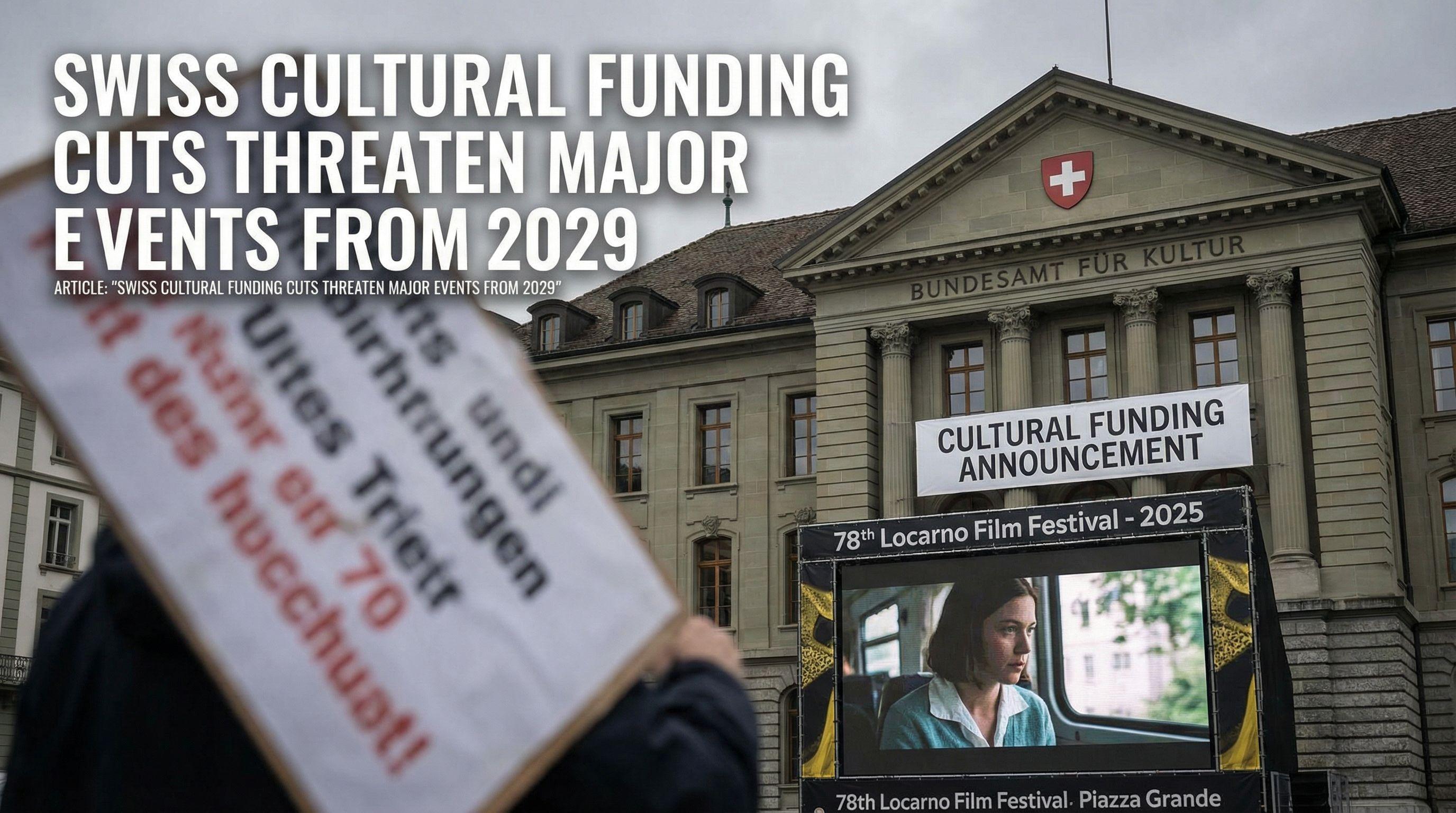
"Large-scale Swiss cultural events, such as the Locarno Film Festival, will lose state funding from 2029 as part of a cost-cutting drive by the administration."
"From 2025, the SDC has cut its funding for cultural cooperation by 45% from CHF3.7 million to CHF2 million per year."
The clock is ticking for Switzerland's most iconic cultural institutions. In a decisive move that sends shockwaves through the arts sector, the Swiss Agency for Development and Cooperation (SDC) has announced it will completely dissolve partnerships with major events starting in 2029. This is not a mere trimming of the fat; it is a fundamental severing of state support for global cultural players. The Locarno Film Festival, a jewel in the Swiss cultural crown, stands directly in the crosshairs of this aggressive cost-cutting drive.
The administration's strategy marks a dramatic pivot away from long-standing cultural diplomacy. By setting a hard deadline of 2029, the federal government has effectively served an eviction notice to the financial foundations of these large-scale events. The implications are severe: without this crucial state backing, the ability of Swiss festivals to maintain their world-class status and international outreach is in immediate jeopardy. The message from Bern is loud and clear—the era of guaranteed federal patronage for these cultural giants is coming to an abrupt end.
While 2029 looms as the final blow, the financial bleeding has already begun with alarming intensity. As of 2025, the SDC has slashed its funding for cultural cooperation by a staggering 45%. The numbers paint a grim picture of the current landscape: the annual budget has plummeted from CHF 3.7 million to a mere CHF 2 million. This immediate evaporation of CHF 1.7 million represents a critical loss of resources that festivals and organizations rely on for their operational stability.
This drastic reduction is not a theoretical projection—it is the harsh reality the Swiss arts scene grapples with today. The speed and scale of these cuts have left institutions scrambling to fill the void. With nearly half of the available funds wiped out overnight, the sector is facing an unprecedented liquidity crisis. Furthermore, the administration has signaled that even these diminished remaining funds remain vulnerable to further austerity measures, creating a climate of extreme financial uncertainty.
The casualty list reads like a Who's Who of Swiss cultural excellence. Beyond Locarno, the cuts strike at the heart of the Visions du Réel documentary festival and the renowned Culturescapes Festival. These are not peripheral entities; they are the engines of Switzerland's cultural dialogue with the world. The impact widens to include the Fribourg Film Festival (FIFF), the International Short Film Festival Winterthur, and the Zürcher Theater Spektakel, all of which now confront a future without this specific stream of federal aid.
The austerity measures also target the infrastructure that supports diversity and production. Vital organizations such as Artlink, the film distributor Trigon-Film, and the production fund Visions Sud Est are among those losing support. Even the Südkulturfonds and the Unesco Fonds international pour la diversité culturelle are on the chopping block. This systematic dismantling threatens to homogenize the Swiss cultural landscape, stripping away the resources that allow diverse, international narratives to find a home in Switzerland.
This cultural austerity is a direct symptom of a broader political shift in Bern. In December, the Swiss parliament wielded the axe against the international cooperation budget, slicing off CHF 110 million for 2025 alone. This move defied the government's initial requests and signaled a harder, more isolationist fiscal stance. The legislature's aggressive approach extends well into the future, with a massive CHF 321 million cut already locked in for the financial plan covering 2026 to 2028.
The political will to sustain international cultural exchange is eroding rapidly. These parliamentary decisions have forced the SDC's hand, necessitating the dissolution of partnerships that have stood for years. As foreign aid to nations like Albania, Bangladesh, and Zambia is discontinued, the cultural sector is becoming collateral damage in a wider war on spending. The Swiss arts scene must now navigate a new era where federal support is no longer a guarantee, but a shrinking privilege.