Crime
Number of Human Trafficking Victims Increased in Switzerland in 2025, Report Finds
A new report reveals a rise in the number of identified human trafficking victims in Switzerland last year. Advocacy groups call for greater awareness, highlighting the diverse profiles of victims and the prevalence of underreporting.
Switzerland Confronts a Surging Shadow Economy
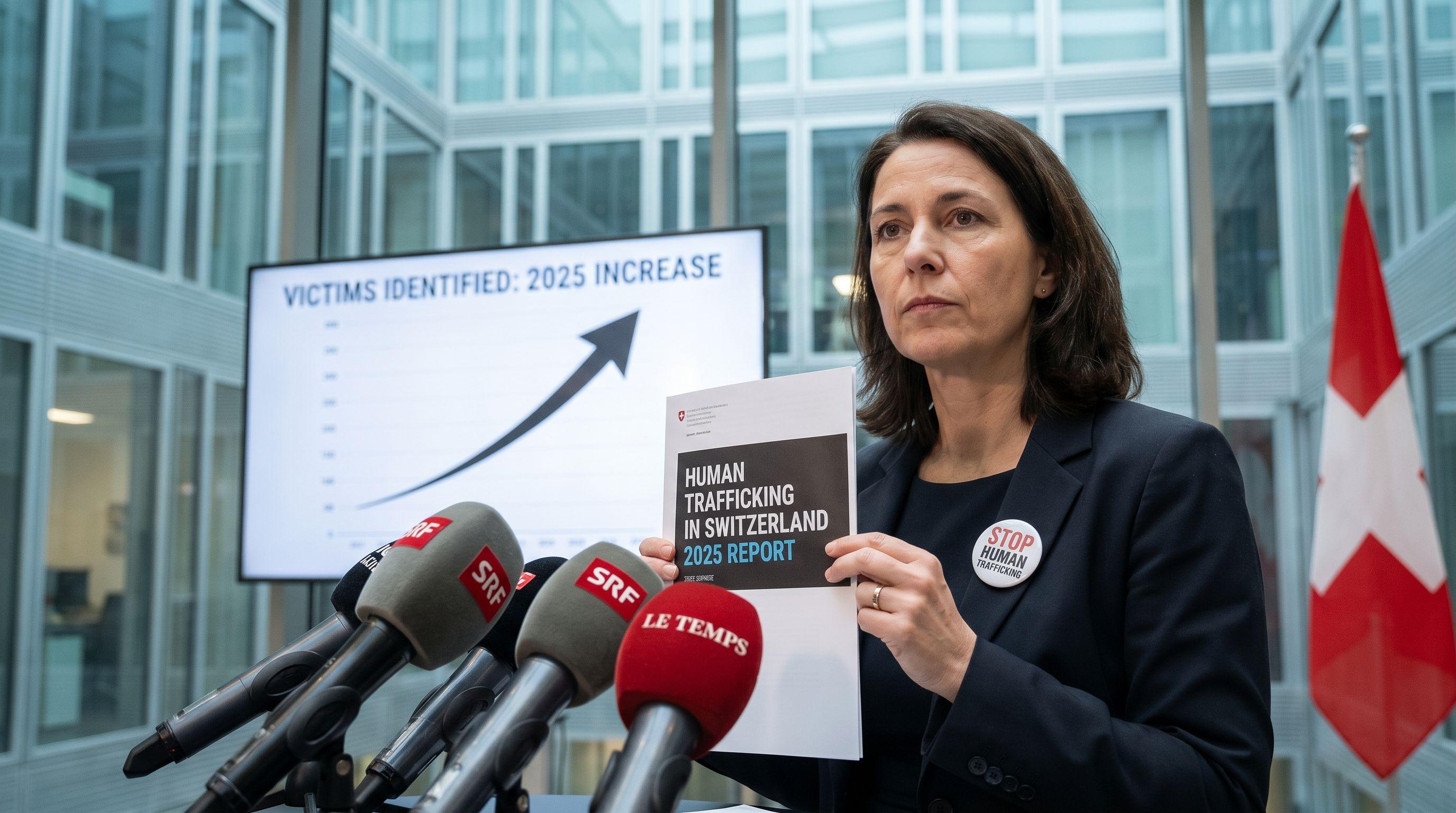
Switzerland’s reputation as a safe haven is under fire as new data reveals a disturbing upward trend in human exploitation. In 2025, the FIZ Advocacy and Support for Migrant Women and Victims of Trafficking registered a staggering 228 people in its protection programme. This represents an increase of 20 individuals compared to the previous year, a surge that experts warn is merely the tip of a much larger iceberg. While the numbers are climbing, the FIZ cautions that figures could be significantly higher due to chronic underreporting and the clandestine nature of these crimes. The reality is stark: 65 individuals required emergency placement in special safe accommodation last year to escape their captors. This is not a distant problem; it is happening within the borders of our confederation, demanding immediate national attention. The increase is partially attributed to heightened awareness, yet the sheer volume of cases proves that traffickers are operating with alarming frequency across Swiss cantons.
Demolishing the Victim Stereotype
Trafficking in Switzerland knows no single face, age, or origin. Victims identified in 2025 hailed from over 80 different countries, creating a complex mosaic of exploitation that defies simple categorization. Fanie Wirth of the FIZ emphasized to Swiss public radio SRF that the age range is shockingly broad, spanning from the very young to individuals over 60 years old. While a significant portion of these victims originate from Eastern Europe, the common thread is not geography, but systemic vulnerability. The absence of education and stable employment opportunities serves as the primary catalyst, driving individuals into the hands of exploiters who promise a better life in the West. This diversity in profiles complicates law enforcement efforts, as there is no 'standard' victim to look for. Instead, the Swiss public and authorities must grapple with the fact that exploitation can hide behind any door, affecting anyone regardless of their background or stage in life.
Sex Work and the Vulnerability Gap
The sex industry remains the primary battleground for human rights advocates in Switzerland. Out of 82 officially identified victims of trafficking last year, more than 58%—specifically 48 individuals—were exploited within the sex work sector. This statistic highlights a critical vulnerability gap that traffickers continue to exploit with impunity. Most of these victims are women who find themselves trapped in a cycle of debt and coercion. However, the FIZ report makes it clear that trafficking is not confined to one industry; it permeates various sectors where labor is cheap and oversight is minimal. The contrast between Switzerland’s high standard of living and the harrowing conditions of these 82 identified victims is dramatic. As the FIZ continues to provide specialized support, the data suggests that the demand for exploitative labor remains a powerful engine for crime, necessitating a more aggressive crackdown on the networks that facilitate this modern-day slavery.
The Urgent Call for Legal Evolution
Switzerland stands at a critical crossroads: current victim assistance laws are failing those exploited beyond its borders. Under existing regulations, individuals who suffer exploitation abroad are often excluded from the robust assistance programs available to those trafficked within Switzerland. This legal loophole creates a hierarchy of suffering that advocacy groups are desperate to dismantle. The 2025 report serves as a catalyst for a renewed political push to expand protections. If Switzerland is to maintain its moral authority on human rights, it must ensure that its legal framework evolves as quickly as the tactics of traffickers. The implications are clear: without a comprehensive overhaul of victim support and a more inclusive definition of assistance, many will continue to fall through the cracks. The rise in identified cases in 2025 is a wake-up call. It is no longer enough to react to the numbers; Switzerland must proactively secure the rights of all victims, ensuring that no one is left to face their exploiters alone.