AI
Written with AI assistance•2 gennaio 2026•
Marking a major shift in the Swiss media landscape, the country's last major free commuter newspaper, '20 Minutes', has ended its 26-year print run. Publisher TX Group will now focus on the paper's digital presence.
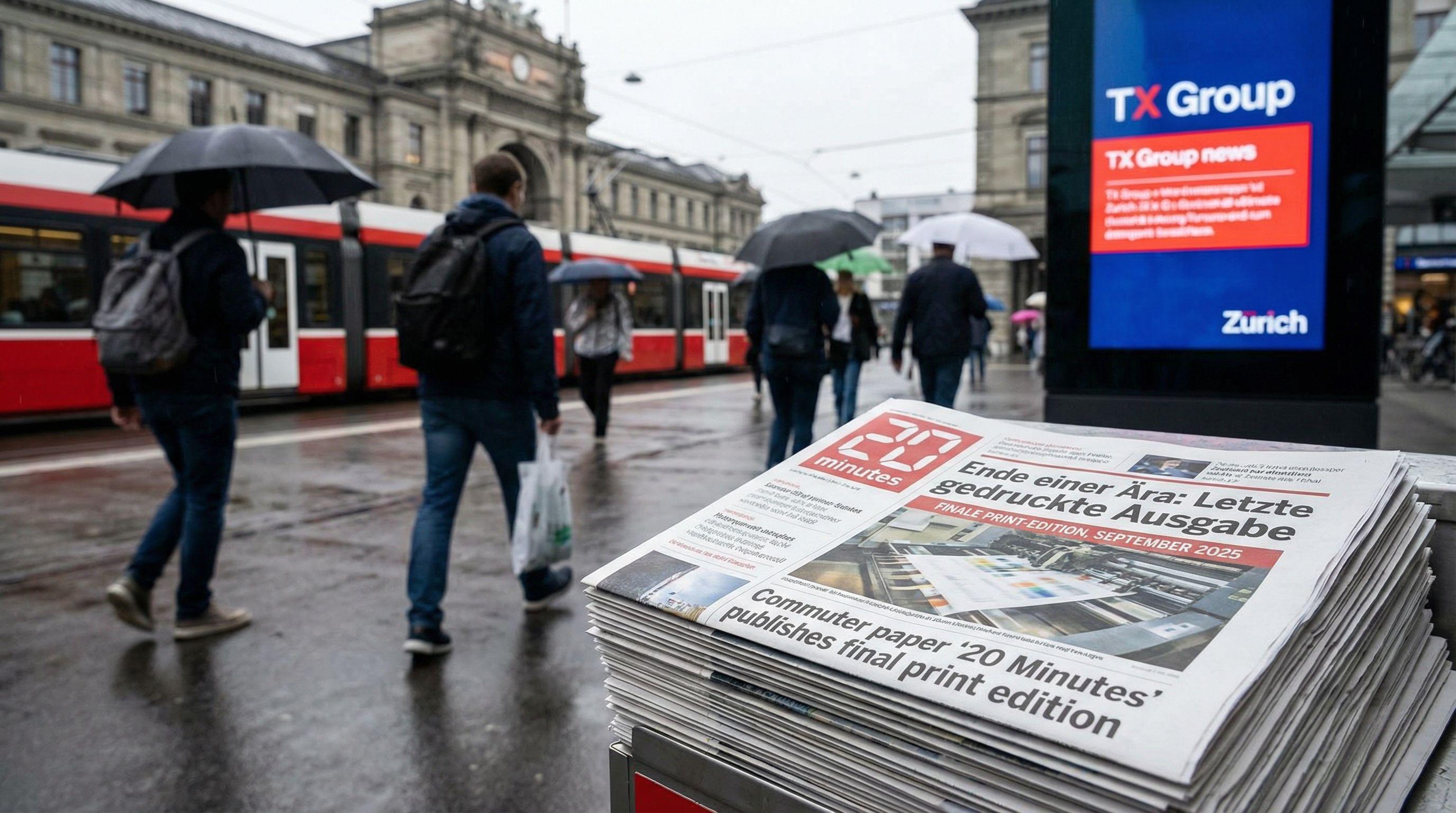
"The closure also consigns to history the blue distribution boxes that once stood at railway stations and tram stops across the country."
"The end of the print edition marks the close of a chapter in commuter journalism — and a reminder of how thoroughly the internet has upended the economics of free news."
Switzerland’s streets are losing a landmark. After a defining 26-year run, the final print edition of '20 Minutes' hit the stands this Tuesday, marking the definitive end of free printed daily news in the country. The iconic blue distribution boxes, once ubiquitous sentinels at every major railway station and tram stop from Geneva to Zurich, are being uprooted. While a select few will find sanctuary in museum collections, the majority are consigned to history, casualties of a media landscape that has shifted irrevocably.
Publisher TX Group has executed a decision first announced this summer, pulling the plug on a format that defined the morning ritual for millions. This is not merely a change in business strategy; it is a cultural erasure. The tactile experience of snapping open a fresh paper on the morning commute has officially been replaced by the silent scroll of smartphones. The farewell edition, distributed across German, French, and Italian-speaking regions, served as a final tombstone for the print era, looking back on a history that began just before the millennium turned.
At its zenith, '20 Minutes' was a juggernaut, distributing a staggering 600,000 copies every single day. Launched in December 1999, it didn't just report the news; it reshaped the rhythm of Swiss life. Long before 5G networks and social media feeds monopolized our attention, this publication democratized information, placing it directly into the hands of commuters at zero cost. It was a logistical marvel, with teams of young distributors in branded jackets flooding platforms to hand-deliver bundles to a hungry public.
The paper's dominance was absolute. It crushed competitors with ruthless efficiency. Rivals like Metropol, .CH, Blick am Abend, and News attempted to carve out space in the free-sheet market, only to wither and die. '20 Minutes' outlasted them all, becoming the sole survivor in a brutal arena. Its influence extended beyond mere reporting; it created a shared national narrative, a common thread connecting the banker in Zurich with the student in Lausanne. Today, that thread is severed, leaving a void in the physical world that no app can fully replicate.
The economics of print have finally caught up with the giant. Despite its massive cultural footprint, '20 Minutes' could not outrun the plummeting trajectory of print advertising revenues. The business model that sustained free journalism for a quarter-century has collapsed under the weight of the digital revolution. Printing and distributing physical paper is a costly enterprise, one that advertisers are no longer willing to bankroll when digital targeting offers superior precision.
This is a cold, hard calculation by TX Group. The sustainability of the print model had evaporated. '20 Minutes' is not alone in this reckoning; it is simply the last domino to fall. Other publishers saw the writing on the wall years ago. Le News, for instance, abandoned its 30,000-copy print run over a decade ago, recognizing that the costs far outweighed the benefits. The closure of '20 Minutes' serves as the final confirmation that the era of ad-funded print journalism is dead. The market has spoken, and it has no room for nostalgia.
While the paper dies, the brand survives—but it faces a radically different battlefield. '20 Minutes' now exists exclusively as a website and an app, a transition eased by its early and aggressive adoption of digital platforms. Pietro Supino, the boss of TX media, and his team are betting everything on this digital-only future. The transition is seamless for the publisher, but jarring for the public. The content remains, but the medium has shifted entirely to the glowing rectangles in our pockets.
This shift represents the total victory of the internet over the printing press in the sector of free news. The immediacy of digital distribution has rendered the overnight print cycle obsolete. As Switzerland grapples with the loss of its last printed free daily, the message is clear: adapt or vanish. '20 Minutes' has chosen adaptation, ensuring its survival in the cloud while its physical legacy is dismantled, bolt by blue bolt, from the streets of Switzerland.