Military
Cost of Swiss Patriot Missile System 'Could Double' Amid Major Delivery Delays
The price for Switzerland's order of the US-made Patriot missile defense system is reportedly on track to double from its original CHF2. 3 billion budget, with deliveries also facing delays of five to seven years due to international conflicts.
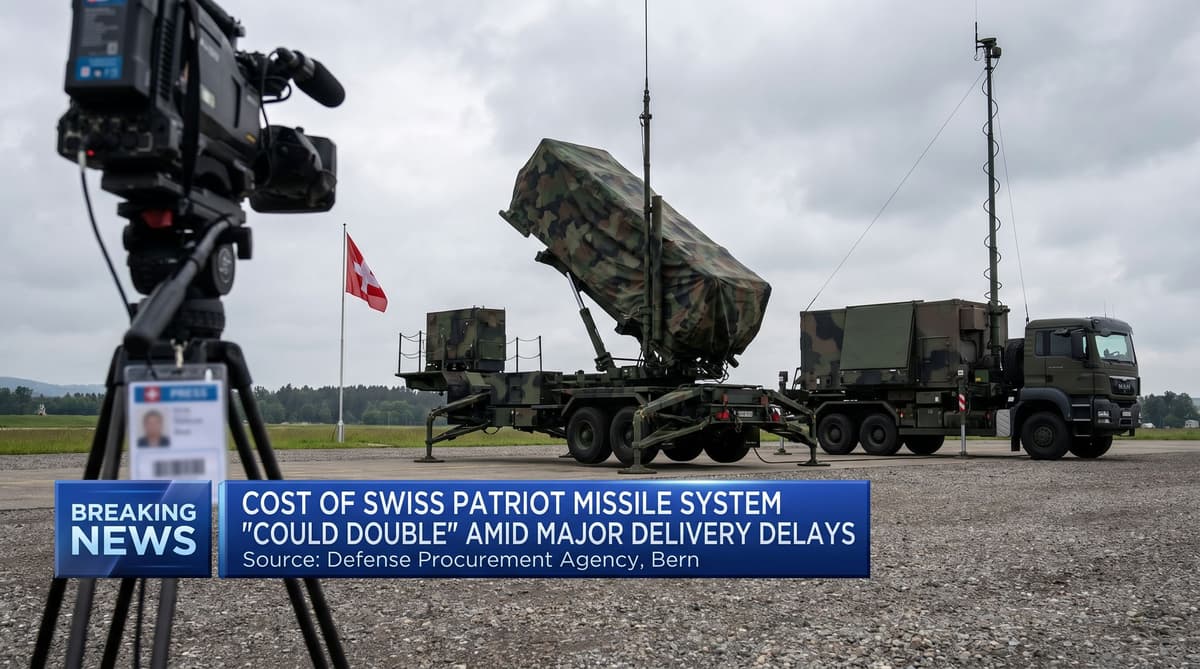
Switzerland’s defense strategy is reeling as the price tag for the American-made Patriot missile system threatens to explode. A staggering CHF 2.3 billion was the original promise, but that figure is now a relic of the past. Reports from Tamedia and CHMedia suggest the final cost could double, effectively vaporizing the initial budget. While the Federal Office for Armaments attempts to downplay the surge, they have already conceded that additional costs are in the '50% plus' range. This is not a minor adjustment; it is a fiscal earthquake that challenges the transparency of Swiss military procurement. The Swiss taxpayer now confronts a reality where a critical security asset costs twice as much before a single unit has even touched Swiss soil. This financial volatility creates a massive vacuum in the federal budget, forcing a confrontation between national security needs and fiscal responsibility. As inflation and production demands soar globally, Switzerland finds itself trapped in a buyer's nightmare, watching its purchasing power plummet in real-time.
Global Conflicts Strangle Supply
A five-to-seven-year delay now separates Switzerland from its promised air defense shield. The geopolitical landscape has shifted violently, and Switzerland is paying the price in time. The war in Ukraine has already diverted manufacturing priorities, and escalating tensions in Iran are further choking the supply chain. This is a critical vulnerability: Switzerland’s airspace remains exposed while the US prioritizes active combat zones. The 'neutral' Swiss are finding that being a non-belligerent does not grant them priority in the global arms queue. Instead, they are pushed to the back of the line, waiting nearly a decade for technology that may be aging by the time it arrives. This unprecedented delay transforms a modern upgrade into a desperate game of catch-up. The government has been forced to admit that the procurement timeline is no longer under its control, leaving the nation’s long-term defense strategy in a state of suspended animation. The urgency is palpable, yet the hang-up is absolute, dictated by foreign battlefields thousands of kilometers away.
Bern Freezes the Flow of Cash
The Federal Council has taken the extraordinary step of halting all payments to the United States for the Patriot system. This bold move, executed in April, serves as a diplomatic and financial handbrake. Switzerland is no longer willing to blindly fund a project plagued by ballooning costs and shifting deadlines. By freezing the cash flow, Bern is signaling that its patience has reached a breaking point. However, the United States has already attempted to circumvent this freeze, creating a high-stakes diplomatic friction between the two nations. This is a power struggle over billions of francs and the very definition of a strategic partnership. The government’s refusal to pay is a rare show of force against a superpower supplier, highlighting a deep-seated frustration with the 'American-first' delivery schedule. This standoff puts the entire Air2030 program at risk, as the Swiss government grapples with the possibility that its primary defense partner may not be able to fulfill its obligations under the agreed terms.
Pivoting Toward a European Shield
The summer of 2026 looms as a decisive turning point for Swiss sovereignty. The Federal Council has openly stated it is considering the nuclear option: cancelling the US contract entirely. In its place, a European missile defense system is being weighed as a more reliable, and perhaps more affordable, alternative. This potential pivot represents a seismic shift in Swiss procurement philosophy, moving away from total reliance on Washington toward a more integrated European security framework. A decision is expected this summer, and the implications are profound. If Switzerland walks away, it ruins a multi-billion franc deal and reshapes its geopolitical alliances for a generation. The choice is stark: stay the course with a delayed, overpriced American system, or gamble on a European solution that could offer faster delivery and better regional integration. The stakes could not be higher. As the world grows more dangerous, Switzerland’s ability to defend its own skies hangs in the balance, caught between a failing deal and an uncertain future.