Politics
Swiss Parliament Rejects Initiative to Ease Naturalisation Process
The Swiss House of Representatives has voted decisively against a popular initiative aimed at simplifying the naturalisation process and making criteria uniform across the nation, sending the proposal to the Senate.
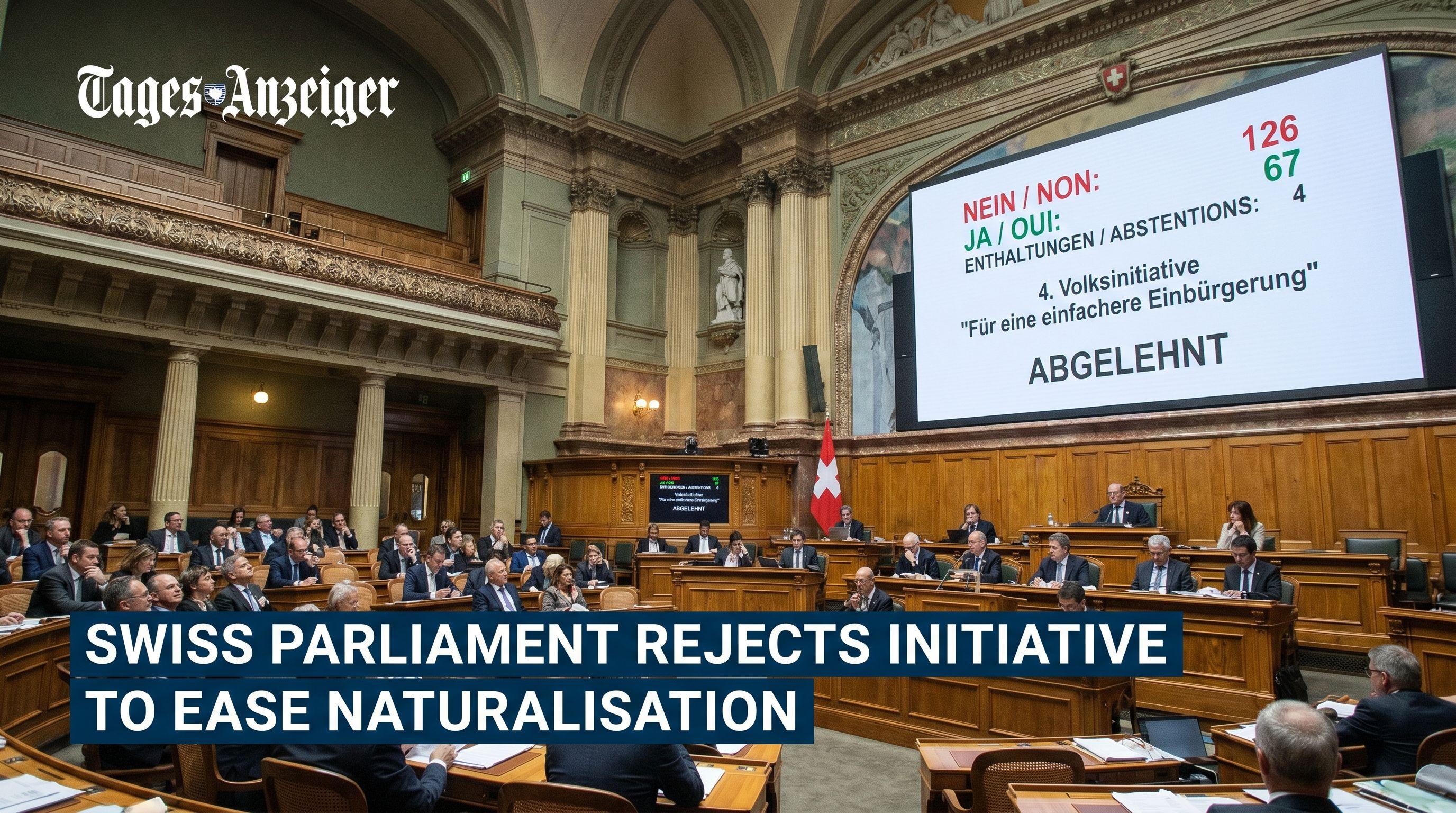
Parliament Crushes Bid for Citizenship Reform
A staggering two-thirds majority in the Swiss House of Representatives has decisively halted a movement to overhaul the nation's citizenship laws. With 130 votes against and only 62 in favor, the National Council sent a clear message: the path to becoming Swiss will remain one of the most rigorous in Europe. This high-stakes rejection follows a grueling five-and-a-half-hour debate that laid bare the deep ideological rifts within the Federal Palace. The 'Democracy Initiative,' championed by the civil society alliance 'Aktion Vierviertel,' sought to dismantle the current barriers to entry, but it was met with a wall of resistance from the center and right-wing blocs. This vote isn't just a procedural hurdle; it is a firm defense of the status quo in a country where identity and integration are perpetually under the microscope. While the Social Democrats and Greens fought to modernize what they call 'outdated' civil rights, their efforts were systematically dismantled by a majority that views the current 10-year residency requirement as a necessary 'trial by fire' for prospective citizens.
The Five-Year Flashpoint: Radical Shifts Rejected
The initiative proposed a radical halving of the residency requirement, slashing it from ten years to just five. This move would have fundamentally altered the demographic landscape of Swiss civic life, yet the House refused to budge. Under current law, applicants must possess a C residence permit and prove a decade of integration, a standard the initiative's supporters argued is punitively long. The proposed reform also sought to lower language barriers to a basic A2 level, arguing that 'democracy requires participation, not perfection.' However, opponents surged to the defense of the current system, asserting that Swiss citizenship is a 'reward for successful integration' rather than a starting point. The rejection also buried a counter-proposal from the political left that aimed to ease naturalisation specifically for second-generation immigrants—a group that currently faces the same hurdles as newcomers unless they belong to the third generation. This refusal to compromise signals a hardening of the parliamentary heart against any dilution of the 'Swiss' brand.
Federal Control vs. Cantonal Sovereignty
At the heart of this legislative battle is a fierce struggle for power between Bern and the individual cantons. The 'Democracy Initiative' demanded that the federal government seize total control over naturalisation legislation, effectively stripping cantons of their right to set local criteria. Currently, Switzerland’s federalist structure allows cantons to impose their own residency requirements, ranging from two to five years, and to dictate the specifics of the naturalisation interview. This patchwork of rules means that becoming Swiss in Geneva is a vastly different experience than in Schwyz. By rejecting the initiative, the House has reaffirmed the sanctity of cantonal autonomy. Critics of the initiative argued that local communities are the best judges of integration, while proponents lamented a 'postcode lottery' that treats residents unequally based on where they live. This tension between national uniformity and local tradition remains the most significant roadblock to any future reform, as the House chooses to protect the historical 'bottom-up' approach to citizenship.
A Nation Divided: The Political Aftermath
The battle now moves to the Senate, but the momentum is firmly with the conservatives. The Swiss People’s Party (SVP) has even attempted to push the pendulum further, unsuccessfully proposing that applicants be forced to renounce their original nationalities to obtain Swiss papers. This 'all-or-nothing' approach to identity highlights the polarizing nature of the debate. As identity theft cases soar and the economy grapples with the impact of free movement, the question of who gets to call themselves 'Swiss' has never been more critical. For the 25% of the Swiss population who do not hold a Swiss passport, this rejection is a stark reminder of the high walls surrounding the Alpine democracy. The initiative will eventually face the ultimate judge—the Swiss voters—in a national referendum. Until then, the message from Bern is clear: the keys to the Confederation will not be handed out easily. The struggle for 'modern civil rights' faces an uphill climb against a parliament determined to preserve the exclusivity of the Swiss cross.