AI
Written with AI assistance•6 février 2026•
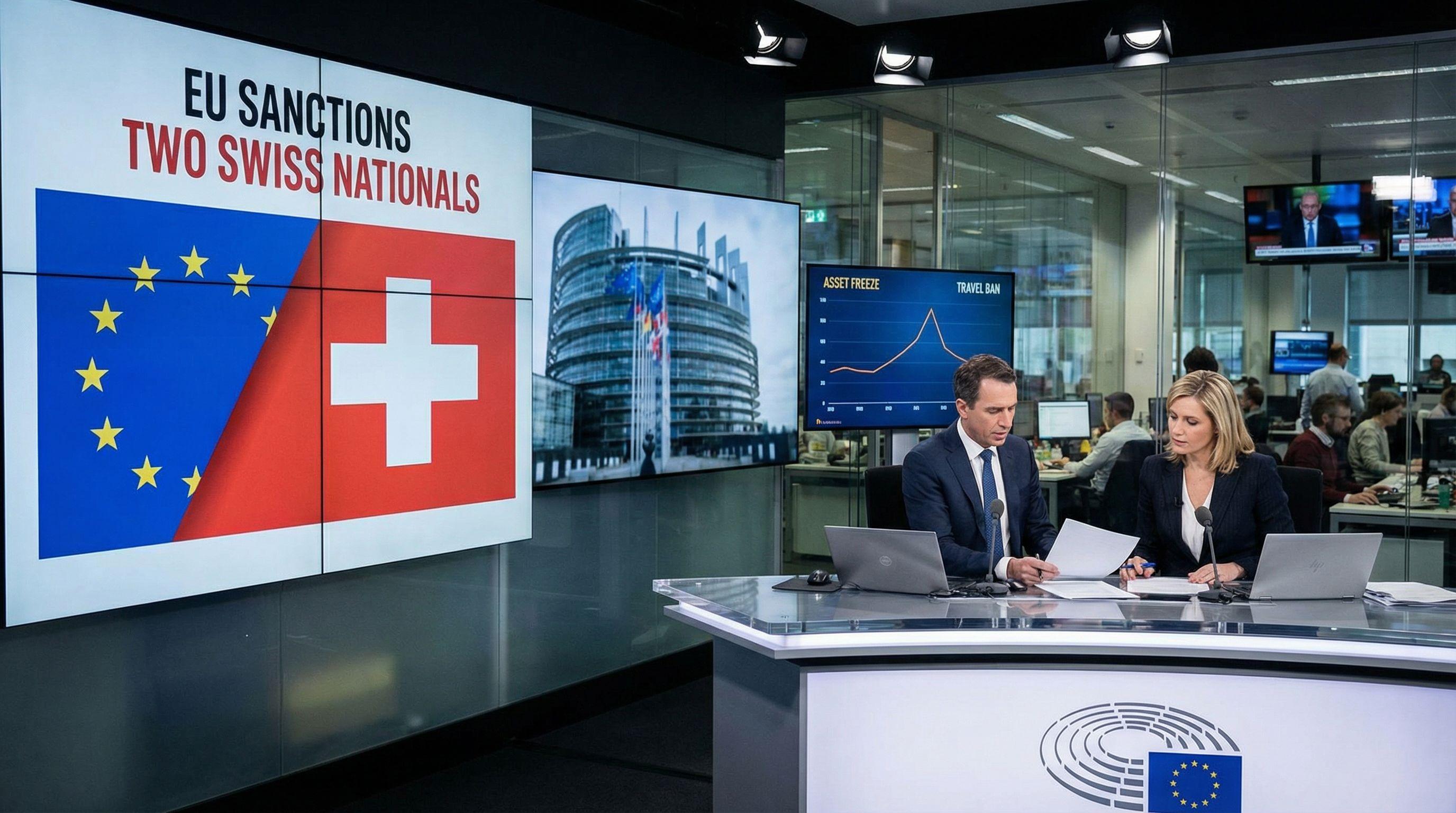
The European Union has imposed sanctions, including travel bans and asset freezes, on two Swiss citizens—a former intelligence officer and a Swiss-Cameroonian influencer—for their alleged involvement in spreading Russian propaganda.
"Measures or strategies linked to the Russian government that undermine democracy, the rule of law, stability or security."
"The Lady of Sochi"
The European Union has escalated its information war, launching a direct and unprecedented legal strike against two Swiss citizens. In a move that reverberates through the halls of Bern and Brussels alike, the EU has imposed severe sanctions—including crippling asset freezes and strict travel bans—on Jacques Baud and Nathalie Yamb. These are not merely warnings; they are punitive measures designed to dismantle the financial and logistical capabilities of individuals accused of peddling Russian propaganda.
While sanctions against Russian oligarchs have become commonplace, targeting Swiss nationals marks a critical shift in the EU's strategy to combat "hybrid threats." The allegations are serious: active involvement in spreading disinformation that destabilizes Western democracy. This aggressive posture signals that citizenship is no longer a shield against Brussels' wrath when the integrity of the European information space is at stake. The message is clear: the EU is no longer distinguishing between foreign adversaries and the Western nationals who amplify their narratives.
The profiles of the two sanctioned individuals could not be more distinct, yet both find themselves in the crosshairs of EU foreign policy. Jacques Baud, a former officer of the Swiss Federal Intelligence Service (FIS), faces a dire reality. Residing in Brussels, Baud is feeling the full, crushing weight of the asset freezes, a situation that has reportedly hit him harder than many sanctioned Russian oligarchs. His proximity to the seat of EU power has ironically made him an easy target for enforcement.
In stark contrast, Nathalie Yamb—self-styled as the "Lady of Sochi"—continues to operate with a surprising degree of freedom. While Baud is pinned down in Europe, Yamb has leveraged her connections in the Global South. As of August 2025, she serves as a special advisor to Niger’s military rulers, a position that came with a diplomatic passport. This critical document has allowed her to bypass travel restrictions, facilitating official visits to allies like Venezuela. While Baud grapples with frozen bank accounts, Yamb flaunts her diplomatic immunity, highlighting a glaring disparity in the practical application of these sanctions.
Switzerland is refusing to sit idly by while its citizens are targeted by foreign entities. In a significant diplomatic maneuver, the Swiss ambassador intervened directly in Brussels on January 9, 2026. This move underscores a growing tension: while Switzerland has previously aligned with EU sanctions against Russia—such as in the case of businessman Artem Yurievich Chaika in 2023—it has not adopted this specific regime targeting disinformation.
Both Baud and Yamb have expressed feelings of abandonment, yet the ambassador's intervention proves that Bern is navigating a delicate tightrope. The government is forced to balance its traditional neutrality and protection of its citizens against its relationship with the European Union. Unlike the clear-cut financial sanctions related to the war in Ukraine, these new measures target speech and influence, areas where Swiss law and EU directives diverge. The Swiss government is now in the uncomfortable position of advocating for citizens accused of undermining the very values Europe seeks to defend.
The sanctions rest on a controversial 2024 EU directive that penalizes "measures or strategies" linked to the Russian government that undermine democracy. However, this plunges the continent into a dangerous legal grey area. When does a controversial opinion become a "hybrid threat"? The EU asserts that the deliberate spread of false information with malicious intent justifies these extreme measures, effectively weaponizing the legal system against information warfare.
Critics argue this sets a precarious precedent for press freedom. While disinformation is a tangible threat, the power to freeze assets and ban travel without a criminal trial is a tool of immense magnitude. As the definition of "security threat" expands to include narrative and influence, journalists and commentators operate on shifting ground. Today, it is a former spy and an influencer; tomorrow, the net could widen. This case forces a critical confrontation between the necessity of defending democracy and the imperative of free expression.