energy
Swiss Government Retreats on Energy Security Regulations
Federal Council withdraws proposed electricity supply act updates following industry opposition, sending stricter liquidity requirements back for revision until year-end.
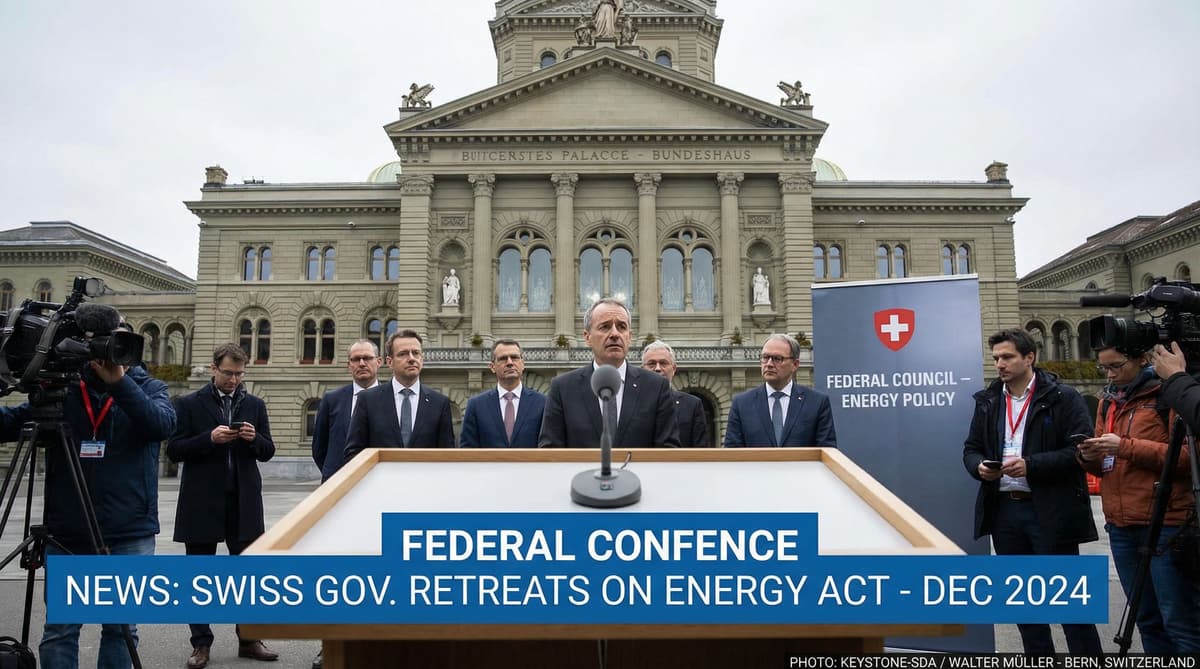
The Swiss Federal Council has executed a stunning policy U-turn, scrapping its ambitious plans to overhaul the Electricity Supply Act. In a move that exposes the deep rift between federal ambition and industrial reality, the government has bowed to harsh criticism from powerful industry stakeholders and cantonal authorities. The original proposal, designed to tighten the screws on system-critical energy suppliers, has been effectively shelved as of May 14, 2025.
This is not merely a delay; it is a forced retreat. The government's intent to enforce stricter accountability upon owners—primarily cantons and municipalities—hit a wall of opposition that could not be breached. Instead of pushing forward with a seamless transition to a robust new legal framework, the Federal Council has been forced to send the Department of Energy back to the drawing board. They now face a race against time, with a mandate to revise the shattered bill by the end of the year. The message from the consultation process was loud and clear: the industry refuses to accept the government's terms without a fight.
Liquidity Mandates Spark Fierce Backlash
At the heart of this legislative collapse lies a battle over balance sheets. The government's proposal sought to impose rigorous new standards on organizational structure, risk management, and, most controversially, minimum requirements for liquidity and equity. These measures were intended to insulate the Swiss grid from financial shocks, ensuring that energy providers—not the taxpayer—would bear the brunt of future crises.
However, the industry's response was swift and decisive. Stakeholders dismantled the proposal during the consultation phase, arguing that the liquidity requirements were too onerous and the capital mandates too restrictive. The defeat of these specific clauses highlights a critical tension: while the government seeks to secure the nation's energy future through financial regulation, the energy sector views these constraints as a straitjacket on their operations. The rejection was total, forcing the Federal Council to waive these stricter rules for the time being, leaving a regulatory vacuum where tougher oversight was meant to stand.
Rescue Shield Extended for Five Years
With the legislative roadmap in tatters, the government has been forced to deploy a stop-gap measure of significant magnitude. The existing rescue package, a financial safety net originally scheduled to expire in 2026, will now be extended by a staggering five years. This decision admits a painful reality: a seamless transition to a permanent legal solution is no longer possible.
This extension is a double-edged sword. While it guarantees a safety net remains in place, it prolongs the state of emergency management rather than establishing a sustainable, long-term regulatory environment. The rescue mechanism, designed as a temporary bridge, is now becoming a semi-permanent fixture of Swiss energy policy. By pushing the horizon out to 2031, the Federal Council is buying time, but at the cost of certainty. The reliance on this extended rescue package underscores the severity of the delay—Switzerland is now operating on borrowed time regarding its energy security framework.
Grid Stability Remains on Thin Ice
This legislative paralysis comes at a critical juncture for Switzerland. While politicians debate the fine print of liquidity ratios, the physical reality of the energy grid remains precarious. The Federal Electricity Commission (ElCom) has issued a stark warning: electricity reserves are still desperately needed in the medium term. The nation's energy supply is not yet secure enough to weather potential storms without these safeguards.
By retreating on these regulations, the government risks leaving the sector vulnerable just as stability is needed most. The delay in enforcing stricter capital requirements means that for the foreseeable future, the systemic risks that the law was intended to mitigate remain unchecked. As the Department of Energy scrambles to revise the bill by year-end, the clock is ticking. Switzerland remains in a delicate balancing act, relying on extended emergency measures while the structural reforms required for true energy independence remain just out of reach.