healthcare
Roche Breakthrough: New AI Algorithm for Heart Attack Detection
Swiss pharmaceutical giant secures CE mark for innovative chest pain triage algorithm, advancing emergency cardiac care diagnostics across Europe.
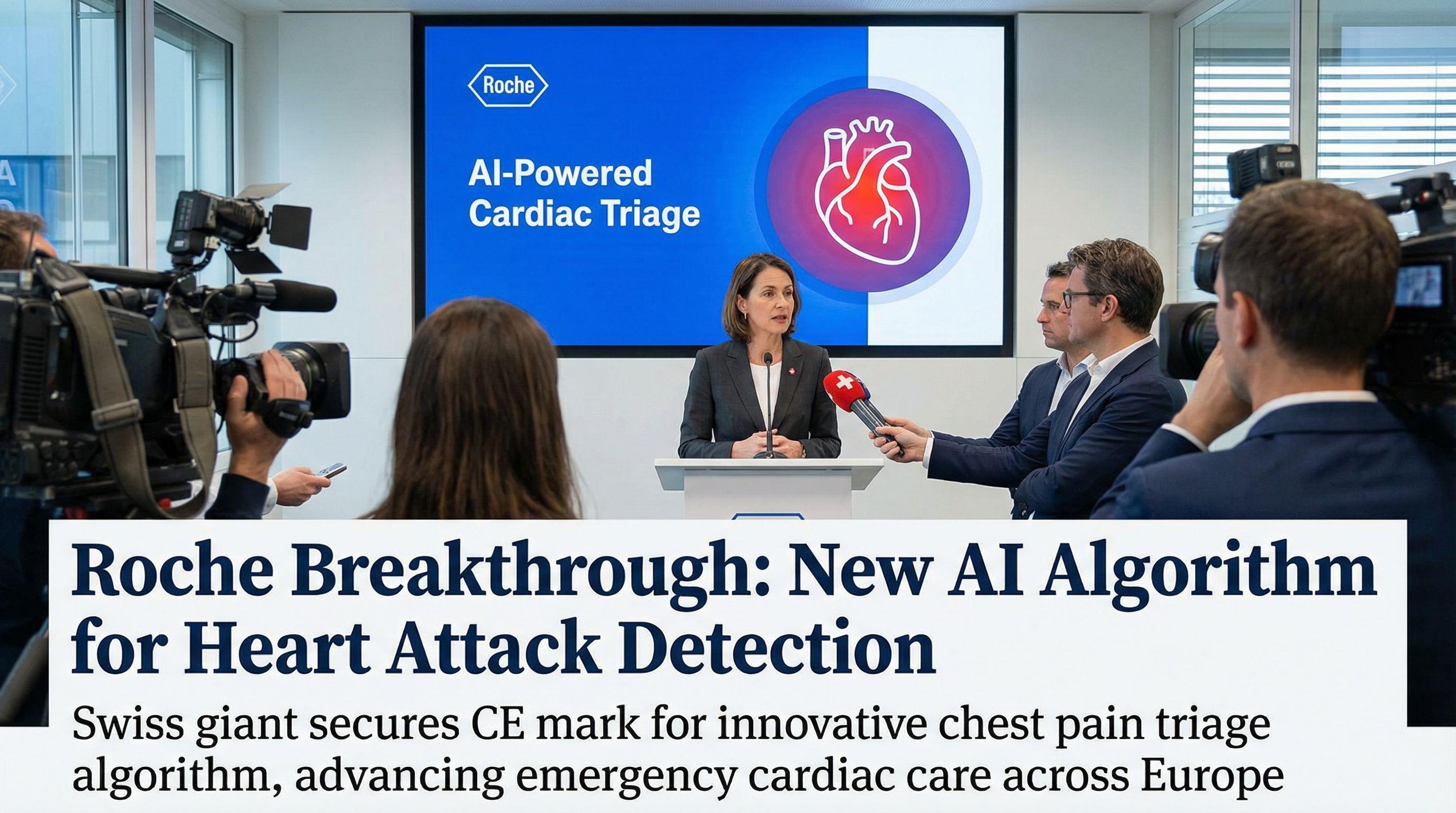
Regulatory Victory: Roche Redefines Emergency Triage
Swiss pharmaceutical titan Roche has smashed through a critical regulatory barrier, securing the coveted CE mark for its revolutionary chest pain triage algorithm. This is not merely an administrative win; it is a pivotal moment for emergency medicine across Europe. By obtaining this "green light," the Basel-based giant effectively empowers Accident and Emergency (A&E) departments to make rapid, life-saving decisions with unprecedented confidence.
The urgency cannot be overstated. Acute Coronary Syndrome (ACS), which includes heart attacks, demands immediate and precise action. Roche’s new tool cuts through the chaos of the ER, providing doctors with a robust mechanism to rule out or confirm cardiac events instantly. This approval signals a dramatic shift in how hospitals manage the influx of chest pain patients, moving from traditional observation to data-driven, algorithmic precision. As healthcare systems grapple with overcrowding, this innovation arrives as a critical lifeline, promising to streamline patient flow and prioritize those in immediate danger.
The Engine: AI Meets High-Sensitivity Diagnostics
At the heart of this breakthrough lies a sophisticated fusion of biology and code. Roche has successfully integrated its cutting-edge high-sensitivity cardiac troponin tests with advanced digital algorithms, creating a diagnostic powerhouse. This is not just about measuring biomarkers; it is about interpreting them with machine intelligence to distinguish between a lethal cardiac event and non-cardiac chest pain.
The algorithm acts as a force multiplier for medical professionals. By synthesizing complex lab data into clear, actionable insights, it removes ambiguity from the diagnostic process. The integration with existing lab solutions ensures that this is not a standalone gadget but a core component of the hospital's nervous system. The result is a seamless flow of reliable data that allows clinicians to act faster than ever before, potentially saving heart muscle—and lives—that might otherwise be lost to hesitation.
Global Rollout: From Basel to the World
Roche is wasting no time in asserting its dominance on the global stage. With the CE mark in hand, the algorithm is immediately available across Europe, the Middle East, and Asia. This aggressive rollout strategy underscores the company's confidence in its technology and its commitment to modernizing healthcare infrastructure worldwide.
Meanwhile, the United States stands as the next major frontier. Roche has confirmed that the algorithm will soon be deployed to the American market via its Navify suite of cloud-based solutions. This strategic expansion ensures that Swiss innovation will soon be the standard-bearer for cardiac triage in hospitals from Zurich to New York. The seamless integration into existing emergency service workflows means that adoption barriers are minimal, allowing hospitals to upgrade their diagnostic capabilities without overhauling their entire operational structure.
Future Horizons: The Digital Cardiac Ecosystem
This algorithm is merely the opening salvo in Roche’s broader war on cardiac disease. The company has made it clear that this is part of a comprehensive, future-proof offering for Acute Coronary Syndrome. We are witnessing the birth of a holistic digital ecosystem where next-generation algorithms, biomarkers, near-patient care devices, and laboratory analyzers communicate in real-time.
The implications for the future of Swiss and global healthcare are profound. Roche is moving beyond simple diagnostics into total patient care management. By combining cloud-based intelligence with physical medical devices, they are building a safety net that is tighter, faster, and smarter. As these technologies mature, the line between the laboratory and the patient's bedside will vanish, ushering in an era where heart attacks are detected with near-perfect accuracy the moment a patient enters the door.