Business
Novartis Reports Sales Dip as Generic Drug Competition Intensifies
Swiss pharmaceutical giant Novartis has reported a decline in Q1 turnover, attributing the pressure to the loss of patent protection on billion-euro drugs like Entresto. The company is bracing for a significant impact from copycat drugs throughout the year.
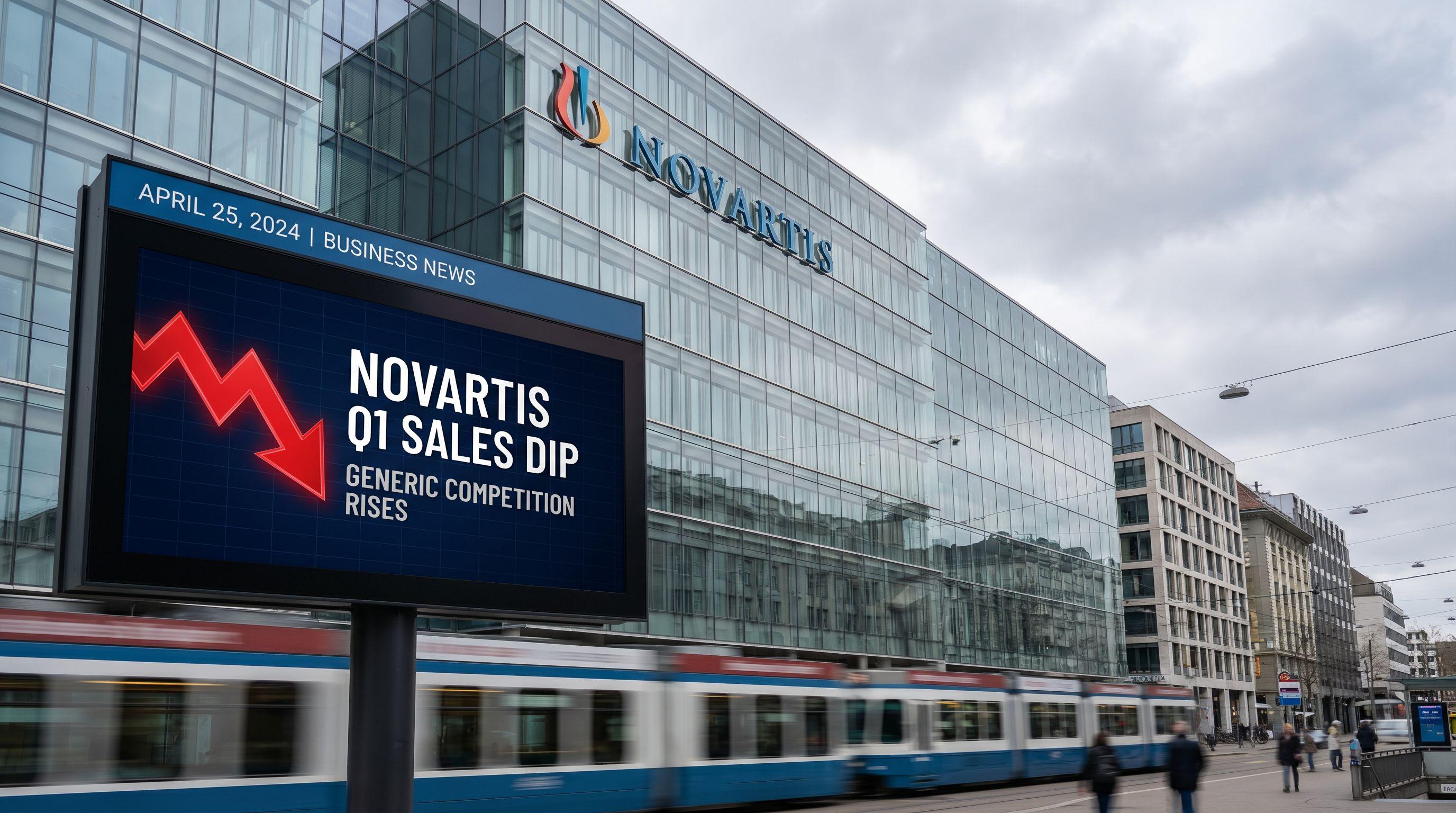
The Patent Cliff Arrives
A staggering $13.1 billion in first-quarter turnover marks a pivotal moment for Novartis as the pharmaceutical titan finally hits the long-feared 'patent cliff.' This 1% dip in revenue—which plummets to a 5% decline at constant exchange rates—signals the end of an era for some of the company’s most lucrative assets. While revenue grew by a healthy 8% just two quarters ago, the momentum has stalled. The Basel-based giant is now grappling with the harshest period of generic competition in its history. This is not a gradual decline; it is a sudden, calculated shift in the market landscape. The company’s consolidated profit has already slid to $3.2 billion, down from $3.6 billion a year prior. Investors are watching closely as the shield of exclusivity vanishes, leaving billion-dollar brands exposed to the cold reality of the open market.
Generic Rivals Storm the Gates
More than $4 billion in annual sales is currently at risk as generic manufacturers flood the market with low-cost alternatives to Novartis’ crown jewels. The loss of patent protection for Entresto, Promacta, and Tasigna—all multi-billion euro drugs—has opened the floodgates for copycat products. CEO Vas Narasimhan has been blunt about the situation, warning that the impact will be 'significantly greater' during the first half of 2026. This is a brutal confrontation with the lifecycle of pharmaceutical innovation. While Novartis has enjoyed years of dominance with these therapies, the arrival of generics forces an immediate and aggressive repricing of the company’s value proposition. The sheer scale of this transition is unprecedented for the firm, as three of its most vital revenue streams face simultaneous erosion from competitors who lack the massive R&D overhead of the Swiss original.
Profit Margins Under Siege
Core operating profit has plummeted by 12%, falling to $4.9 billion and missing the AWP consensus of $5.2 billion by a significant margin. This metric, which analysts use to strip away the noise of one-time costs, reveals the true pressure on the company's bottom line. Operating profit itself dropped 9% to $4.2 billion, driven largely by the lower volume of high-margin branded sales. The contrast is stark: while Novartis is fighting to maintain its market share, the costs of maintaining a global infrastructure remain high. This financial squeeze is further complicated by international political pressure, including recent deals with the US government to slash drug prices. The pharmaceutical industry’s traditional high-margin model is being attacked from two sides—by generic manufacturers on the bottom and by government regulators on the top.
Basel Braces for a Transitional Year
Despite the immediate turbulence, Novartis management remains defiant, confirming its full-year targets and projecting low single-digit sales growth by year-end. This confidence suggests that the company expects its newer pipeline of drugs to eventually offset the massive losses from its expiring patents. For Switzerland, the stakes could not be higher. As one of the nation’s largest employers and a cornerstone of the Swiss economy, Novartis’ ability to pivot is a matter of national interest. The company is betting on a second-half recovery to stabilize its core operating profit, which is currently expected to decline only slightly over the full year. The message from Basel is clear: the storm is here, and it is heavy, but the structural integrity of the Swiss pharma giant remains intact. The coming months will determine if Novartis can innovate its way out of this $4 billion hole or if the era of double-digit growth is a relic of the past.