Arts & Culture
Moritz de Hadeln, Founder of Visions du Réel Film Festival, Dies at 85
Moritz de Hadeln, a pivotal figure in the film world who founded the Visions du Réel documentary festival in Nyon in 1969, has passed away at 85. He was also renowned for his leadership at other major festivals, including the film screenings on Locarno's Piazza Grande.
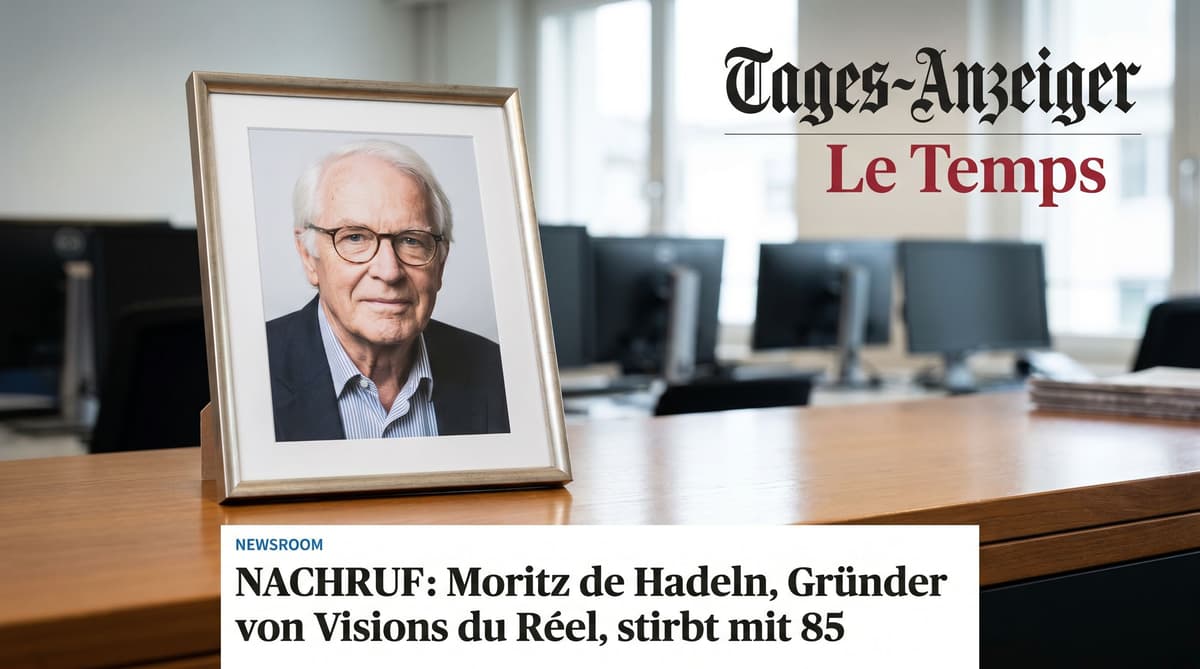
The global film community grapples with the loss of a visionary as Moritz de Hadeln, the formidable architect of modern film festivals, dies at 85. De Hadeln was not merely a director; he was a force of nature who transformed the landscape of cinema from the shores of Lake Geneva to the red carpets of Berlin and Venice. His death, confirmed by the Nyon Film Festival on Tuesday, follows complications from surgery after a long illness. Born in England in 1940 and raised across the cultural hubs of Europe, de Hadeln’s life was an odyssey through the lens. He began as a documentary filmmaker, but his true masterpiece was the creation of platforms that allowed others to shine. His passing marks the end of an era for Swiss cultural diplomacy, leaving a void in an industry he helped professionalize and globalize over six decades of tireless service.
Revolutionizing the Swiss Screen
In 1969, de Hadeln ignited a cultural revolution in Nyon by founding the International Documentary Film Festival, now the world-renowned Visions du Réel. While documentaries were often sidelined as academic exercises, de Hadeln saw them as the 'strength of Swiss cinema,' elevating the genre to a high art form. His ambition did not stop at the lakeside. In 1972, he seized the reins of the Locarno International Film Festival, where he served for five pivotal years. It was de Hadeln who pioneered the open-air screenings on the Piazza Grande, a move that turned a regional gathering into a staggering international spectacle. Today, the Piazza Grande remains the beating heart of Locarno, a testament to his belief that cinema must be a shared, public experience. He didn't just show films; he built cathedrals for them, ensuring that Swiss festivals punched far above their weight on the global stage.
Conquering the European Stage
For a staggering 21 years, de Hadeln commanded the Berlin International Film Festival, steering the Berlinale through the fall of the Wall and into a new millennium. His tenure from 1980 to 2001 is the longest in the festival’s history, a period defined by aggressive expansion and the historic 2000 move to Potsdamer Platz. He was a master of the 'Grand Slam' of festivals, eventually becoming the first-ever foreign artistic director of the Venice International Film Festival in 2002. This appointment shattered decades of Italian isolationism. In Venice, he demonstrated his unparalleled industry clout by programming five major Miramax titles in a single year, including the Oscar-winning 'The Hours.' His ability to navigate the complex geopolitical tensions of the film world made him a sought-after consultant and jury member long after he stepped down from official posts. He was the ultimate insider, a man who knew that a festival's power lay in its ability to blend high art with Hollywood muscle.