Business
Jura Construction Price-Fixing Probe Expands to 20 Firms
The Swiss Competition Commission (Comco) has widened its investigation into alleged bid-rigging in Canton Jura, now targeting 20 construction companies for coordinating prices on over 150 public and private tenders since 2016.
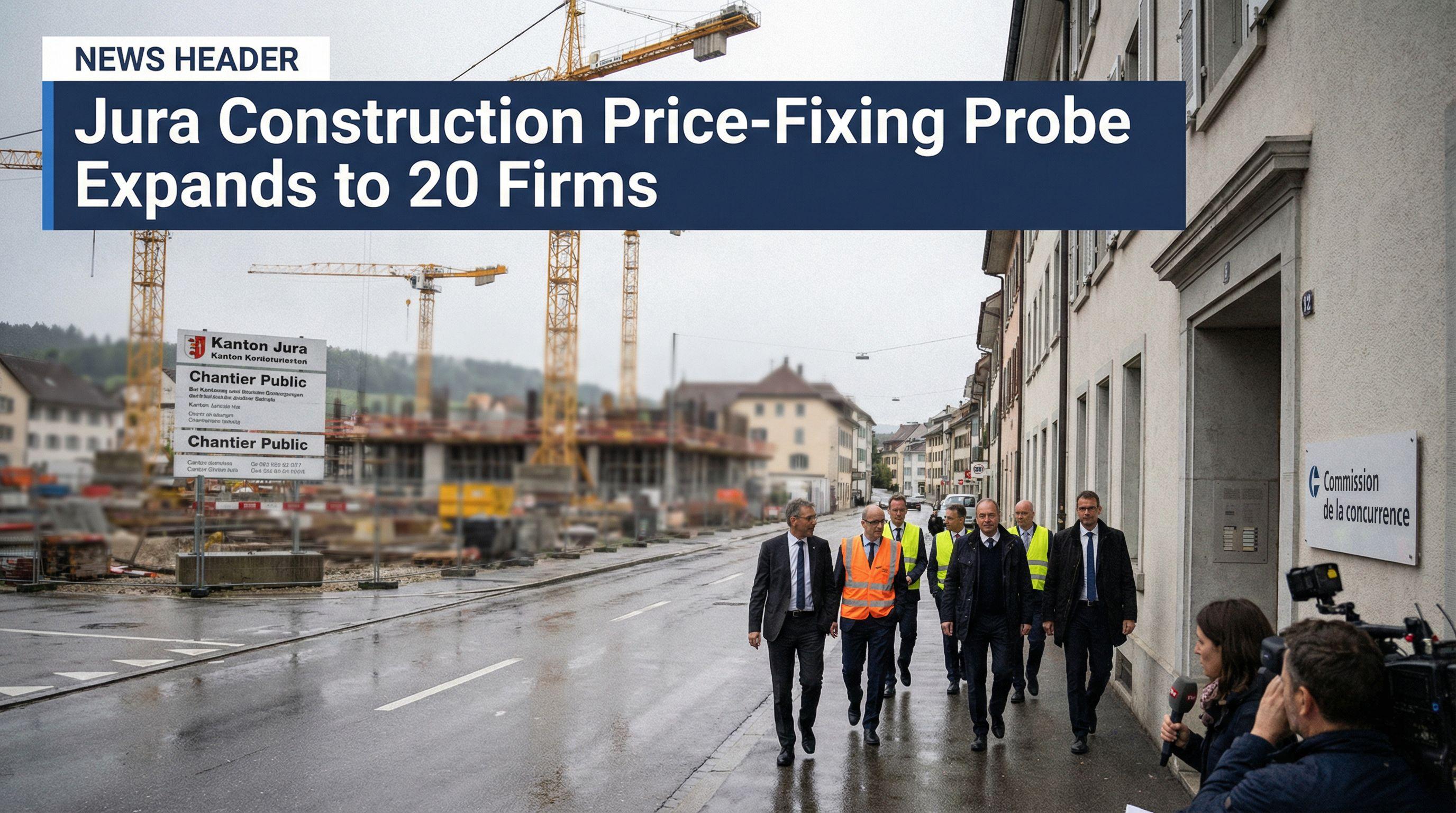
The Crackdown Explodes
The regulatory noose is tightening around Canton Jura’s construction sector with unprecedented force. What began as a targeted probe into six firms has metastasized into a sprawling investigation now ensnaring 20 companies. The Swiss Competition Commission (Comco) dropped this bombshell on Tuesday, signaling that the alleged corruption is far more systemic than initially feared. This is not a minor compliance oversight; it is a full-blown regulatory siege.
Comco’s expansion of the probe reveals a disturbing picture of the local marketplace. Authorities now suspect that nearly two dozen firms have been operating in lockstep, coordinating bids and effectively dismantling fair competition. The leap from six to 20 suspects indicates that investigators have uncovered a web of collusion that permeates the region's industry. The message from Bern is crystal clear: the era of handshake deals behind closed doors is over. As the investigation widens, the reputation of Jura’s construction industry hangs in the balance, facing what could be the most significant antitrust cleanup in the region's recent history.
A Decade of Deceit
The scale of the alleged manipulation is nothing short of staggering. Comco’s dossier now covers over 150 public and private tenders, painting a picture of a market rigged systematically for nearly a decade. From 2016 through 2025, taxpayers and private developers in Jura may have been paying inflated prices orchestrated by a cartel of construction heavyweights. This isn't a handful of isolated incidents; it is a suspected nine-year timeline of coordinated price-fixing.
The sheer volume of affected tenders suggests that bid-rigging became 'business as usual' for the companies involved. When competition dies, prices soar, and innovation plummets. The investigation targets the very heart of the procurement process, alleging that these firms decided winners and losers long before the envelopes were opened. If proven true, this represents a colossal breach of public trust and a significant financial drain on the canton's resources. The scope of 150 projects implies that almost no major civil engineering work in the region during this period was untouched by suspicion.
Engineering a Cartel
Civil engineering and building construction are the battlegrounds for this massive inquiry. The investigation, which first broke cover last November, has zeroed in on the infrastructure that keeps Jura running—roads, bridges, and public edifices. It is within these high-stakes sectors that the 20 firms are accused of coordinating their prices, effectively carving up the market among themselves to ensure mutual profit at the expense of the client.
The mechanics of such schemes are insidious. By agreeing on prices beforehand, companies create an illusion of competition while secretly rotating the winning bids among cartel members. This 'pay-to-play' mentality locks out honest competitors and forces public entities to pay a premium for essential services. Comco’s laser focus on these specific sectors highlights the vulnerability of large-scale infrastructure projects to cartel behavior. The expansion of the probe confirms that the initial evidence found in November was just the tip of the iceberg, leading investigators to the deep-rooted structural rot beneath.
The Long Road to Justice
Justice will not be swift, but it promises to be thorough. Comco has bluntly stated that an investigation of this magnitude will take approximately three years to conclude. The firms involved now face a grueling period of uncertainty, legal battles, and potential reputational ruin. For the 20 companies in the crosshairs, the next 36 months will be a fight for survival as investigators dismantle their records to prove the existence of illegal agreements.
The implications for Switzerland are profound. A three-year probe paralyzes decision-making and casts a long shadow over the Jura economy. However, the rigor of the process is necessary. Comco is signaling that it has the patience and resources to unravel even the most complex webs of collusion. While the wheels of justice turn slowly, the potential fines and sanctions at the end of the road could reshape the construction landscape in Jura forever. The industry is on notice: the cost of cheating the system is about to become unbearably high.