banking
Julius Bär Chairman Steps Down Amid Leadership Shake-up
Romeo Lacher announces departure from Julius Bär chairmanship and Swiss National Bank role, marking major leadership change in Swiss banking sector.
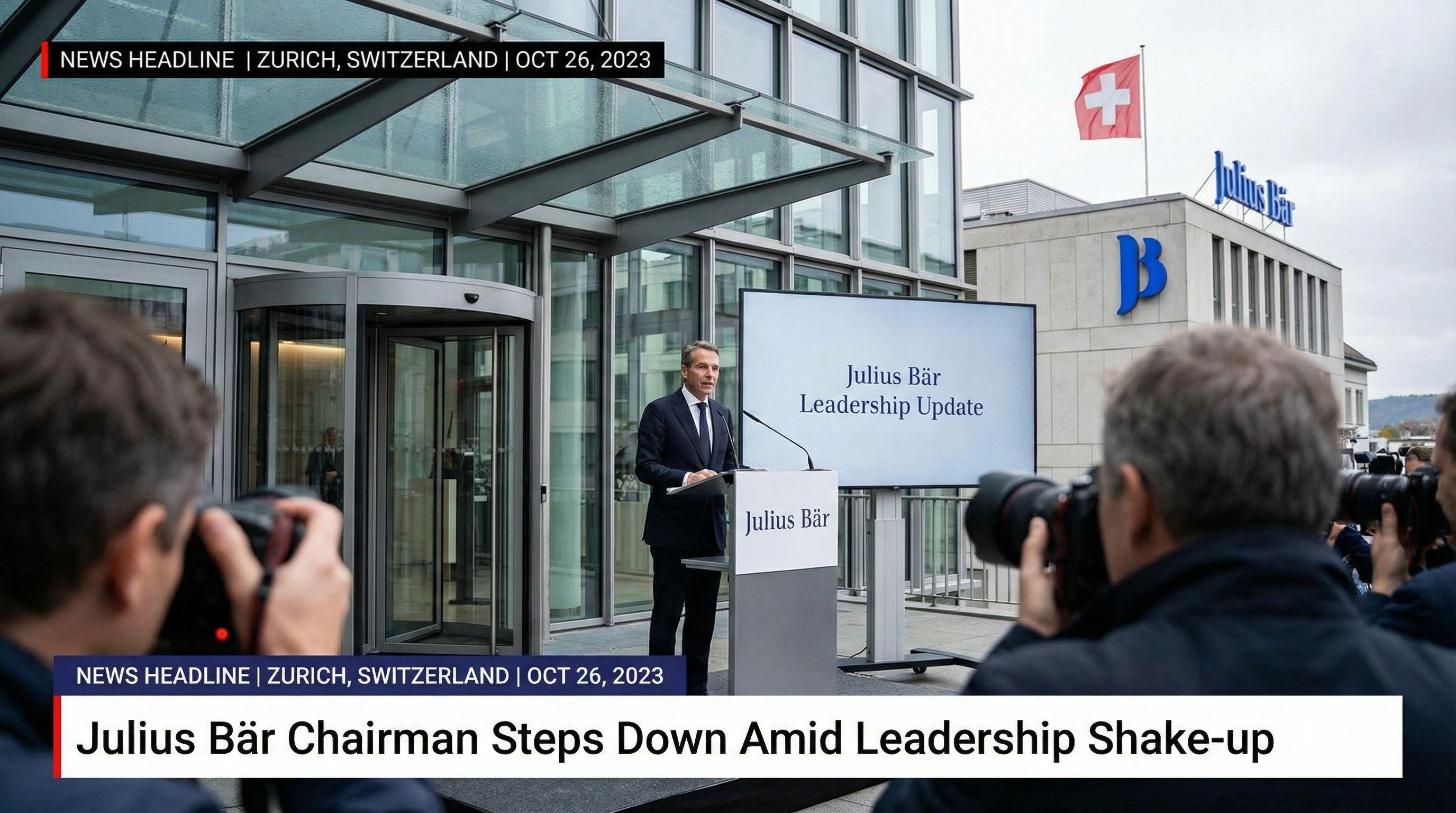
Lacher Exits Stage Left: A Double Resignation Shakes Swiss Finance
Romeo Lacher is clearing his desk. In a decisive move that reverberates through the Bahnhofstrasse and beyond, the Chairman of Julius Bär has announced he will not stand for re-election this spring. This is not merely a corporate reshuffle; it is a complete changing of the guard at the highest echelons of Swiss banking. Lacher is severing ties on two critical fronts: stepping down from the private banking giant on April 10, 2025, and resigning his vice-chairmanship at the Swiss National Bank (SNB) just two weeks later on April 25.
The timing is calculated and absolute. By synchronizing his departure with the arrival of new operational leadership, Lacher signals the definitive end of a turbulent chapter. The Swiss financial sector, known for its stability, is currently witnessing a significant transformation in its upper ranks. Lacher’s dual exit underscores a broader narrative of accountability and renewal. While he remains in office for the next few months, the clock is ticking loudly. The industry now watches with bated breath as one of its most prominent figures prepares to bow out, leaving two massive vacancies in his wake.
Navigating Turbulence: The Shadow of the Signa Affair
The ghost of 2023 still haunts the corridors of Julius Bär. Lacher’s departure cannot be disentangled from the bank's recent confrontation with significant credit losses, primarily linked to the collapse of the Signa empire. The bank grappled with the fallout, forcing the Board to make hard, uncomfortable decisions. Vice-Chairman Richard Campbell-Breeden framed the narrative explicitly, stating that under Lacher's watch, the Board "acted decisively to address the credit losses incurred in 2023."
This was crisis management at its most critical. The Zurich-based institution had to stabilize its reputation and its balance sheet simultaneously. Lacher’s tenure, particularly in its final stretch, became defined by this cleanup operation. He utilized the appointment of a new CEO as the strategic pivot point to announce his own exit, effectively drawing a line under the scandal. The message to shareholders and the market is clear: the remedial phase is over. The bank has confronted its demons, absorbed the blows, and is now attempting to turn the page before the April Annual General Meeting.
Enter Bollinger: Goldman Sachs Veteran Takes the Reins
Stefan Bollinger has landed. As of January 9, 2025, the former Goldman Sachs partner is officially in the pilot's seat at Julius Bär. His arrival marks a pivotal shift from defense to offense. Bollinger is not an interim fix; he is a high-profile recruit brought in to inject American-style dynamism into the venerable Swiss institution. The markets are waiting to see if the new man in charge can revive the bank's fortunes following the bruising Signa ordeal.
The pressure on Bollinger is immediate and immense. He inherits a bank that is fundamentally sound but reputationally bruised. Lacher explicitly cited Bollinger’s successful onboarding as the trigger for his own resignation, handing the baton to a leader unencumbered by the decisions of 2023. Investors are scrutinizing Bollinger's first moves: Will he restructure? Will he pivot the strategy? With the chairmanship soon to be vacant, Bollinger stands as the central figure of continuity and change, tasked with steering the wealth manager back to calm waters and profitability.
March Madness: The Race for the Chairman's Seat
The countdown has begun. Julius Bär’s board is in the final stages of a high-stakes headhunting mission. The search for Lacher’s successor is reportedly "almost complete," with the official reveal slated for March 2025. This is not just a procedural announcement; it is a declaration of the bank's future direction. The board has confirmed it is looking at external candidates, signaling a desire for a fresh perspective rather than an internal promotion.
The upcoming Annual General Meeting on April 10 looms large. Shareholders expect a heavy hitter—someone with the gravity to restore full confidence and the strategic vision to partner with CEO Bollinger. Meanwhile, the Swiss National Bank must also fill the void left by Lacher on its Bank Council by late April. For the Swiss financial center, this spring represents a critical juncture. As the old guard steps down, a new leadership structure is rapidly taking shape, promising to redefine the strategy of one of Switzerland’s most storied private banks.