housing
Housing Shortage Hits Swiss Seniors as Downsizing Options Remain Limited
Study reveals 30% of older Swiss residents willing to downsize face market constraints despite growing need for age-appropriate housing
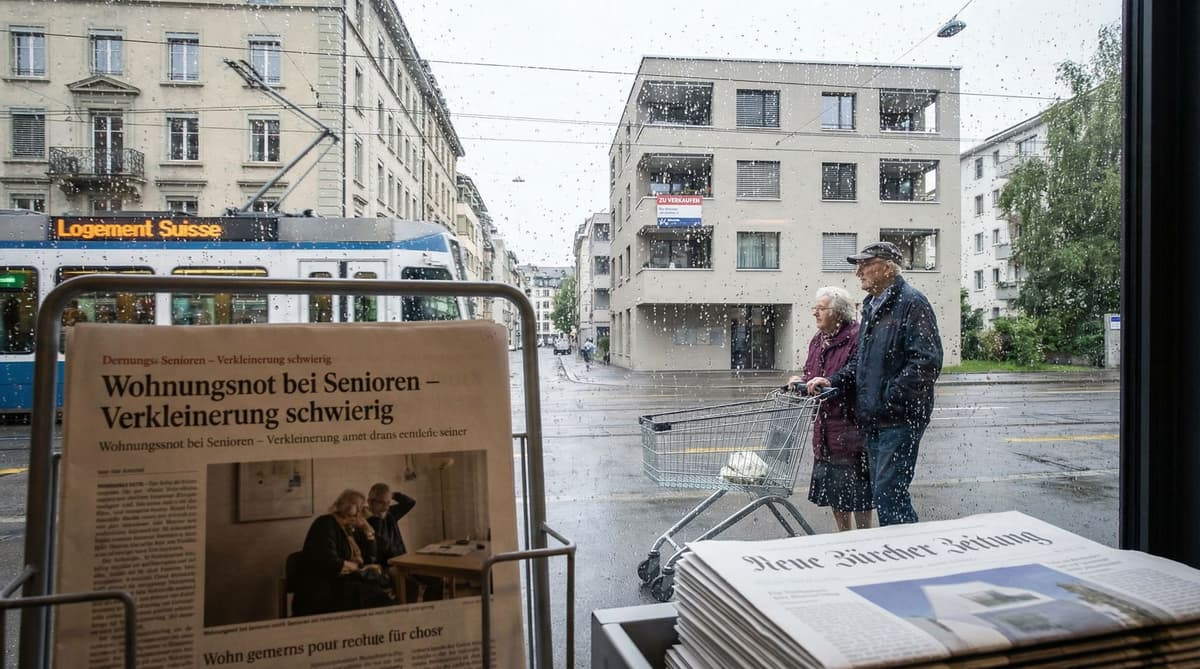
A staggering 30% of Swiss residents aged 45 to 79 are ready to trade their sprawling family homes for compact living, yet they remain trapped in properties that no longer serve them. A comprehensive study released Monday by the Zurich University of Applied Sciences (ZHAW) exposes a critical bottleneck in the national housing market: the desire to downsize is surging, but the inventory is practically non-existent.
For these "best agers," the departure of children or the onset of retirement signals a need for change—specifically, a shift toward cheaper rent, better transport links, and quieter neighborhoods. However, the reality is a stark contrast to their aspirations. Holger Hohgardt of ZHAW notes that while "a new space opens up for many people" during this life phase, the market fails to fill it. This is not merely a matter of preference; it is a structural failure that leaves seniors isolated in empty nests while the housing crisis deepens around them.
Market Blindness Ignores Demand
The Swiss real estate sector is failing to capitalize on a massive demographic opportunity. Despite the clear demand from the 45-plus demographic, the study reveals a baffling scarcity of suitable housing offers. The market suffers from a severe lack of digital exchange platforms, innovative multi-generational houses, and necessary property conversions that would facilitate this transition.
This inertia is creating a paradox where demand exists without supply. The industry continues to build for a standard family unit that is evolving, ignoring the nuanced needs of an aging population that craves flexibility over square footage. The authors of the study are unequivocal in their assessment: "More commitment from local authorities and businesses is needed." Without pilot projects or aggressive municipal housing strategies, the market will remain paralyzed, unable to circulate housing stock efficiently.
Systemic Paralysis Blocks Progress
Switzerland's housing policy is inadvertently fueling stagnation. The ZHAW study explicitly states that the local housing system "incentivises stability more than change." This regulatory and financial framework rewards homeowners for staying put, effectively penalizing those who wish to right-size their lives.
Strict financing requirements and a rigid property market mean that even if a senior wants to sell a large house to buy a smaller apartment, the financial logistics often make the move unfeasible or unattractive. This systemic paralysis does not just affect the elderly; it freezes the entire property ladder. By incentivizing stasis, the Swiss system is manufacturing a scarcity that could be alleviated if the natural flow of downsizing were properly supported by policy reforms.
Young Buyers Pay the Price
The consequences of this downsizing gridlock ripple violently down to the younger generation. Because seniors are unable to vacate family-sized homes, the dream of homeownership is becoming statistically impossible for young Swiss families. The study highlights that high property prices and limited supply are direct byproducts of this stagnation.
We are witnessing the solidification of a "no house generation." As long as the market fails to provide viable exit strategies for seniors, family homes remain off the market, driving prices into the stratosphere. The ZHAW findings—backed by the Federal Housing Office and the Swiss Homeowners’ Association—paint a picture of a circular crisis: without options for the old, there is no room for the young. The solution requires immediate, bold intervention to unlock the housing stock currently held by a generation ready, but unable, to move.