Swiss Law
Swiss-Owned Lafarge Appeals Conviction for Financing Terrorism in Syria
Cement manufacturer Lafarge, owned by Swiss giant Holcim, has appealed its conviction by a Paris court for paying millions to jihadist groups to keep a Syrian plant operational. The appeal reopens the high-profile corporate crime case.
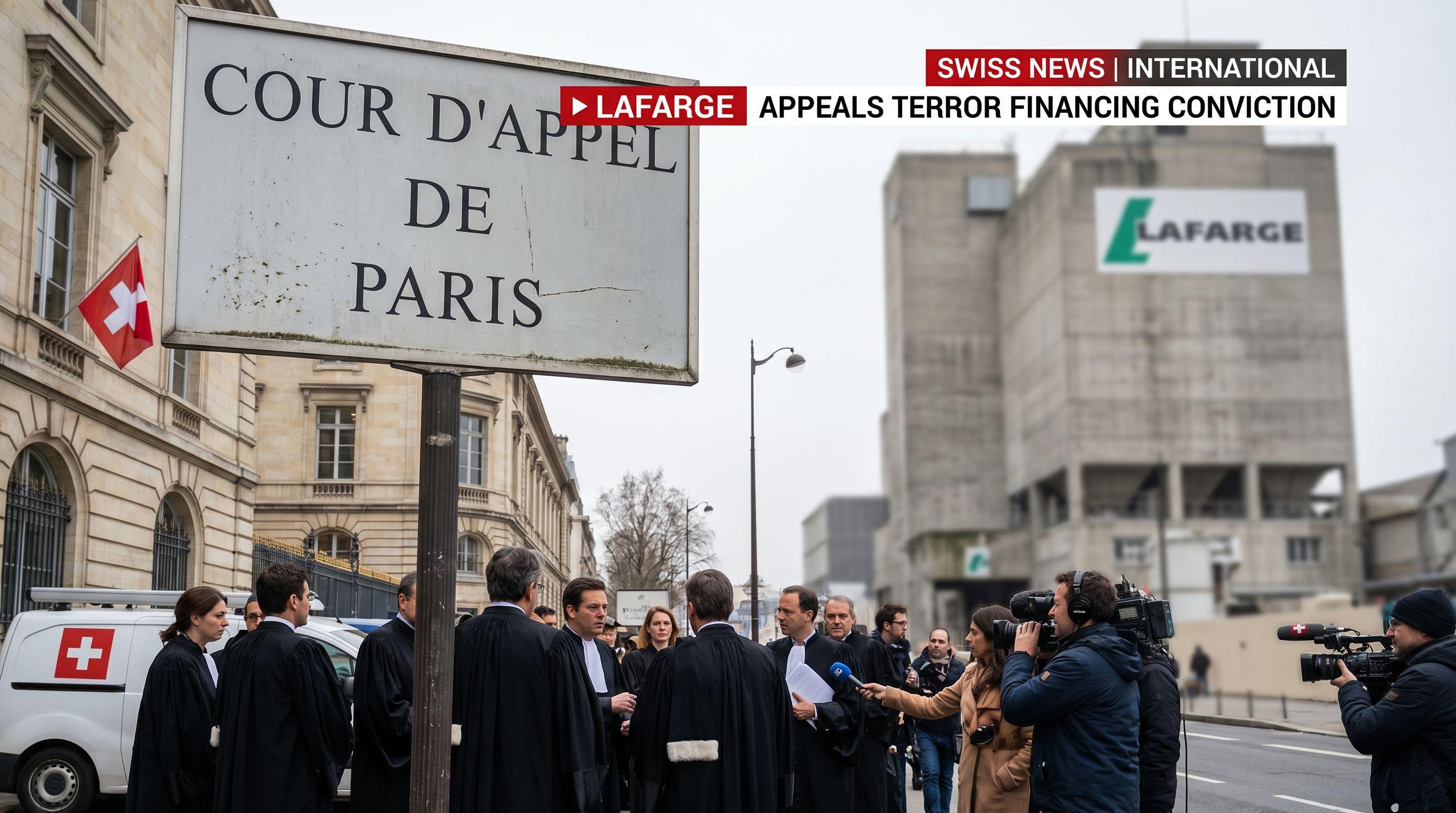
Lafarge Ignites Legal Firestorm with High-Stakes Appeal
The global corporate landscape is reeling as cement titan Lafarge, now a subsidiary of the Swiss powerhouse Holcim, officially challenges its conviction for financing terrorism. This is not just a legal maneuver; it is a desperate attempt to scrub a permanent stain from the reputation of one of the world's largest industrial players. The appeal reopens a case that has already sent shockwaves through the boardrooms of Zurich and Paris, forcing a confrontation with the dark reality of doing business in war zones. While Holcim attempts to distance itself from the legacy of its acquisition, the shadow of the Jalabiya plant in northern Syria looms larger than ever. This legal battle represents a critical juncture for corporate accountability, as the world watches whether a multinational can truly be held responsible for the blood spilled in the pursuit of profit.
The Price of Blood: €5.6 Million for Terrorist Cooperation
A staggering €5.6 million flowed directly from corporate coffers into the hands of jihadist groups between 2013 and 2014. This was the cold, calculated price Lafarge paid to keep its Syrian cement plant operational while the rest of the world watched the country descend into chaos. The Paris Criminal Court was scathing in its assessment, declaring the company was 'prepared to make any compromise' to protect its bottom line. Beyond the direct payments, the court slapped the firm with a maximum criminal fine of €1.125 million and a massive €4.57 million customs penalty for violating international sanctions. This financial trail exposes a disturbing willingness to bypass global security protocols. While the defense argues these were necessary measures for staff safety, the prosecution paints a picture of a multinational fueling the very engines of terror it claimed to be navigating.
Corporate Cowardice: The Fall of the C-Suite
Six years behind bars—that is the unprecedented sentence handed down to former CEO Bruno Lafont, a man the court accused of 'bad faith' and 'cowardice.' In a dramatic fall from grace, the former head of a French industrial flagship was marched to the Santé prison in Paris, though he is now fighting for his release. He is not alone in the dock; seven other executives face the consequences of their tenure. Christian Herrault, Lafont’s former right-hand man, received five years for presiding over negotiations with the Islamic State to secure a 'profitable agreement.' These sentences shatter the glass ceiling of executive immunity. The court’s message is clear: the era of hiding behind corporate structures to mask complicity in human rights abuses is over. Even as these men appeal, the image of a CEO in a prison cell serves as a chilling warning to leaders across the globe that 'not knowing' is no longer a valid defense.
Swiss Giants Under Scrutiny: The Global Fallout
This case strikes at the very heart of the Swiss business model, reigniting the fierce debate over the Responsible Business Initiative. As Holcim grapples with the fallout of its subsidiary’s actions, the pressure on Swiss-based multinationals to monitor their global supply chains has reached a fever pitch. NGOs like Sherpa and ECCHR have hailed the initial conviction as a 'major victory,' but the appeal threatens to delay justice for years. For Switzerland, a nation that prides itself on neutrality and ethical banking, the Lafarge scandal is a reputational nightmare. It forces a reckoning: can Swiss giants truly control the ethics of the companies they swallow? As the appeal moves forward, the implications for international law are profound. The outcome will determine whether the 'Swiss brand' remains synonymous with quality and integrity, or if it becomes a shield for corporate complicity in the world's most violent conflicts.