Law
Switzerland Violated Freedom of Assembly, European Court of Human Rights Rules
The European Court of Human Rights (ECHR) has ruled that Switzerland violated the freedom of assembly by fining the organizer of a 2019 women's day demonstration in Geneva. The court found that holding her personally liable for riots during the event was a breach of her rights.
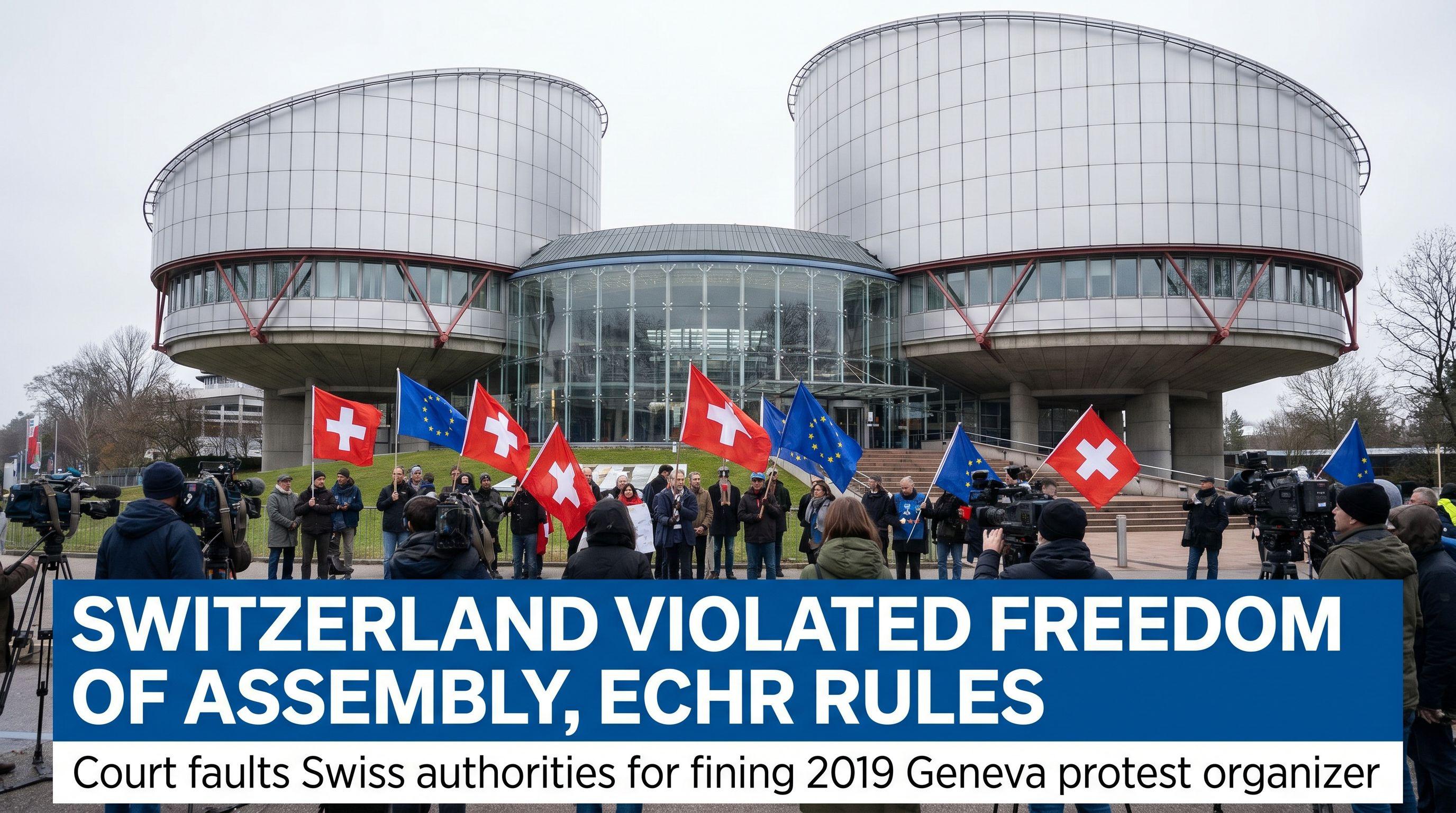
Strasbourg Overrules Swiss Justice
Switzerland’s reputation as a bastion of direct democracy faces a sharp rebuke from abroad. The European Court of Human Rights (ECHR) has officially ruled that Swiss authorities trampled on the fundamental freedom of assembly. This landmark verdict stems from a 2019 International Women’s Day demonstration in Geneva, where a peaceful march was overshadowed by isolated riots. While Swiss courts sought to penalize the messenger, Strasbourg has sent a clear message: the state cannot muzzle organizers for the actions of a few. This ruling arrives at a critical juncture as Switzerland grapples with its 50-year legacy within the ECHR framework, highlighting a growing friction between local law enforcement tactics and international human rights standards.
The Price of Protest: A CHF 200 Injustice
A mere CHF 200 fine may seem trivial, but its implications for Swiss civil society were staggering. By convicting the organizer under criminal law, Swiss courts attempted to establish a dangerous precedent: personal financial and criminal liability for the unpredictable chaos of a public crowd. The ECHR dismantled this logic, ruling that the fine constituted a violation of the right to a fair trial and freedom of expression. This 'chilling effect'—where citizens fear organizing events due to potential personal ruin—is exactly what the European Convention on Human Rights is designed to prevent. The court found that the organizer had been unfairly targeted for an 'ineffective security service,' despite the event being authorized by the state.
Geneva’s Security Gamble Backfires
Geneva authorities played a high-stakes game with civil liberties and lost. Prior to the 2019 march, the organizer was explicitly warned she would be held personally liable for any non-compliance. When riots broke out, the state pivoted from protector to prosecutor. However, the ECHR’s verdict exposes the flaw in this strategy: the state cannot outsource the maintenance of public order to private citizens and then punish them when things go south. This decision forces a total rethink of how Swiss cantons manage large-scale demonstrations. The court’s insistence on protecting freedom of assembly and association means that the burden of security must remain a shared responsibility, not a trap for activists.
Defining the Future of Swiss Dissent
This ruling is a victory for every Swiss citizen who believes in the right to take to the streets. It reinforces the reality that Switzerland does not operate in a vacuum; its judicial system must align with the broader European commitment to human rights. As the country moves forward, this verdict will serve as a shield for future organizers, ensuring that the fear of criminal prosecution does not silence the voices of dissent. The Swiss legal system now confronts the task of integrating this ruling into cantonal practices, ensuring that 'authorized' truly means 'protected.' The era of holding individuals hostage for the actions of a crowd is over, marking a significant evolution in the Swiss democratic landscape.