Politics
Parliamentary Commission Narrowly Backs Construction of New Nuclear Power Plants
In a significant policy shift, a parliamentary committee has narrowly voted to endorse a proposal allowing the construction of new nuclear power plants in Switzerland, reigniting a deeply divisive national debate on the country's future energy strategy.
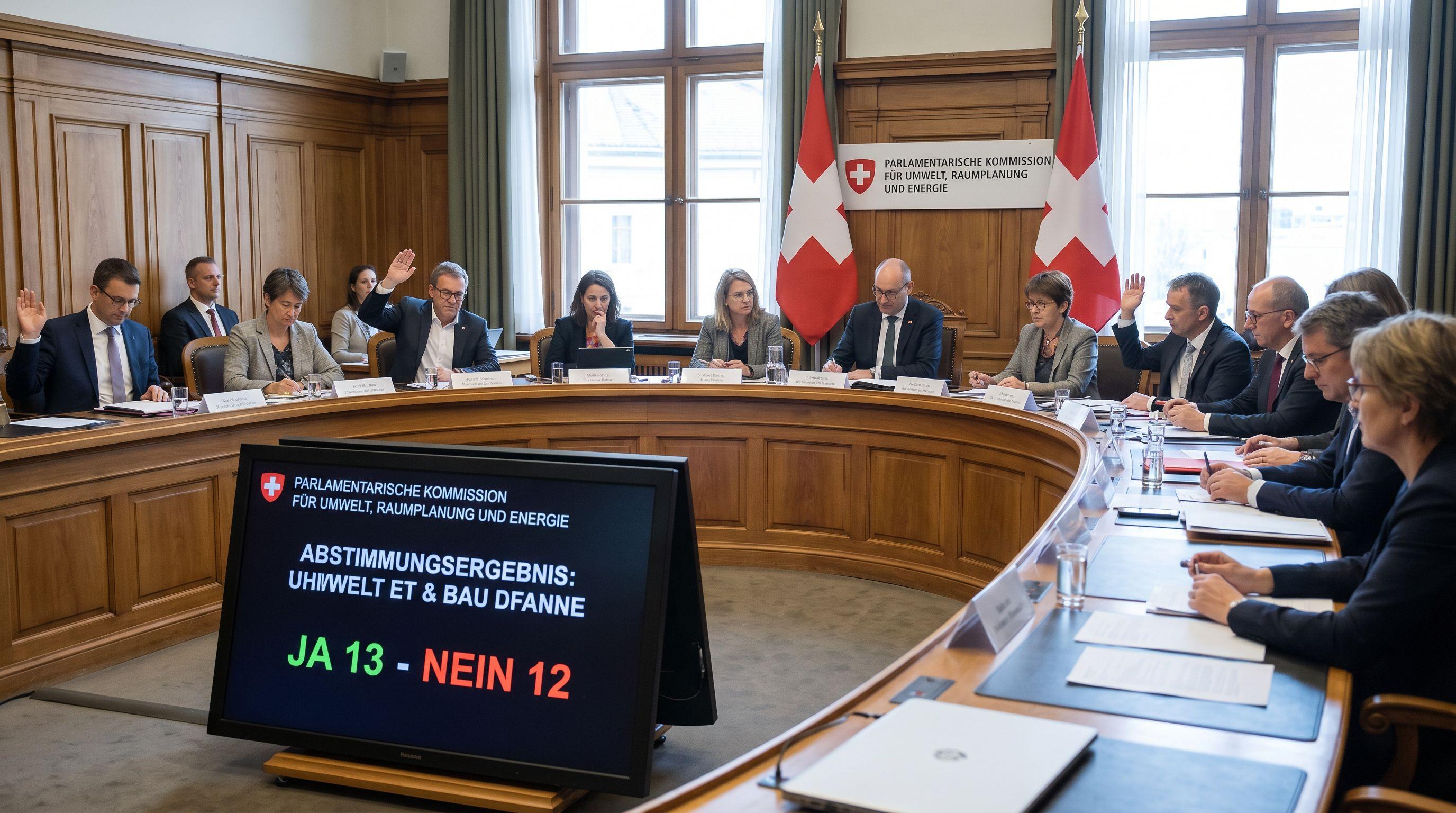
The Nuclear Ban Crumbles
A single vote has just upended seven years of Swiss energy certainty. By a razor-thin margin of 13 to 12, the National Council's energy commission has moved to dismantle the 2017 ban on new nuclear power plants. This isn't just a legislative tweak; it is a seismic shift that confronts the very core of Switzerland's 'Energy Strategy 2050'. Since the historic 2017 referendum, the nation has operated under a strict prohibition of new reactors, yet the reality of looming energy shortages is forcing a radical rethink. The commission's decision signals that the era of ideological exclusion is over, replaced by a desperate search for grid stability. While existing plants like Beznau and Leibstadt continue to hum in the background, the prospect of new concrete being poured for reactors is suddenly a live political reality. This move directly aligns with the Council of States, which has already signaled its appetite for a nuclear comeback, setting the stage for a high-stakes legislative showdown.
Technological Neutrality vs. Financial Risk
Switzerland demands a reliable, low-carbon, and cost-efficient energy supply, and the commission insists we cannot afford to be picky. The majority argues that the state must remain 'technologically neutral,' refusing to gamble the nation's future solely on the hope that renewables will fill the gap. However, this pragmatism comes with a staggering price tag. Opponents are sounding the alarm, claiming that reopening the nuclear door will expose the public sector to massive financial risks and paralyze investment in wind and solar. To mitigate this, the commission agreed that any new plant must only receive a permit if its construction and operation are fully secured by private capital—rejecting calls for state-mandated funding. This creates a high-wire act: the law may allow new plants, but the market must prove they are viable. Meanwhile, a proposal to restrict approvals only to advanced 'fourth-generation' reactors was shot down, leaving the door wide open for established, proven technologies to return to Swiss soil.
The Shadow of the Blackout Initiative
The 'Stop Blackout' initiative is the engine driving this political reversal. This popular movement seeks to ensure Switzerland never goes dark, and its pressure has forced the Federal Council into an indirect counter-proposal that mirrors the initiative's goals. Proponents argue that if renewable targets fall short of their 2050 milestones, the nation will face a catastrophic energy deficit that only nuclear power can bridge. In contrast, critics view this as a betrayal of the 2017 mandate, arguing that the focus should remain on a detailed waste-disposal strategy and a more aggressive expansion of hydro and solar power. The commission's rejection of additional hurdles—such as a revised electricity supply plan—shows a clear intent to streamline the path for nuclear power. This isn't just about electricity; it's about sovereignty. As Europe grapples with energy volatility, the Swiss parliament is signaling that it will prioritize domestic reliability over green purity, even if it means revisiting a technology many thought was destined for the history books.
The Looming National Referendum
The final word will not belong to the politicians in Bern, but to the Swiss people. While the National Council is the next hurdle for this amendment, the inevitability of a national referendum looms over every debate. Switzerland's direct democracy ensures that a policy shift of this magnitude—reversing a decade of anti-nuclear momentum—will be settled at the ballot box. This sets the stage for a generational campaign. On one side, a coalition of centrist and right-wing parties will argue for 'all-of-the-above' energy security; on the other, environmental groups and left-leaning parties will fight to protect the 2017 consensus. The stakes could not be higher. If the ban is lifted, Switzerland could see its first new reactor applications in decades by the 2030s. If rejected, the country must double down on an unprecedented acceleration of renewable infrastructure. Either way, the narrow 13-12 commission vote has fired the starting gun on a debate that will define the Swiss landscape for the next half-century.